
 Matzav
Former Cuban President Raúl Castro Indicted in U.S. On Murder, Conspiracy Charges
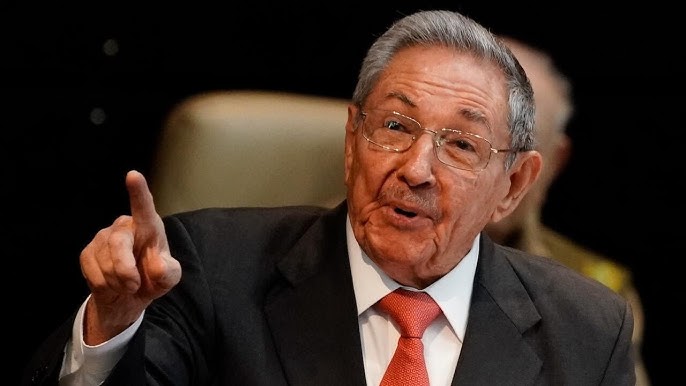
MIAMI – A federal grand jury in South Florida indicted former Cuban president Raúl Castro, in an attempt to hold him accountable for the 1996 killing of four people, three of them Americans.
Top Justice Department officials were expected to announce the unsealing of the indictment Wednesday in downtown Miami, the heart of the Cuban exile community.
The extraordinary indictment, which was returned by a grand jury in April, comes as the Trump administration has ratcheted up pressure to try to force political turnover in Cuba’s communist regime, and it is the latest example of the Trump administration using its Justice Department to sway foreign policy.
Castro faces charges of murder, conspiracy to kill U.S. nationals and destruction of aircraft, according to the court docket. Others were also charged alongside him, court records show.
The indictment had not been made publicly available as of Wednesday at 1 p.m. Eastern, though the court docket showed the charges against Castro and a request from the Justice Department to unseal it.
Castro, 94, took over the presidency of Cuba when his brother, Fidel Castro, stepped down in 2008. With Fidel’s death in 2016, he became the island’s preeminent revolutionary hero. Although he left the presidency in 2018, Raúl Castro remained first secretary of the Communist Party of Cuba until 2021.
It is unlikely that Castro will be extradited to the United States to appear in court and face the charges. Absent Cuba’s cooperation, the indictment is likely to remain symbolic unless the U.S. takes aggressive action to remove Castro from Cuba.
The murder charges in the indictment stem from the 1996 shooting-down of two jets flown by Brothers to the Rescue, a U.S.-based humanitarian group formed in 1991 by Cuban exiles in Miami and headed by Jose Basulto, a veteran of the 1961 Bay of Pigs invasion.
The group’s mission became harassing the Cuban government, sometimes flying over Cuban airspace and dropping leaflets urging residents to rise up against the regime. Their campaigns had led to numerous complaints from Havana and assurances from the Clinton administration that it would stop.
On the day the planes were shot down, the group said it was looking for Cuban rafters trying to flee the country in the Florida Straits when the Cuban military downed the planes. Numerous investigations at the time concluded they were over international waters when the planes were downed.
The political fallout was swift, and Cuban Americans had long rallied for Fidel and Raúl Castro – the Cuba’s defense minister – to be charged in the killings.
Federal officials – including acting attorney general Todd Blanche and U.S. Attorney for the Southern District of Florida Jason Reding Quiñones – had a news conference set for Wednesday afternoon at Freedom Tower in Miami.
Freedom Tower is a symbolic monument for Cuban-Americans, the place where Cubans who were fleeing the communist revolution in the late 1950s and 1960s were processed and received aid when they arrived in Miami.
President Donald Trump, in an executive order issued the first week of his second term, declared a national emergency regarding Cuba, saying it presents “an unusual and extraordinary threat” because it has aligned itself with countries hostile to the U.S., including Iran, Russia and China.
Amid these tensions, CIA Director John Ratcliffe traveled to Havana last week for meetings with senior Cuban security and intelligence officials, including Raúl Rodriguez Castro, the powerful grandson of Raúl Castro.
The meeting came as extensive blackouts continued on the island, with the government acknowledging it was “without any reserves” to fuel power plants.
The Trump administration has adopted a policy of economic strangulation to try to drive the current leadership from power, actions that have gone above and beyond the U.S. economic embargo imposed more than six decades ago.
The administration’s actions include expanded economic sanctions, a naval blockade preventing ships from carrying oil to the island and the threat of secondary sanctions on any other country or entity that trades with the Cuban government or designated individuals or companies.
Trump has suggested he could utilize a playbook in Cuba similar to the one he used in Venezuela earlier this year.
The Justice Department first indicted Venezuelan President Nicolás Maduro on narco-terrorism charges in 2020, though he was not extradited at the time. In January, the administration launched an attack on Venezuela, capturing Maduro and bringing him to New York to face charges.
The Trump administration, in part, described the capture as a law enforcement effort to ensure that Maduro faced his day in court on narco-terrorism charges. It left the rest of the Venezuelan government intact, saying that its Maduro-era leaders were cooperating with the United States. Secretary of State Marco Rubio has outlined a similar plan for Cuba, while demanding economic and political changes.
Trump has said that Cuba is “next in line” as soon as he finishes his war with Iran, although the administration has not publicly declared that it intends to use military force to achieve its goals in Cuba.
In March, The Washington Post reported that the Justice Department had formed a working group to examine possible federal charges against officials or entities within Cuba’s government.
The U.S. Attorney’s Office for the Southern District of Florida – which includes Miami, the center of the Cuban exile community – has been overseeing the prosecution group.
The indictment’s unsealing came on Cuban Independence Day, which marks the anniversary of the establishment of the Republic of Cuba after the end of U.S. occupation in 1902.
In a “Message to the Cuban People” on Wednesday, Rubio said he was aware of their “unimaginable hardships,” which he said were “not due to an oil ‘blockade’ by the U.S., but from the corruption of their leaders.
“In the U.S.,” Rubio said, “we are ready to open a new chapter in the relationship between our people and our countries. And, currently, the only thing standing in the way of a better future are those who control your country.”
(c) 2026, The Washington Post · Perry Stein, Karen DeYoung