
 JBizNews
Musk Predicts Widespread Robotaxis by Year-End. Prediction Markets Say Otherwise
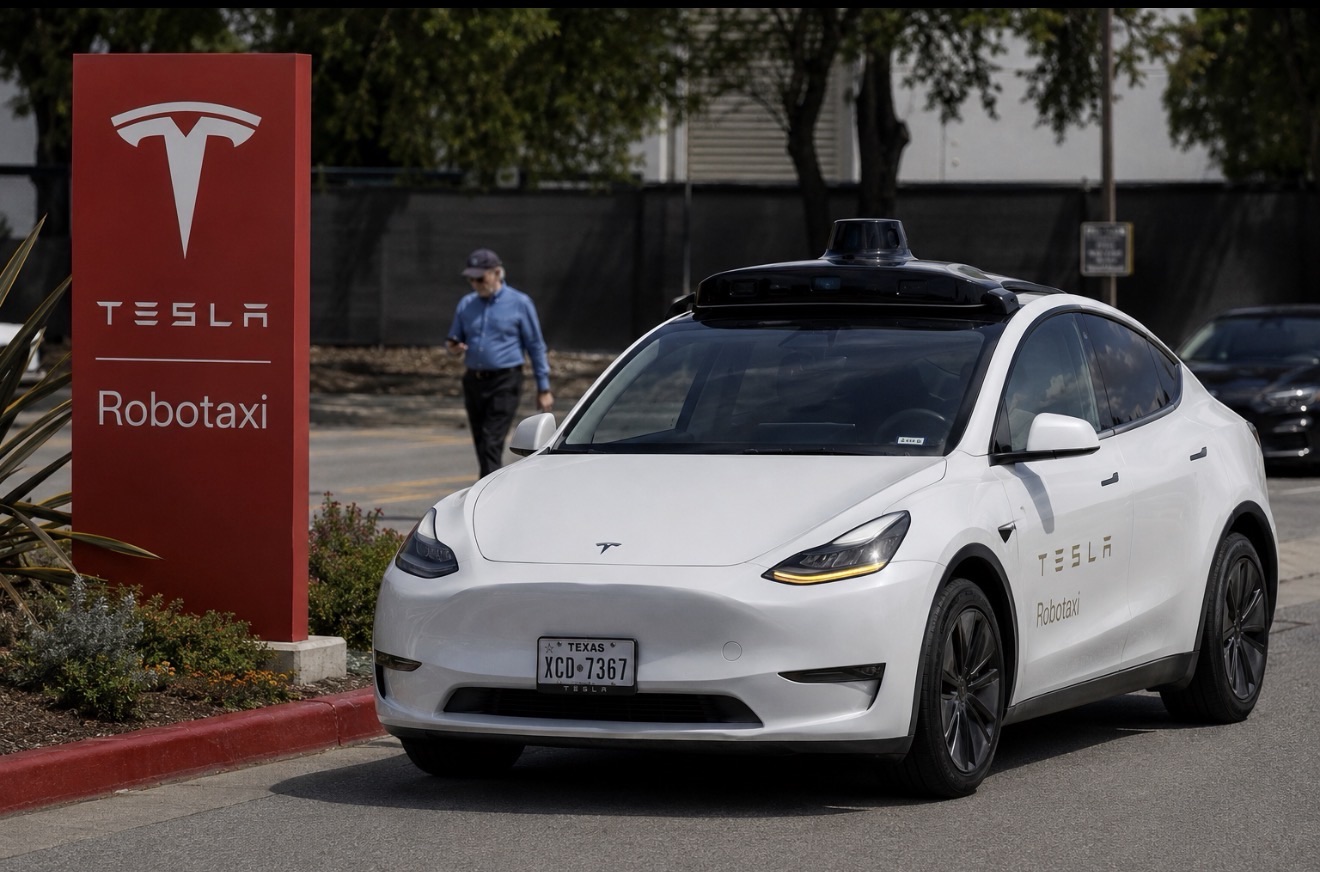
Elon Musk said this week that Tesla’s driverless ride-hailing service will be “widespread in the U.S. by the end of this year,” reviving one of the company’s most ambitious — and repeatedly delayed — promises. But the traders risking real money on those timelines are increasingly betting against him.
Prediction markets tracking Tesla’s autonomy rollout continue pricing low odds that the company can deliver fully unsupervised robotaxi service at meaningful scale within the timeframes Musk publicly describes.
On Polymarket, one of the largest prediction platforms, traders currently assign Tesla roughly a 13% chance of launching unsupervised robotaxi operations in California by June 30. Another contract tied to a nationwide unsupervised Full Self-Driving rollout by the same deadline has generated more than $1 million in trading volume, with bettors sharply divided over whether Tesla can achieve the milestone.
The divide reflects a growing disconnect between Musk’s public optimism and the regulatory, technical, and operational hurdles still facing Tesla’s autonomous-driving ambitions.
At the center of the skepticism is California.
Tesla has not yet filed for the autonomous deployment permits required by the California Department of Motor Vehicles for fully driverless commercial ride-hailing operations. Under current state rules, companies must complete tens of thousands of supervised autonomous testing miles before qualifying for broader deployment approval.
Public records currently show no such qualifying Tesla miles reported under California’s driverless permitting system.
Tesla’s limited Bay Area transportation service launched earlier this year operates under a Transportation Charter Permit — the same regulatory category used for traditional human-driven car services — rather than a driverless autonomous permit.
California regulators are also tightening oversight beginning July 1, when new rules allowing police officers to directly cite autonomous vehicles for violations take effect.
That combination of regulatory delay and operational complexity has fueled growing skepticism among investors and industry analysts about how quickly Tesla can scale.
Even Tesla’s own filings have become more cautious.
The company’s first-quarter shareholder materials quietly softened earlier promises regarding robotaxi expansion. Several cities previously expected to launch autonomous operations during the first half of 2026 — including Phoenix, Miami, Orlando, Tampa, and Las Vegas — were shifted into a broader “preparations underway” category rather than firm rollout deadlines.
Only Dallas and Houston currently operate limited unsupervised Tesla robotaxi service.
And even there, scale remains relatively small.
Public tracking estimates suggest Tesla currently operates fewer than 40 unsupervised robotaxis across Austin, Dallas, and Houston combined, up from fewer than 10 vehicles at the start of April.
The growth trajectory is notable, but still far below what most investors would consider a nationwide rollout.
By comparison, Waymo, the autonomous-driving company backed by Alphabet, already operates fully driverless commercial ride services across multiple major U.S. cities, including Phoenix, San Francisco, Los Angeles, Miami, and Austin.
Tesla executives themselves have acknowledged that major scaling may depend on future software generations that are not yet available.
During the company’s latest earnings call, Musk pointed investors toward the next-generation Full Self-Driving platform, known internally as version 15, as a critical milestone for broader robotaxi deployment. He suggested the software could become available by early 2027.
Chief Financial Officer Vaibhav Taneja also tempered expectations, warning investors that robotaxi revenue would likely remain immaterial through much of 2026 while capital expenditures continue rising sharply.
Tesla expects to spend more than $25 billion this year while continuing to generate negative free cash flow.
Insider trading activity has also reflected a more cautious posture than Musk’s public messaging.
Tesla director Kathleen Wilson-Thompson sold shares during multiple periods since February, while Taneja also sold stock earlier this year near recent highs.
The financial stakes surrounding autonomy are enormous.
Tesla’s valuation increasingly depends less on its traditional vehicle business and more on investor belief that the company can dominate autonomous transportation and robotics.
Shares recently traded near $428, leaving Tesla with valuation multiples far above nearly every major automaker globally. Analysts estimate that a large portion of Tesla’s current market capitalization reflects expectations tied specifically to robotaxis and the company’s Optimus humanoid robotics program rather than its existing automotive operations alone.
That dynamic helps explain why autonomy timelines matter so much to investors.
If Tesla successfully scales driverless transportation nationally, the financial upside could be massive. Morgan Stanley estimates the broader autonomous vehicle economy could eventually generate trillions of dollars in annual revenue globally.
But the market for commercial robotaxis remains extremely early and highly uncertain.
The widening gap between Musk’s timelines and prediction-market odds has become so common inside Silicon Valley that it has earned its own nickname: “Elon Time.”
Musk himself has acknowledged the criticism before, once describing himself as “pathologically optimistic with time.”
The pattern stretches back years.
In 2019, Musk told investors he was “very confident” Tesla would deploy fully autonomous vehicles by 2020. Similar timelines were repeated repeatedly through 2025 before Tesla’s first limited robotaxi rollout eventually arrived in Austin last year under far more restricted conditions than initially promised.
Many prediction-market traders appear increasingly unwilling to take Musk’s deadlines at face value.
Last year, bettors reportedly lost millions wagering on earlier Tesla autonomy timelines after Musk publicly encouraged confidence in the company’s progress.
This time, many appear to be betting against him instead.
Tesla did not respond to requests for comment regarding the prediction-market skepticism or its broader rollout timeline.
The company’s next major test with investors will likely arrive alongside second-quarter delivery results, where analysts remain closely focused on slowing EV demand, shrinking margins, rising competition, and whether Tesla can continue convincing Wall Street that its future ultimately lies not in cars — but in autonomy.
— JBizNews Desk
© JBizNews.com. All rights reserved. This article is original reporting by JBizNews Desk. Unauthorized reproduction or redistribution is strictly prohibited.