
 JBizNews
Pentagon Picks Shield AI to Power Cheap Attack Drone Swarms as Iran War Drives Demand
The Pentagon is rapidly shifting toward a new kind of warfare: cheaper, AI-powered attack drones that can overwhelm enemies in large numbers instead of relying only on billion-dollar weapons systems.
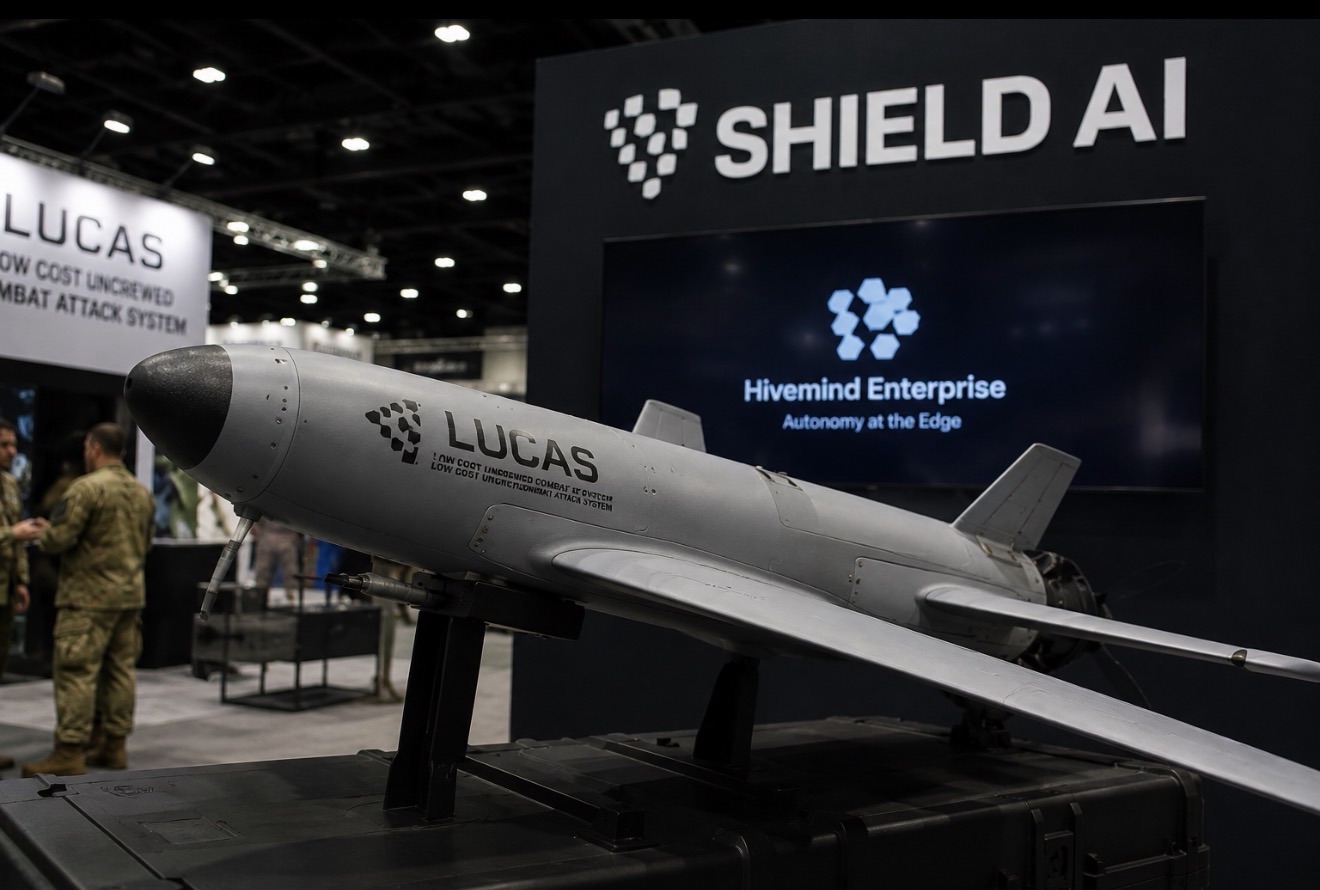
The Defense Department announced Tuesday that it selected defense startup Shield AI to provide the autonomous software for a new low-cost drone program designed around swarms of expendable attack drones that can operate together with limited human control.
For everyday Americans, the story highlights how modern wars are changing — and why the U.S. military is increasingly investing in artificial intelligence and lower-cost weapons after seeing how devastating cheap drones have become in the Iran conflict.
The new Pentagon system, called LUCAS, is built around small one-way attack drones costing roughly $35,000 each. That is dramatically cheaper than traditional American missiles, some of which cost more than $1 million per shot.
Shield AI’s software, known as Hivemind, acts like an “AI pilot,” allowing groups of drones to coordinate attacks, avoid threats and continue missions even if communications are jammed or disrupted.
“It’s cheaper to destroy a target, but it’s also keeping our war fighters safer,” Shield AI co-founder Brandon Tseng said in an interview with CNBC.
The push comes after the Iran war exposed a major military reality: inexpensive drones can inflict enormous damage against far more expensive systems.
Iran’s Shahed drones — low-cost exploding drones used heavily throughout the conflict — have successfully struck military installations, infrastructure and energy facilities across the Middle East. Some attacks caused billions of dollars in damage using weapons that cost only a tiny fraction of the targets they hit.
That has forced Pentagon planners to rethink decades of military strategy.
Instead of depending mostly on advanced fighter jets, destroyers and high-end missiles, the military is increasingly preparing for future conflicts where thousands of smaller autonomous systems flood battlefields simultaneously.
The Pentagon reportedly moved unusually fast on the LUCAS program, taking it from development to combat deployment in less than a year — far quicker than traditional military procurement timelines that often take many years.
The shift is also transforming the defense industry itself.
For decades, giant contractors like Lockheed Martin, RTX and Northrop Grumman dominated Pentagon spending. Now venture-backed technology startups like Shield AI and Anduril are rapidly gaining ground by focusing on AI software, autonomous drones and lower-cost weapons.
Shield AI recently reached a valuation of roughly $12.7 billion as investor interest in military AI companies surged following the Iran conflict.
The Pentagon has also announced additional contracts tied to low-cost missile and drone systems as military leaders race to expand production capacity.
Analysts say the economic logic behind the shift is difficult to ignore.
A swarm of cheap autonomous drones can potentially overwhelm air defenses and destroy targets at a fraction of the cost required to stop them. That creates a dangerous imbalance where defending against attacks may become far more expensive than launching them.
The U.S. military now appears determined to build that capability for itself rather than risk falling behind adversaries already deploying large numbers of autonomous systems.
The Trump administration has strongly backed the effort, including through expanded missile defense and drone initiatives designed to speed up weapons development and manufacturing.
Supporters argue AI-powered systems could reduce risks to American troops while allowing the military to respond faster and more cheaply during future conflicts.
Critics, however, continue warning about the growing role of artificial intelligence in warfare, especially systems capable of making battlefield decisions with reduced human oversight.
Still, momentum inside the Pentagon is clearly accelerating.
Defense experts say the battlefield lessons from Iran, Ukraine and other recent conflicts have convinced military planners that autonomous drone warfare is no longer experimental technology — it is becoming the future of combat.
And for companies like Shield AI, the war-driven demand surge is rapidly turning Silicon Valley defense startups into some of the most important new players in the global arms industry.
— JBizNews Desk
© JBizNews.com. All rights reserved. This article is original reporting by JBizNews Desk. Unauthorized reproduction or redistribution is strictly prohibited.