
 JBizNews
Nvidia Crushes Q1, Guides Q2 to $91 Billion as AI Infrastructure Boom Accelerates
Jensen Huang Calls AI Buildout “Largest Infrastructure Expansion in Human History” as Nvidia Extends Dominance Across Global AI Market
NEW YORK — Nvidia Corp. delivered another massive earnings beat Wednesday after the closing bell, reporting fiscal first-quarter revenue of $81.62 billion and forecasting second-quarter sales of approximately $91 billion, well ahead of Wall Street expectations as demand for artificial-intelligence infrastructure continued accelerating across the global economy.
The results reinforced Nvidia’s position at the center of the AI investment boom now reshaping technology, cloud computing, enterprise software, and global infrastructure spending.
According to the company’s quarterly earnings release issued Wednesday afternoon, revenue surged 85% year-over-year from $44.06 billion, topping analyst expectations near $79 billion.
Adjusted earnings came in at approximately $1.87 per share, above Wall Street estimates that had generally clustered between $1.77 and $1.78 per share.
The company’s all-important Data Center division generated $75.2 billion in revenue, significantly exceeding analyst forecasts and continuing to confirm extraordinary demand for Nvidia’s AI chips, networking systems, and rack-scale computing infrastructure.
Nvidia also announced an additional $80 billion share repurchase authorization and raised its quarterly dividend to $0.25 per share, signaling growing confidence from management that the current AI spending cycle remains in its early stages.
The biggest headline for Wall Street, however, was Nvidia’s forward guidance.
The company projected second-quarter revenue of approximately $91 billion, plus or minus 2%, far above consensus forecasts that had settled near $87 billion.
Even some of the market’s most bullish projections had struggled to reach the $91 billion level, making the guidance one of the strongest signals yet that AI infrastructure spending continues accelerating faster than many investors expected.
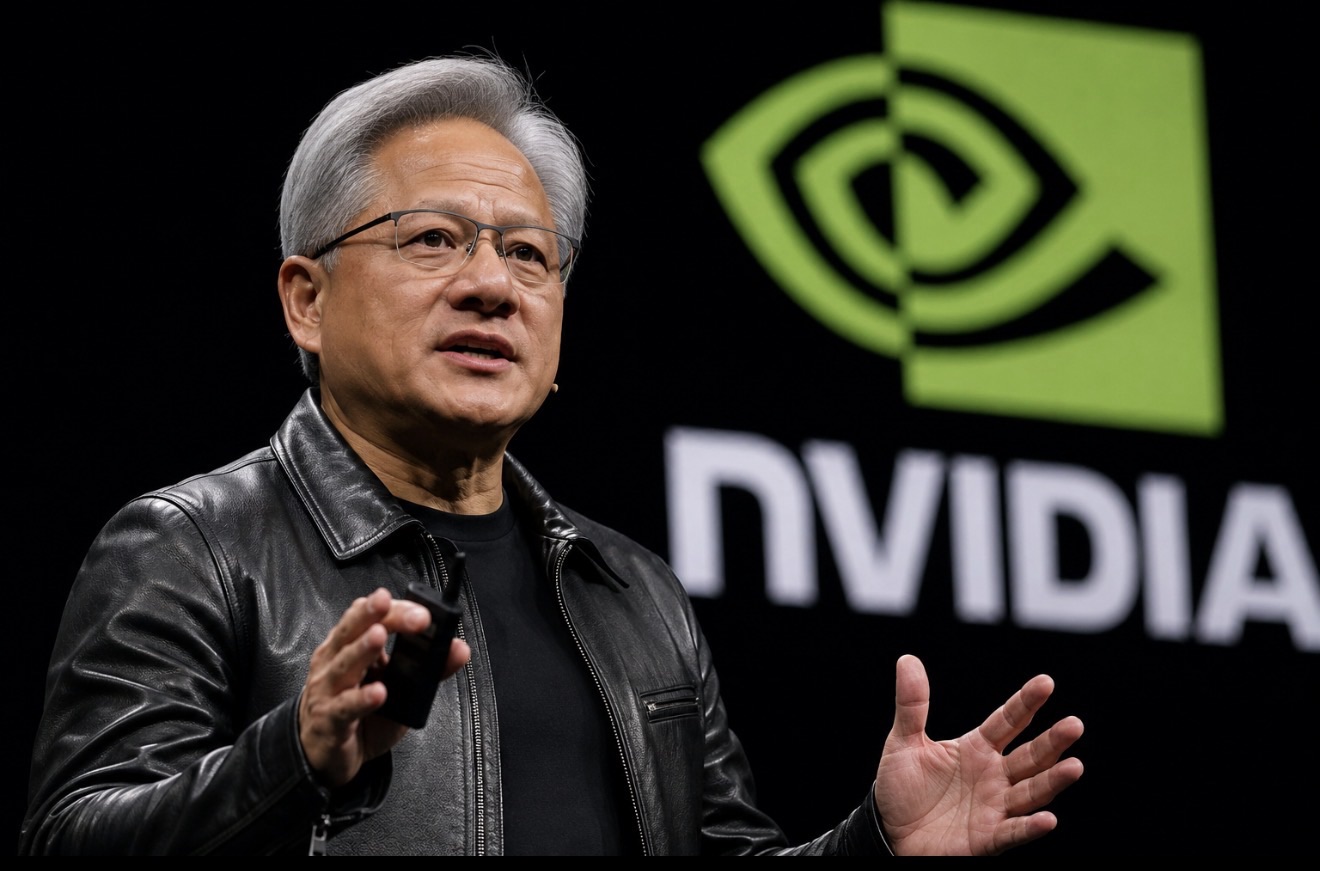
“The buildout of AI factories — the largest infrastructure expansion in human history — is accelerating at extraordinary speed,” said Jensen Huang, Nvidia’s founder and chief executive officer.
“Agentic AI has arrived, doing productive work, generating real value and scaling rapidly across companies and industries,” Huang added.
The results answered one of Wall Street’s biggest questions surrounding the AI trade: whether the enormous capital expenditures announced by major technology companies are fully translating into real revenue growth for Nvidia.
The answer appears to be yes.
Major cloud providers including Microsoft Corp., Amazon.com Inc., Alphabet Inc., and Meta Platforms Inc. are collectively expected to spend hundreds of billions of dollars on AI infrastructure, chips, networking, and data-center expansion over the coming years.
Wednesday’s report strongly suggested that spending wave is not slowing.
One particularly strong area inside the earnings report was Nvidia’s networking business.
Networking revenue surged to approximately $14.8 billion, significantly above analyst expectations, reflecting soaring demand for Nvidia’s NVLink systems and AI networking infrastructure used to connect massive GPU clusters powering generative AI systems.
The report also showed Nvidia increasingly evolving beyond simply selling chips.
Wall Street analysts have increasingly viewed Nvidia as an end-to-end AI infrastructure company supplying complete AI computing systems, networking fabrics, rack-scale architectures, and software ecosystems rather than only GPUs.
That broader positioning continues strengthening Nvidia’s competitive advantage across the AI industry.
The company’s commentary surrounding its upcoming Vera Rubin platform also drew major investor attention.
Huang has repeatedly emphasized that demand for Nvidia’s next-generation AI systems continues building rapidly as corporations, governments, and cloud providers race to expand AI capabilities.
At Nvidia’s GTC conference earlier this year, Huang projected combined demand across Nvidia’s Blackwell and Vera Rubin product cycles could eventually reach roughly $1 trillion over multiple years — one of the most aggressive infrastructure forecasts ever issued by a major technology executive.
China remained one of the few unresolved areas inside the report.
Nvidia continues facing restrictions tied to advanced AI-chip exports into China following U.S. government export controls, and the company said current guidance still assumes minimal contribution from the Chinese data-center market.
Any future loosening of export restrictions could provide additional upside beyond current forecasts.
Despite the strong report, Nvidia shares initially traded lower in after-hours trading before stabilizing as investors absorbed the guidance, buyback announcement, and margin outlook.
The temporary volatility reflected growing investor expectations surrounding Nvidia earnings after the company repeatedly exceeded Wall Street forecasts throughout the AI boom.
The broader implications extend far beyond Nvidia itself.
Suppliers including Taiwan Semiconductor Manufacturing Co., Micron Technology, SK Hynix, and Broadcom Inc. stand to benefit directly from continued AI infrastructure demand, while utilities, data-center developers, construction firms, fiber providers, and power-equipment companies are also increasingly tied to the AI expansion cycle.
The spending boom is also beginning to affect the broader labor market and real economy.
Construction of AI data centers across states including Texas, Virginia, and Arizona is driving demand for electricians, HVAC specialists, fiber installers, engineers, security personnel, and skilled construction workers as companies race to build the physical infrastructure required to support next-generation AI systems.
At the same time, rising power consumption tied to AI infrastructure is beginning to place additional strain on utility grids and long-term energy planning across multiple regions.
For investors, Wednesday’s earnings report reinforced the central market narrative driving much of the current technology rally: the global AI infrastructure cycle not only remains intact, but may still be accelerating.
The next major focus for Wall Street now shifts toward Nvidia’s conference call commentary surrounding production capacity, Blackwell rollout timing, enterprise AI demand, networking growth, and any potential developments tied to China export policy.
JBizNews Desk
© JBizNews.com. All rights reserved. This article is original reporting by JBizNews Desk. Unauthorized reproduction or redistribution is strictly prohibited.