
 JBizNews
International Students Face Collapsing Job Path as H-1B Fee, OPT Squeeze and Weak Hiring Converge
May 25, 2026 — A wave of new immigration barriers and a stalled entry-level hiring market are pushing tens of thousands of foreign graduates of U.S. universities toward the exits, with students, career counselors and labor-market data all pointing to the sharpest erosion of the post-graduation work pipeline in a generation.
The Federal Reserve Bank of New York reported on May 5 that the unemployment rate for recent college graduates ages 22 to 27 held at 5.6% through the first quarter of 2026 — well above the 3.1% rate for all college graduates and the 4.2% rate for all workers — as hiring across white-collar sectors continues slowing amid corporate cost-cutting, artificial-intelligence automation and mounting economic uncertainty.
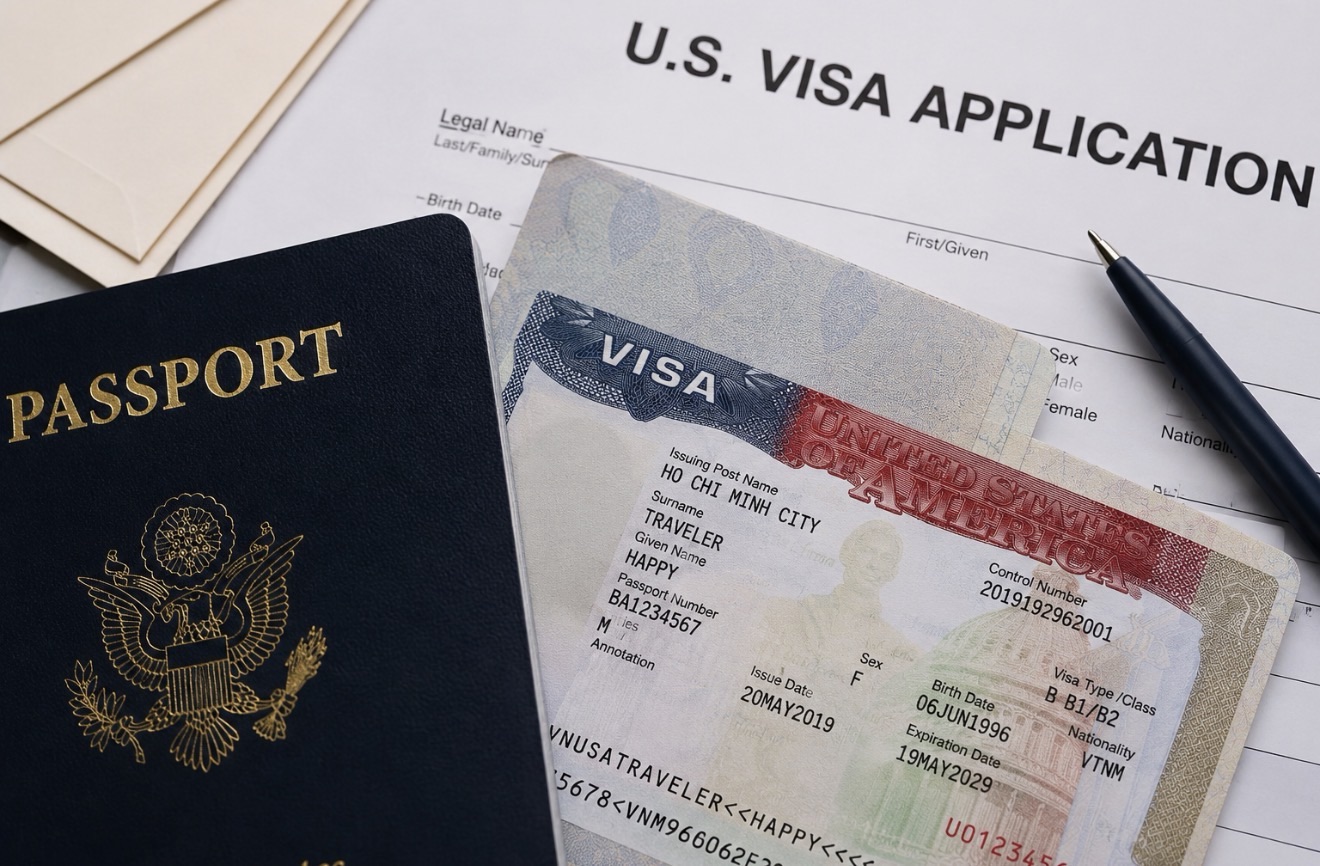
At the same time, a Trump administration proclamation signed September 19, 2025, imposing a $100,000 fee on new H-1B petitions filed from abroad has dramatically narrowed the work-visa runway international students traditionally relied on after graduation.
Together, the two forces are reshaping one of America’s most important talent pipelines.
Approximately 84,000 international students are projected to earn bachelor’s degrees from U.S. universities this spring, according to an Economic Innovation Group analysis of National Center for Education Statistics data. Layered on top are roughly 306,000 master’s candidates and 153,000 doctoral students counted in the latest Open Doors survey sponsored by the U.S. Department of State.
Most are graduating into what the New York Fed describes as a “low-hire, low-fire” labor market — one where companies are slowing recruitment, preserving cash and reducing entry-level openings even as layoffs moderate.
For international students, the slowdown is colliding with visa restrictions at exactly the worst moment.
Erica Ford, an international career development coach at Cornell University who advises roughly 300 foreign students annually, told CNBC that STEM graduates who previously expected multiple offers are now relieved to secure even one. Doctoral candidates are pivoting away from academic research toward industry roles as university funding tightens, while nonprofit employers once considered viable alternatives are shedding staff and freezing hiring.
The pressure is especially severe because international graduates operate under visa deadlines domestic students do not face.
President Donald Trump’s September H-1B overhaul fundamentally changed the economics of sponsorship. The proclamation requires employers to pay a $100,000 surcharge on new H-1B petitions filed for workers outside the United States while shifting the system toward a wage-weighted lottery that favors higher-paid applicants over the previous random selection process.
U.S. Citizenship and Immigration Services later clarified that the fee does not apply to F-1 students adjusting status from inside the country — a carve-out that has slightly improved odds for graduates already working under Optional Practical Training programs because fewer overseas applicants are entering the system.
But the relief is narrow.
The wage-weighted structure still favors senior-level, highly paid positions, leaving entry-level international graduates competing for a shrinking pool of sponsorship-capable employers. Reid Hoffman, the LinkedIn co-founder and venture investor, has publicly urged the administration to create lower-fee exemptions for startups, warning that the current structure effectively pushes high-skilled immigrants toward only the largest corporations capable of absorbing the cost.
Recruiters across startup, venture-backed and small-business sectors report hiring pipelines drying up almost immediately after the fee took effect.
The student experience increasingly reflects that collapse.
Sid Chakravarthy, a 21-year-old mathematics and economics graduate of Boston University raised in Dubai, told The New York Times he submitted more than 700 job applications, receiving automatic rejections for roughly the first 500 despite meeting qualifications for many of the roles. Sakshi Patel, who completed a master’s degree last year and is pursuing finance positions, described interview processes that abruptly stall once sponsorship requirements surface.
Career offices at major research universities report a sharp increase in international students simultaneously applying for jobs in Canada, the United Kingdom, Germany and Ireland — countries now aggressively marketing simpler post-study immigration pathways to graduates who once overwhelmingly prioritized the United States.
The enrollment numbers are already beginning to reflect the shift.
International graduate enrollment fell roughly 6% — nearly 10,000 students — during the autumn 2025 term, according to National Student Clearinghouse Research Center data released in January. It marked the first decline in three years after international graduate enrollment surged more than 50% between 2020 and 2024.
Meanwhile, the U.S. State Department issued 15% fewer student visas globally between October 2024 and March 2025. The sharpest decline came from India — historically the single largest source of U.S. graduate students — where visa issuance dropped 43.5%.
NAFSA: Association of International Educators now projects a meaningful contraction in the number of jobs created or supported by international students during the 2025-2026 academic year after the category peaked in 2023-2024.
Business groups, universities and immigration attorneys warn the broader consequences could extend well beyond campus enrollment.
For decades, international graduates have formed a critical talent base for American technology firms, research labs, financial institutions, healthcare systems and startup ecosystems. A growing combination of H-1B costs, visa uncertainty, security reviews, processing delays and weak entry-level hiring conditions now risks redirecting portions of that talent pipeline toward competing economies.
The administration argues the overhaul protects American workers, raises wage standards and prevents employers from undercutting domestic labor markets through lower-cost foreign hiring.
But critics warn the long-term effect may be to weaken one of America’s most successful competitive advantages: attracting and retaining global talent.
Eva Yao, founder of Colorado-based Flari Tech and herself a former H-1B visa holder, told CNBC she now advises foreign graduates to focus almost exclusively on large corporations with the financial scale to absorb the new fees and compliance costs — guidance that runs directly against decades of policy designed to encourage entrepreneurial immigration and startup formation.
For now, the path remains open.
But it is becoming narrower, slower, more expensive and significantly more selective than at any point in the post-1990 era.
And a generation of international graduates is beginning to recalibrate its future around that reality.
JBizNews Desk
© 2026 JBizNews. All Rights Reserved. Reproduction or distribution without written permission is prohibited.