
 JBizNews
Wall Street Set To Reopen Higher As Iran Diplomacy Lifts Futures Ahead Of PCE Inflation Data And Final Retail Earnings Wave
12:40am EST – By JBizNews Desk
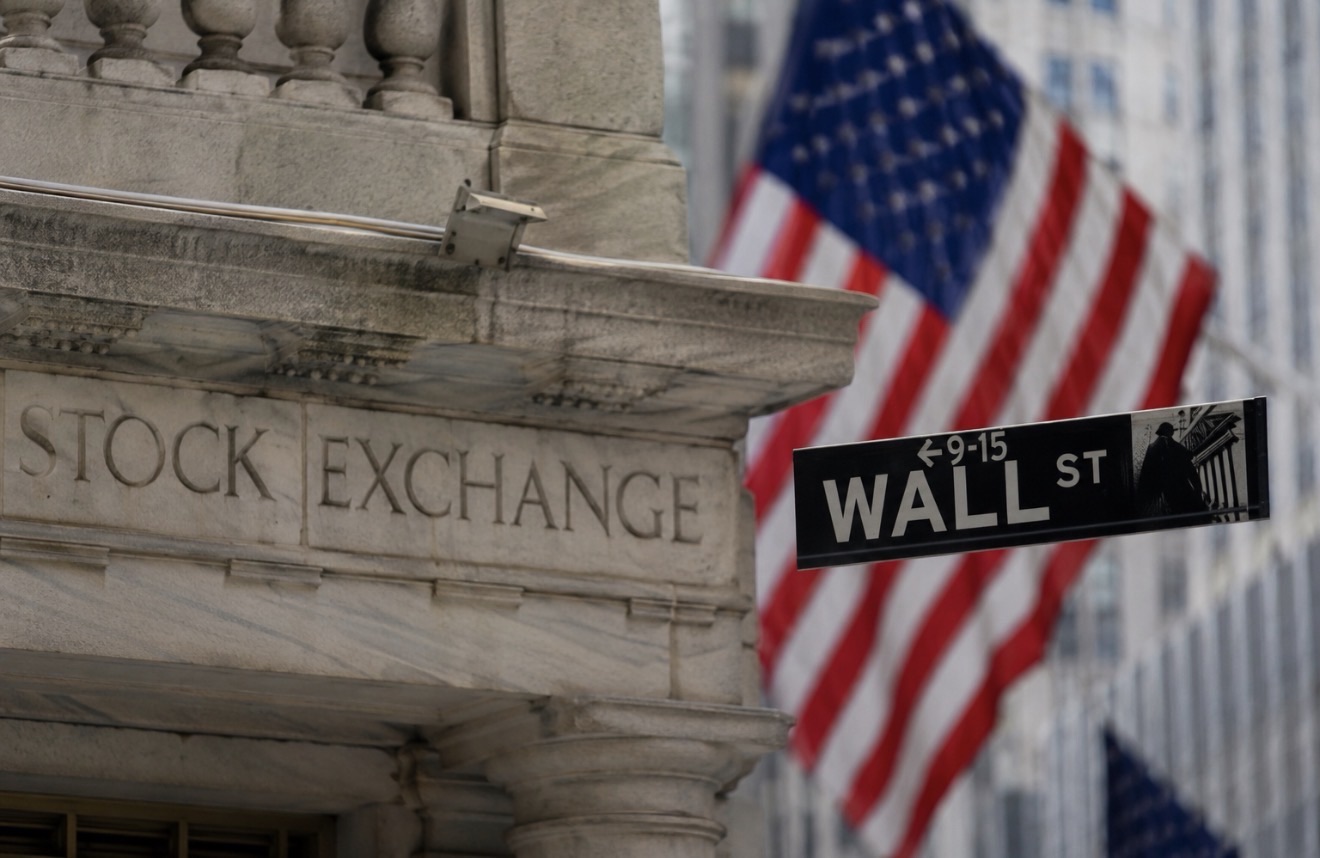
NEW YORK — U.S. equity futures traded firmly higher Monday night, May 25, 2026, signaling a strong open when Wall Street returns from the Memorial Day holiday Tuesday, as oil prices tumbled and President Donald Trump said talks with Iran to end the three-month war are “proceeding nicely.” Dow Jones Industrial Average futures jumped as much as 441 points earlier in the evening before settling up 0.6% as of 9:12 p.m. Eastern, while S&P 500 futures gained 0.6% and Nasdaq-100 futures climbed 0.8%, according to CME Group data. West Texas Intermediate crude dropped roughly 5%, slipping back below the psychologically critical $100-a-barrel threshold.
The opening bell rings at 9:30 a.m. Eastern Tuesday at both the New York Stock Exchange and Nasdaq, with Treasury markets also returning to full trading after the Memorial Day closure. Wall Street enters the shortened four-day week with momentum, but traders face one of the heaviest macro calendars of the quarter — a week packed with inflation data, GDP revisions, retail earnings, and a fragile geopolitical backdrop that continues to swing oil prices and bond yields almost daily.
President Donald Trump told reporters Monday that negotiations with Tehran were advancing while reiterating that the United States could “go on the offensive” if diplomacy collapsed. Iranian officials reportedly traveled to Qatar for consultations tied to a potential framework agreement. The market response was immediate: energy prices fell, Treasury yields eased, and futures rallied as investors increasingly priced in the possibility that the Strait of Hormuz could reopen in the coming weeks.
Oil remains the market’s central macro variable. Brent crude settled just above $100 a barrel Friday after briefly surging as high as $140 earlier this spring. JPMorgan analysts continue forecasting an average Brent price near $97 through the remainder of 2026 if shipping traffic through Hormuz resumes by early summer. AAA said this Memorial Day weekend marked the most expensive for U.S. drivers in four years, with national gasoline prices averaging $4.51 per gallon — up roughly 51% since the conflict began on February 28. Saudi Aramco CEO Amin Nasser warned earlier this month that full normalization of global oil flows may not occur until 2027 if disruptions persist.
Stocks nevertheless continue to push higher. The Dow Jones Industrial Average closed Friday at a record 50,285.66 after gaining nearly 300 points. The S&P 500 remains near 7,445 while the Russell 2000 has recently outperformed amid investor rotation into economically sensitive small-cap names. The Dow advanced 2.13% last week, the S&P 500 gained 0.88%, and the Nasdaq Composite rose 0.45%.
The defining event of the week arrives Thursday morning at 8:30 a.m. Eastern when the Bureau of Economic Analysis releases the April Personal Consumption Expenditures Index, the Federal Reserve’s preferred inflation gauge. The release also includes personal income, personal spending, the second estimate of first-quarter GDP, durable goods orders, and weekly jobless claims — creating one of the densest economic report windows of the year.
The PCE report takes on outsized importance after April’s hotter-than-expected Consumer Price Index rattled markets earlier this month and reignited concerns that inflation tied to energy and supply chains could remain sticky well into the second half of 2026. Investors are now watching whether inflation continues cooling or whether oil-driven price pressures force the Federal Reserve into a prolonged higher-for-longer stance.
The policy backdrop became even more consequential Friday when Kevin Warsh officially assumed the role of Federal Reserve Chair. Warsh is viewed as significantly more hawkish on inflation than his predecessor, and several Fed officials have recently signaled diminishing appetite for near-term rate cuts. Markets are now increasingly debating whether the Fed’s next move could eventually shift back toward tightening if inflation accelerates further.
Tuesday itself brings several notable releases, including the Conference Board Consumer Confidence Index at 10 a.m. Eastern, the Philadelphia Fed Non-Manufacturing Survey at 8:30 a.m., and the Dallas Fed Manufacturing Survey later in the morning. Wednesday adds new home sales and the Richmond Fed Survey of Manufacturing Activity, while Friday closes the week with the Chicago Purchasing Managers’ Index, trade data, and wholesale inventory figures.
The final major wave of earnings season also arrives this week. AutoZone headlines Tuesday’s calendar alongside reports from Box, Champion Homes, Semtech, Elbit Systems, and Modine Manufacturing. Wednesday brings the most closely watched session, featuring results from Salesforce, HP Inc., Marvell Technology, Snowflake, Synopsys, Agilent Technologies, Abercrombie & Fitch, Bath & Body Works, and DICK’S Sporting Goods. Thursday includes reports from Dell Technologies, Autodesk, Best Buy, and Burlington Stores.
Wall Street will pay especially close attention to Salesforce and Marvell Technology as gauges for the artificial intelligence economy. Investors increasingly want proof that enterprise software companies can generate sustainable monetization from AI products rather than simply rebranding existing offerings. Marvell, Synopsys, and HP are also expected to provide insight into AI infrastructure spending, semiconductor demand, and broader enterprise technology budgets following Nvidia’s closely watched earnings report last week.
Nvidia reported record quarterly revenue of $81.6 billion, up 85% year over year, driven primarily by explosive growth in its data-center division, which generated $75.2 billion in sales. Yet despite the strong numbers, the stock failed to spark the type of euphoric post-earnings rally that has defined much of the AI trade over the past two years — a sign that investor expectations remain extraordinarily elevated.
Elsewhere, speculative growth names also continued attracting attention Monday night. BlackBerry shares jumped more than 8% amid renewed enthusiasm around its QNX automotive platform. Quantum-computing company Infleqtion rose after follow-through buying tied to last week’s federal funding announcement, while AST SpaceMobile gained sharply on progress tied to direct-to-cell satellite deployment.
The market’s risks remain straightforward but substantial. Any breakdown in Iran negotiations — or another sudden escalation in the Strait of Hormuz — could rapidly reverse the current futures rally. Reuters reported last week that Iran’s supreme leader instructed negotiators to keep enriched uranium inside the country, a position that could complicate any final agreement with Washington.
For now, however, traders appear willing to extend the same thesis that has powered equities throughout May: that AI-driven earnings growth, easing geopolitical premiums, and eventually lower oil prices will outweigh inflation fears and keep risk assets climbing. Whether Thursday’s PCE data validates that narrative — or undermines it — may determine the direction of Wall Street for the remainder of the summer.
© 2026 JBizNews. All Rights Reserved. Reproduction or distribution without written permission is prohibited.