
 JBizNews
Taiwan Passes India to Become World’s 5th-Biggest Stock Market on TSMC AI Boom
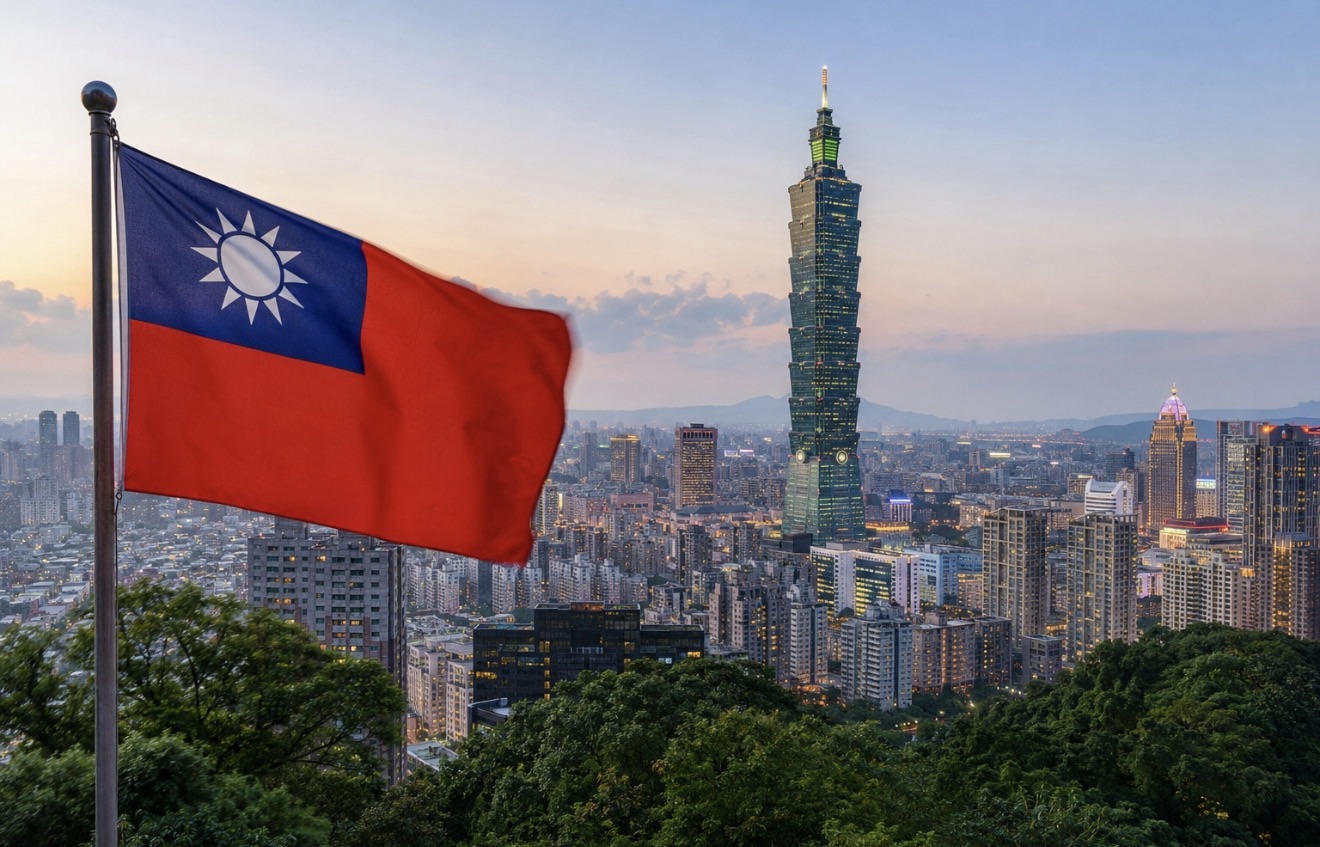
Taiwan has officially overtaken India to become the fifth-largest stock market in the world, a remarkable shift driven almost entirely by the global artificial intelligence boom and the explosive rise of semiconductor giant Taiwan Semiconductor Manufacturing Company (TSMC).
Bloomberg market data published Monday showed Taiwan’s total stock-market capitalization reached approximately $4.95 trillion, narrowly surpassing India’s $4.92 trillion. Taiwan’s benchmark TAIEX index climbed to a record 44,097 points Tuesday morning, cementing the island’s new position behind only the United States, China, Japan, and Hong Kong in global equity-market rankings.
The reversal is extraordinary given the scale difference between the two economies.
Taiwan has a population of roughly 23 million people and an economy worth under $1 trillion. India has approximately 1.4 billion people and an economy more than four times larger. Yet Taiwan’s market has surged ahead because of one company dominating the center of the AI economy.
TSMC alone now represents roughly 42% of Taiwan’s total stock market value.
The company’s shares have surged nearly 50% this year as investors continue pouring money into businesses tied to artificial intelligence infrastructure. TSMC manufactures the advanced semiconductors powering AI systems used by companies including Nvidia, Apple, Advanced Micro Devices, Broadcom, Qualcomm, Amazon, Microsoft, and Meta Platforms.
The company is widely estimated to produce roughly 90% of the world’s most advanced chips — semiconductors essential for AI data centers, cloud computing, smartphones, autonomous systems, and advanced defense technologies.
As global AI spending accelerates, demand for TSMC’s manufacturing capacity has exploded alongside it.
TSMC Chief Executive C.C. Wei has repeatedly said the company remains effectively sold out at the high end of production, with customer demand continuing to exceed available supply despite aggressive expansion efforts.
The company is currently building or expanding manufacturing facilities in Arizona, Japan, and Germany, backed by billions of dollars in incentives and industrial-support programs from governments eager to secure domestic semiconductor production.
Even so, the most advanced chips in the world continue to be produced overwhelmingly inside Taiwan itself.
Taiwan’s government has also actively supported the rally.
Last month, Taiwan’s Financial Supervisory Commission relaxed concentration rules for domestic mutual funds, allowing investment funds focused on Taiwanese equities to allocate up to 25% of assets into a single stock if that company represents more than 10% of the broader market.
At present, TSMC is the only company qualifying under the revised rules.
Analysts at JPMorgan Chase estimated the regulatory change alone could attract more than $6 billion in additional inflows into Taiwanese equities over the coming months, further strengthening demand for TSMC shares.
India, meanwhile, has moved in the opposite direction.
According to Bloomberg data, foreign investors have withdrawn roughly $24 billion from Indian equities so far this year amid slowing corporate earnings growth, weakness in the rupee, and the global rotation toward AI-linked investments concentrated in semiconductor-heavy markets like Taiwan and South Korea.
The reversal has been rapid. Just two years ago, India’s stock market was nearly three times the size of Taiwan’s.
TSMC itself is now valued at more than $1 trillion, placing it among the most valuable companies in the world and reinforcing how deeply the AI boom has concentrated market gains into a relatively small number of semiconductor leaders.
But Taiwan’s success also exposes its greatest vulnerability.
Because such a large share of the country’s stock market depends on one company and one industry, any slowdown in AI spending, production disruption, or geopolitical instability could trigger severe market volatility.
The geopolitical risk remains especially significant given tensions between Taiwan and China.
Beijing continues to claim Taiwan as part of its territory and has never ruled out the use of force to achieve reunification. Semiconductor security and U.S. support for Taiwan remained a major topic during recent meetings between President Donald Trump and Chinese President Xi Jinping earlier this month in Beijing.
Taiwanese officials have publicly welcomed the market milestone while also acknowledging the risks of excessive dependence on semiconductors.
Premier Cho Jung-tai has urged policymakers to accelerate investment in industries including electric vehicles, biotechnology, and green energy in an effort to broaden Taiwan’s economic base beyond chips.
Those diversification efforts, however, remain in relatively early stages.
For India, the loss of fifth place arrives at a politically difficult moment.
Prime Minister Narendra Modi’s government has aggressively promoted manufacturing expansion and semiconductor investment initiatives aimed at reducing reliance on imports and building a domestic chip ecosystem. But replicating Taiwan’s semiconductor infrastructure — built over four decades with deep engineering specialization and global supply-chain integration — remains enormously difficult.
India’s stock market still ranks among the world’s largest emerging-market exchanges, but momentum has increasingly shifted toward AI-linked economies and semiconductor-heavy markets tied directly to the global computing buildout.
TSMC shares are expected to resume trading Wednesday in Taipei following Tuesday’s record close.
For now, the rise of a single company has fundamentally reshaped global stock-market rankings — and transformed Taiwan into one of the central financial winners of the artificial intelligence era.
JBizNews Desk — Asia
© 2026 JBizNews. All Rights Reserved. Reproduction or distribution without written permission is prohibited.