
 JBizNews
US Banks Poised for Massive Growth as Deregulation Unlocks Trillions in Capacity
By JBizNews Desk
America’s biggest banks are about to get significantly more powerful — and consumers, businesses, and investors are likely to feel the effects quickly.
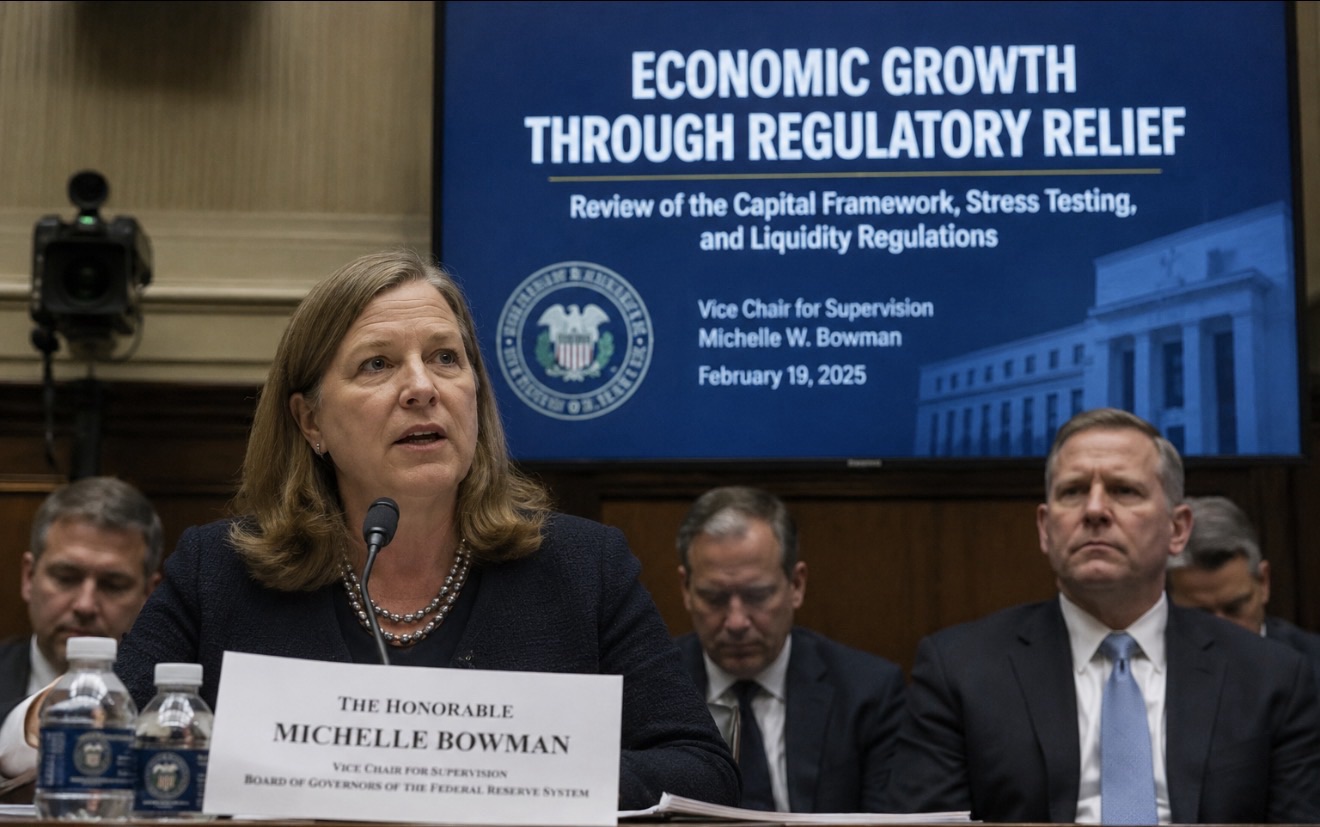
Federal Reserve Vice Chair for Supervision Michelle Bowman outlined the administration’s direction in a February 19 speech at the Federal Reserve Bank of Atlanta and in congressional testimony the following week: Washington is rolling back a series of post-2008 banking rules that have constrained lending capacity for more than a decade.
According to consulting firm Alvarez & Marsal, the changes could ultimately unlock roughly $2.6 trillion in additional lending capacity across the U.S. banking system — capital that has largely remained trapped on bank balance sheets since the global financial crisis.
The figure is enormous. It exceeds the annual economic output of many developed nations and represents one of the largest structural shifts in American banking policy since the aftermath of 2008.
The core of the deregulation effort centers around changes to the supplementary leverage ratio, one of the key post-crisis rules requiring large banks to maintain sizable capital cushions against potential losses. The Federal Reserve, the Office of the Comptroller of the Currency, and the Federal Deposit Insurance Corporation finalized a looser version of the framework late last year.
Alvarez & Marsal estimates the immediate impact alone could free approximately $140 billion in deployable capital at the eight largest U.S. banks. Additional revisions targeting stress-testing procedures, mortgage regulations, and portions of the broader Basel III banking framework are expected to follow.
The banking industry has openly welcomed the shift.
JPMorgan Chase Chief Executive Jamie Dimon, whose bank now holds roughly $4.42 trillion in assets, has argued for years that U.S. regulators overcorrected after the financial crisis and placed American lenders at a competitive disadvantage versus European and Asian rivals.
Goldman Sachs Chief Executive David Solomon publicly praised Bowman’s appointment last year, while Bank of America Chief Executive Brian Moynihan described the regulatory pivot as a meaningful boost for bank profitability and lending flexibility.
The question now is where the money goes.
A significant portion is expected to flow directly into artificial intelligence infrastructure. Until now, large banks have largely watched from the sidelines as private credit firms financed the rapid buildout of AI data centers, semiconductor facilities, cloud infrastructure, and energy projects tied to companies such as Microsoft, Amazon, Alphabet, Meta Platforms, and Nvidia-linked suppliers.
With more balance-sheet flexibility, major banks are now positioning themselves to finance billions of dollars in new AI-related infrastructure projects.
Mortgage lending is another major target.
Speaking at the American Bankers Association community banking conference in Orlando earlier this year, Bowman previewed regulatory adjustments designed to make mortgage origination and servicing less expensive for traditional banks.
For years, many banks gradually retreated from the mortgage business as compliance burdens increased, allowing nonbank lenders to capture significant market share. Regulators now appear eager to reverse that trend in hopes of increasing credit availability for homebuyers.
The broader small-business economy could also benefit. Mid-sized manufacturers, regional businesses, and acquisition financing markets are expected to see expanded access to traditional bank credit after years in which private credit funds increasingly filled the gap.
The rise of private credit itself became one of the clearest signs that post-crisis banking rules had fundamentally reshaped corporate finance.
Critics, however, warn that the rollback carries real risks.
Former Federal Reserve Vice Chair for Supervision Michael Barr, who previously held Bowman’s role, has argued that weaker capital standards could leave the banking system more vulnerable during future periods of stress. Critics point to the collapses of Silicon Valley Bank, Signature Bank, and First Republic Bank in 2023 as evidence that banking instability remains a genuine threat even after years of reform.
Bowman has rejected that argument, contending that U.S. banks remain substantially better capitalized than they were before the 2008 crisis and that excessive regulation has become a greater threat to growth than bank fragility itself.
The Trump administration has aligned closely with that view.
Treasury Secretary Scott Bessent has framed the banking-rule rollback as part of a broader strategy to stimulate economic growth without relying entirely on Federal Reserve rate cuts. The logic is straightforward: if banks lend more aggressively, economic activity accelerates without requiring monetary policy alone to support growth.
Wall Street is already responding.
Bank stocks have broadly outperformed the wider market since Bowman assumed the Fed supervision role last June. The Financial Select Sector SPDR Fund and the SPDR S&P Bank ETF have both gained faster than the S&P 500 over the past year as investors anticipate larger dividends, expanded share buybacks, and stronger lending growth.
International regulators are now watching closely as well. European and Asian policymakers face increasing pressure to determine whether they should follow Washington’s lead or risk placing their own financial institutions at a competitive disadvantage globally.
For everyday Americans, the implications are increasingly direct.
The nation’s largest banks are about to have significantly more money available for mortgages, business loans, infrastructure financing, and corporate expansion. That could support economic growth, improve credit availability, and accelerate investment across sectors ranging from housing to artificial intelligence.
It could also mean operating with thinner safety margins than the system maintained during much of the post-2008 era.
Whether that trade-off ultimately strengthens the economy or creates new long-term financial vulnerabilities may define the next chapter of American banking.
© 2026 JBizNews. All Rights Reserved. Reproduction or distribution without written permission is prohibited.