
 JBizNews
Warsh’s Push for Fed ‘Regime Change’ Will Need Patience, Consensus to Succeed
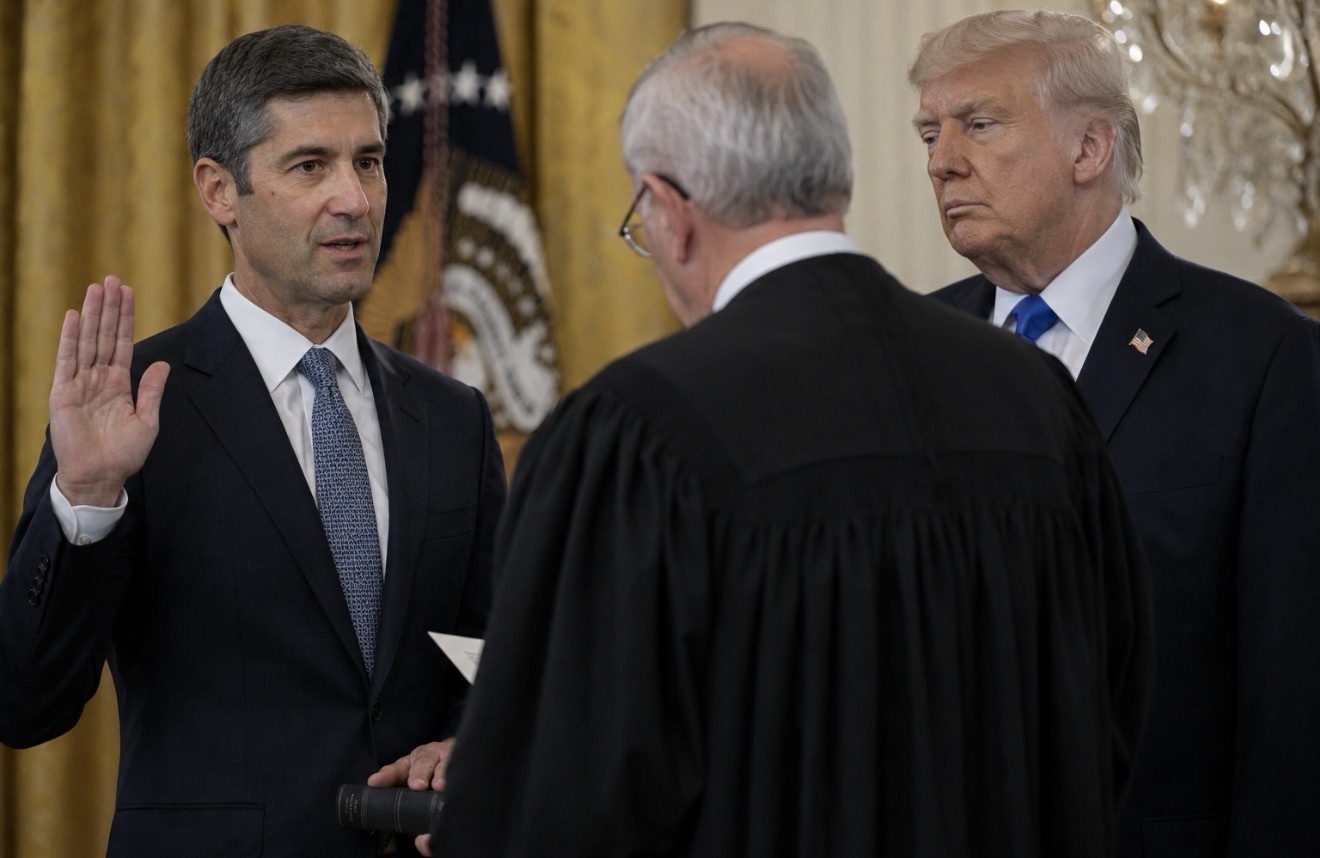
Kevin Warsh, sworn in by President Donald Trump at the White House on Friday, May 22, 2026, as the new chair of the Federal Reserve, has openly vowed to bring “regime change” to the central bank. In speeches and interviews leading up to his confirmation, Warsh has called for shrinking the Fed’s $6.7 trillion balance sheet, removing forward guidance from Fed communications, encouraging more open dissent at policy meetings — what he has called “a good family fight” — and changing the data the Fed bases its decisions on. He blames “policy errors” by the Fed in 2021 and 2022 for the high inflation that followed.
The ambition is enormous. The catch, according to former Fed officials, ex-staffers, and central bank watchers interviewed over the weekend, is that Warsh cannot deliver any of this on his own. The Federal Reserve is a consensus-driven institution. On every major decision — interest rates, balance sheet policy, regulatory rules, communications frameworks — Warsh will need the backing of the Federal Open Market Committee, the 12-member body that includes the seven Fed governors and five voting reserve bank presidents.
“One of his primary things he’s going to be doing is presumably trying to build a consensus, when appropriate, to lower interest rates,” said Jon Faust, who previously worked as an adviser to former chairs Jerome Powell, Janet Yellen, and Ben Bernanke. The challenge for Warsh is that the rest of the FOMC does not necessarily share his views on either the magnitude or the urgency of the changes he wants.
Randall Kroszner, who served alongside Warsh as a Fed governor from 2006 to 2009 and now teaches at the University of Chicago, said the new chair’s power lies in persuasion rather than direct authority. “The chair has the power to persuade. And they’re in a very strong position to be able to persuade. But they still need to persuade.” Kroszner described Warsh as a “long-run strategic thinker” who “wants to bring people along” and added that he “understands that to get things done, you need to build a consensus around things.”
The most pivotal decisions — interest rates and the balance sheet — require FOMC votes. Warsh can chair the meetings, set the agenda, and shape the discussion, but he gets one vote like every other member. Jerome Powell, notably, is planning to remain on the Fed board even after his term as chair expired May 15. The Justice Department launched a controversial criminal probe into Powell earlier this year, then withdrew it. Powell’s decision to stay on the board means Warsh will sit across the table from his predecessor at every meeting — a dynamic with little precedent in modern Fed history.
The FOMC has historically functioned as a deliberative body where political considerations are explicitly left at the door. “I was going to FOMC meetings when Alan Greenspan was chair, so that’s a long time. Politics never enters that room,” said Loretta Mester, the former Cleveland Fed president. That tradition will be tested as Warsh navigates between Trump’s demands for lower rates and the committee’s independent assessment of an economy facing both elevated inflation from the U.S.-Iran war and slowing growth from tighter credit conditions.
There are areas where Warsh has clear unilateral authority. As Fed chair, he can choose how frequently he holds press conferences, how often he speaks publicly, and what he says. He sets the tone for Fed communications strategy. He chairs FOMC meetings and can change how they are structured. He represents the Fed publicly with Congress, foreign central banks, and global markets. None of those areas require committee approval.
But on bigger structural questions — like whether to eliminate or scale back the quarterly Summary of Economic Projections, the Fed communications tool that publishes policymakers’ forecasts for growth, unemployment, and inflation, or the “dot plot” showing officials’ projections for the federal funds rate — even an aggressive chair traditionally seeks broad input first. David Wilcox, former head of the Fed’s Division of Research and Statistics and now at Bloomberg Economics, recalled that when Ben Bernanke introduced the SEPs in 2007, “there was absolutely nobody on the committee who could say their views hadn’t been heard and carefully considered.”
If Warsh chooses to push through major changes without broad support, former Fed staffers warn he could find himself isolated when he most needs allies. Claudia Sahm, the former Fed economist behind the widely watched Sahm Rule recession indicator, said Warsh “should know better” than to push too hard against consensus. “When I disagree with him on a lot of things, I don’t think he is an agent of chaos,” Sahm said. “I think he wants the Fed to innovate and improve and do policy well. That should lead him to meet the committee where they are, and try to shift things gradually.”
The political pressure on Warsh is substantial. Trump repeatedly attacked Powell during his second term, publicly nicknaming him “Too Late” and threatening to fire him over the Fed’s reluctance to cut rates. At Friday’s swearing-in ceremony, Trump said directly: “I want Kevin to be totally independent. Don’t look at me, don’t look at anybody.” The fact that the ceremony was held at the White House at all — the first time a Fed chair has been sworn in there since Greenspan in 1987 — has raised bipartisan concerns about executive influence over the historically independent central bank.
Warsh’s real “regime change” may ultimately happen in less visible parts of the Fed. Loretta Mester noted that the central bank has struggled for years to clearly explain when it uses asset purchases to support markets versus when it uses them for broader monetary policy purposes. “The Fed hasn’t done a very good job, I think, over time of distinguishing and explaining when it’s using asset purchases for a monetary policy reason,” she said. Warsh could reshape expectations that the Fed will always step in whenever markets wobble — a belief that has defined Wall Street behavior since the financial crisis.
He has also expressed support for deregulatory efforts led by Fed Vice Chair for Supervision Michelle Bowman, including revisions to bank reserve rules and liquidity treatment during periods of stress. Dallas Fed President Lorie Logan recently praised those efforts publicly, suggesting Warsh may have more room to move on regulatory “plumbing” than on headline interest-rate decisions.
For markets, the immediate signal is patience. Most analysts expect the Fed to keep rates steady over the next several months while Warsh builds support within the committee. The federal funds rate currently sits between 3.5% and 3.75%, where it has remained since the Fed’s late-2025 rate cut. Trump’s push for aggressive reductions collides with the reality that inflation expectations are still climbing — the University of Michigan’s May survey showed year-ahead inflation expectations rising to 4.8%, with long-run expectations at 3.9% — while energy prices remain elevated because of the Iran conflict.
Cutting rates aggressively into that environment risks reigniting the same inflation cycle Warsh has spent years criticizing.
For consumers and businesses, the practical message is straightforward. Mortgage rates, auto loans, credit cards, small business lending costs, and savings account yields are unlikely to change dramatically through the summer. Any economic relief tied to lower Fed rates will almost certainly arrive slower than the White House hopes.
The early signs suggest Warsh understands this institutional reality. David Wessel, senior fellow at the Brookings Institution, said Warsh has “outlined a wide-ranging agenda” but cautioned that observers should “watch what he does, not what he has said.” Wessel added that Warsh “will not simply be able to impose his will on the central bank, and will have to work with his fellow policymakers.”
For investors, banks, businesses, and homeowners, the takeaway is important but measured. Warsh brings a different philosophy, communication style, and set of priorities than Powell. But the institution he now leads is designed to move slowly and deliberately.
Real “regime change” at the Federal Reserve does not happen in a quarter. It happens over years.
If Warsh builds credibility gradually, persuades colleagues carefully, and saves political capital for the moments that matter most, he could leave the Fed meaningfully changed by the end of his term. If he moves too quickly, he risks becoming isolated inside the very institution he wants to reform.
The next 90 days will tell Wall Street which path he chooses.
— JBizNews Desk
© 2026 JBizNews. All Rights Reserved. Reproduction or distribution without written permission is prohibited.