
 Vos Iz Neias
National Security Expert Slams Israel’s Lebanon Policy: ‘Iran Decides When There’ll Be Ceasefire?’
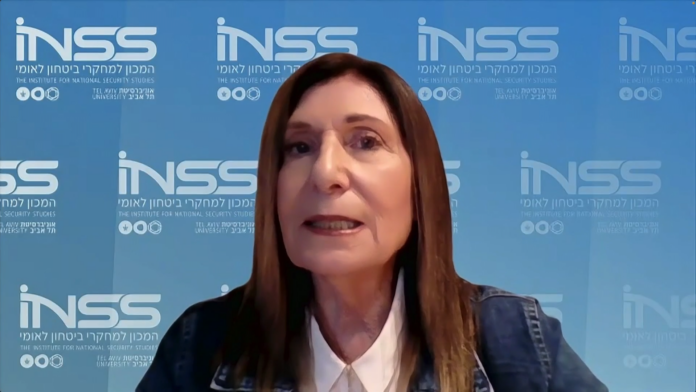
JERUSALEM (VINnews) — Sima Shine, head of the Iran and Shiite Axis Program at Israel’s Institute for National Security Studies (INSS), addressed the security tensions and negotiations over a possible agreement with Iran in an interview with the radio program “Seven to Nine”, hosted by Gideon Oko and Amichai Atali.
During the conversation, Shine, a former Mossad section director and Deputy Head of Strategic Affairs in Israel’s National Security Council, sharply criticized the handling of the northern front and warned about the dramatic implications of a potential nuclear agreement led by U.S. President Donald Trump.
According to Shine, the situation that has developed in northern Israel is incomprehensible. “The situation in which we are told there is a ceasefire in the north, yet every day there are casualties, is simply extraordinary,” she said. “The fact that Iran decides whether there will be a ceasefire in Lebanon is an event of exceptional magnitude, both for Israel and for the Lebanese government.”
Regarding American involvement, Shine added: “We reached a point where the Americans agreed to link the arenas together. Clearly the Iranians demanded this. The Iranians do not want to return to war, so they are not going to completely break with the Americans over something in Lebanon, and this should have been understood from the start. Once a ceasefire was decided upon, it should have been complete. It is unacceptable that Hezbollah continues to strike while we are prevented from acting.”
When asked about the emerging framework for an agreement with Iran, Shine emphasized that one issue above all worries her: “What concerns me is only the nuclear issue. Everything else is less important. As Israelis, we need to focus only on the nuclear issue. When I hear Trump speaking, I ask myself whether he fully understands the significance, and whether he understands that twenty percent enrichment is effectively like sixty percent, because within two weeks it can become sixty and then ninety.”
The hosts challenged Shine on whether Iran’s regime can be trusted at all. She replied: “Under the 2015 agreement, for the two and a half years until Trump withdrew from it, the Iranians complied with all the terms of the deal. They did so because it was in their interest to receive money and investments. They are not good people — they are very bad people — but they acted out of self-interest. Today there has been a dramatic erosion in their trust in the United States and Israel.”
Shine also warned about gaps in the management of negotiations with the Americans. “The Iranians are far more experienced in negotiations than Trump’s people,” she stated. “These are the same people who conducted negotiations in the past, and they have years of experience. Still, it would not be difficult for the United States to assemble a knowledgeable team if it chose to do so.”
When asked whether Israel could strike Iran after Trump signs an agreement with Tehran, Shine was unequivocal: “The answer is no. Israel will not be able to attack, because one of the first clauses already made public is that there will be mutual guarantees. The United States and its allies will not attack Iran, and Iran will not attack them. There are still many obstacles ahead, even though both sides want an agreement and do not want to return to war, but it is difficult to say the path is clear.”
Regarding the military option to prevent Iran from becoming nuclear-capable, she concluded: “There is an option, but whether I see it as realistic, that is another question.”