
 JBizNews
Anthropic, Microsoft in Talks to Put Claude on Maia 200 Chips Six Months After $5 Billion Investment
By JBizNews Desk
NEW YORK — May 24, 2026
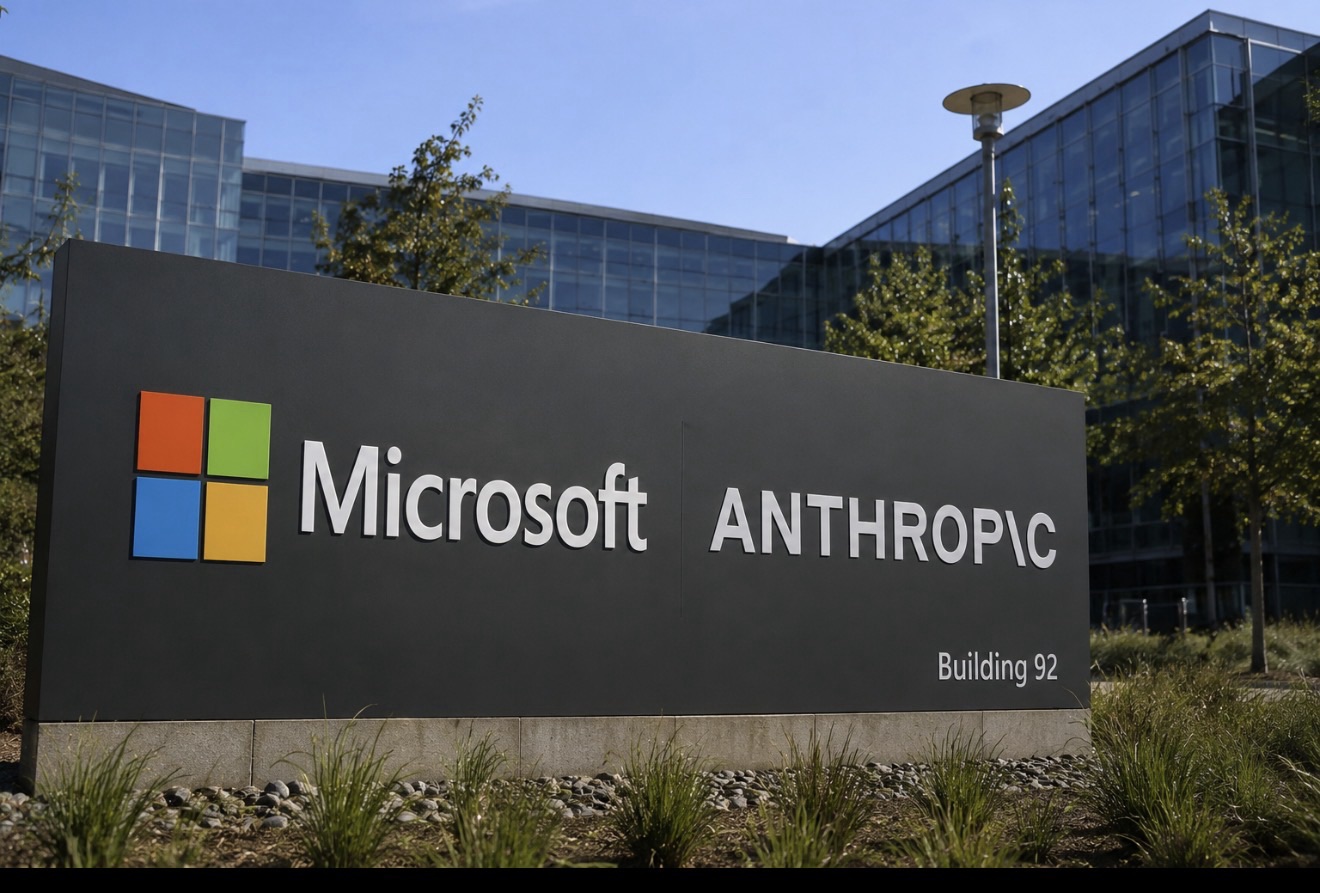
Anthropic is in early discussions with Microsoft Corp. to run its Claude artificial intelligence models on Microsoft’s proprietary Maia 200 AI chips, a move that would transform a financial partnership into a direct infrastructure alliance and give Microsoft its first major external customer for its in-house silicon platform.
The talks, first reported Thursday by The Information and later confirmed by CNBC through a person familiar with the matter, remain preliminary and no agreement has been finalized. Anthropic declined to comment publicly, while Microsoft did not issue a statement. Microsoft shares traded little changed Thursday.
The negotiations arrive just six months after Microsoft committed up to $5 billion to Anthropic in a strategic funding arrangement that also included a separate $10 billion investment commitment from Nvidia Corp., valuing the AI startup near $350 billion.
As part of that deal, Anthropic agreed to spend approximately $30 billion on Microsoft’s Azure cloud infrastructure over time, while continuing to maintain major compute relationships with Amazon Web Services and Google Cloud.
At the center of the discussions is Microsoft’s Maia 200, the company’s newest custom AI processor unveiled earlier this year. Built on Taiwan Semiconductor Manufacturing Co.’s advanced 3-nanometer process, Maia 200 is optimized primarily for AI inference — the process of generating responses from already-trained models — rather than for large-scale training.
Microsoft Chairman and CEO Satya Nadella told investors during the company’s April earnings call that Maia 200 delivers more than 30% better tokens-per-dollar economics compared with leading chips currently deployed inside Microsoft’s infrastructure fleet. The company has already confirmed the chip powers portions of its Copilot ecosystem and will support OpenAI’s GPT-5.2 deployments.
Until now, however, Maia 200 has largely remained an internal Microsoft product.
A deal with Anthropic would mark the first significant use of Microsoft’s custom silicon by an outside frontier AI lab, placing Azure more directly into competition with Amazon’s Trainium platform and Google’s Tensor Processing Units, both of which already serve external AI developers.
For Anthropic, the motivation is straightforward: compute demand.
Usage of Claude and Anthropic’s fast-growing Claude Code developer tools has surged throughout 2026, forcing the company into a global race for processing capacity across multiple cloud and hardware providers.
In April, Anthropic signed a massive 10-year infrastructure arrangement with AWS reportedly worth more than $100 billion centered around Amazon’s Trainium chips. The company also expanded TPU commitments with Google last year, while continuing to rely heavily on Nvidia GPUs for both training and deployment workloads.
Earlier this week, SpaceX disclosed that Anthropic will pay approximately $1.25 billion per month through 2029 for compute infrastructure tied to Elon Musk’s expanding AI data-center network.
Against that backdrop, Maia 200 would likely serve as a dedicated inference engine rather than a training system.
That distinction matters financially.
Training frontier AI models remains dominated by Nvidia’s Hopper and Blackwell architectures along with Google’s TPU systems. But inference — the actual day-to-day generation of responses for users — increasingly represents the largest operating expense for AI labs at scale.
Every Claude API call, enterprise integration, coding request and chatbot response consumes inference capacity.
Reducing the cost of those workloads by even modest percentages could materially improve Anthropic’s gross margins as usage accelerates globally.
For Microsoft, the strategic importance is potentially even greater.
Azure has spent years trying to close the gap with AWS and Google in proprietary AI silicon, while simultaneously attempting to reduce dependence on Nvidia’s expensive GPU supply chain.
If Anthropic adopts Maia 200 meaningfully, Microsoft would gain a marquee external validation of its chip economics and demonstrate that Azure can compete not just as a cloud reseller of Nvidia hardware, but as a vertically integrated AI infrastructure platform.
The talks also deepen the increasingly complicated relationships among Microsoft, OpenAI and Anthropic.
Microsoft remains OpenAI’s largest strategic partner and investor, with roughly $13 billion committed to the ChatGPT creator. Yet over the past year Microsoft has simultaneously expanded ties with Anthropic, integrating Claude models into portions of its enterprise software stack, including Office and Copilot workflows.
A Maia 200 compute partnership would further solidify that relationship.
Industry executives also believe Anthropic could seek influence over future Maia chip designs if an agreement progresses — similar to the collaborative design relationships Anthropic already maintains with Amazon on Trainium and Nvidia on next-generation AI systems.
That type of long-term co-design arrangement would make Anthropic not merely a Microsoft customer, but a strategic infrastructure partner.
The broader significance extends beyond the two companies themselves.
The AI infrastructure landscape is increasingly evolving into a tightly interconnected system where hyperscalers, chipmakers and frontier AI labs simultaneously act as investors, suppliers, customers and competitors.
Anthropic now buys infrastructure from nearly every major player in the ecosystem: AWS, Google Cloud, Nvidia, CoreWeave, SpaceX and potentially Microsoft’s Maia platform.
OpenAI has followed a similar path across Microsoft, Oracle, Nvidia and AWS.
For investors, Thursday’s market reaction remained relatively muted because negotiations remain early-stage and no commercial agreement has yet been signed.
But the underlying signal is larger than one deal.
Microsoft is moving its custom AI silicon strategy from internal experimentation toward commercialization, while Anthropic’s willingness to test Maia 200 suggests growing confidence that alternative chips can meaningfully compete with Nvidia in high-volume inference workloads.
If the partnership materializes, the AI infrastructure race shifts another step away from Nvidia’s near-monopoly dominance and toward a more fragmented, full-stack competition among the world’s largest cloud providers.
Whether the talks ultimately result in a finalized agreement remains uncertain.
But six months after Microsoft wrote a $5 billion check into Anthropic, the relationship is clearly evolving beyond capital — and increasingly into the hardware foundation powering the next generation of artificial intelligence itself.
© 2026 JBizNews. All Rights Reserved. Reproduction or distribution without written permission is prohibited.