
 JBizNews
States Flex Antitrust Muscle After Live Nation Win, Eye Nexstar and Paramount Deals
By JBizNews Desk
A bipartisan coalition of state attorneys general is rapidly emerging as one of the most aggressive forces in American antitrust enforcement, moving to challenge major media and entertainment consolidation efforts as the Trump administration’s Justice Department scales back several high-profile merger fights.
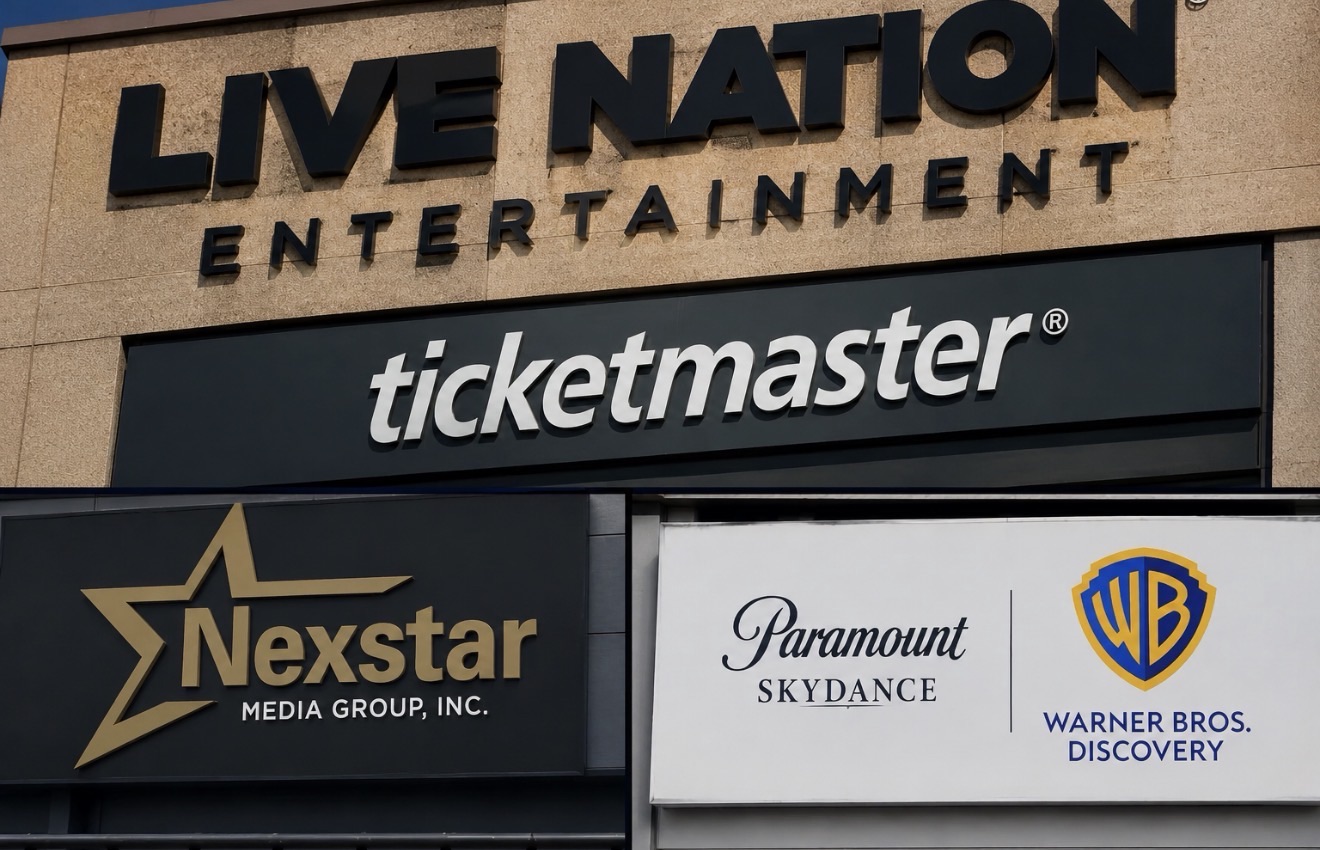
The shift accelerated after a landmark April 15 jury verdict in the U.S. District Court for the Southern District of New York, where 33 states and the District of Columbia defeated Live Nation Entertainment and its Ticketmaster subsidiary on monopolization claims after the Department of Justice settled mid-trial without securing a breakup of the company.
The verdict is now reshaping expectations across Wall Street, corporate boardrooms, and the media industry.
California Attorney General Rob Bonta and New York Attorney General Letitia James led the coalition that refused to accept the DOJ settlement and instead pressed forward independently. The jury ultimately found that Live Nation unlawfully monopolized primary ticketing and amphitheater services while also illegally tying amphitheater access to concert promotion contracts.
Pennsylvania Attorney General Dave Sunday, a Republican, criticized the federal settlement as inadequate, saying it “falls far short of protecting consumers.” North Carolina Attorney General Jeff Jackson, a Democrat, called the DOJ’s approach “barely a slap on the wrist.”
The bipartisan push marked a significant moment in the balance of antitrust power between Washington and the states.
The remedies phase in the Live Nation case is still ongoing, with states seeking broad structural relief that could ultimately include a forced divestiture of Ticketmaster — a remedy federal officials declined to pursue. Live Nation Chief Executive Michael Rapino has repeatedly defended the company’s business model as procompetitive and consumer-friendly, but the jury rejected those arguments across the central claims presented at trial.
Attention is now shifting toward two major pending media transactions that state officials appear increasingly willing to challenge independently.
On April 17, Chief Judge Troy L. Nunley of the U.S. District Court for the Eastern District of California granted a preliminary injunction blocking further integration between Nexstar Media Group and Tegna, siding with an eight-state coalition led by California and New York.
The states argued the combination would substantially reduce competition across more than 30 local television markets and raise retransmission fees ultimately passed on to cable and satellite customers. Under the ruling, Nexstar must continue operating Tegna as an independent company pending final judgment.
Nexstar Chief Executive Perry Sook has argued the merger is necessary to compete against streaming giants and digital advertising platforms, but state enforcers contend the concentration in local broadcasting markets remains too severe.
The next major flashpoint may become the proposed Paramount Skydance Corporation acquisition of Warner Bros. Discovery, announced February 27 in a transaction valued at roughly $110 billion including debt.
Although the deal cleared the federal Hart-Scott-Rodino waiting period earlier this year, several attorneys general have signaled privately and publicly that federal clearance may no longer guarantee completion.
The transaction, backed by David Ellison and the Ellison family investor consortium, is being framed by executives as a necessary scale response to streaming competition from Netflix, Amazon, Disney, and YouTube. Paramount Chief Legal Officer Makan Delrahim, himself a former Trump-era DOJ antitrust chief, has defended the merger as procompetitive.
But after the Live Nation verdict, corporate advisers increasingly fear states could adopt the same litigation strategy against large media combinations even when federal regulators step aside.
The broader concern for corporate America is that states are no longer merely supplementing federal antitrust enforcement — they are increasingly replacing it.
Several consumer advocacy organizations and former enforcement officials have criticized the Trump administration’s merger posture, arguing that behavioral settlements and negotiated conduct remedies have replaced structural breakups that historically defined major antitrust cases.
The Live Nation case crystallized those frustrations and emboldened states to assert authority under both federal and state competition laws.
At the same time, states are building new procedural tools to expand oversight. California, Washington, and Colorado have already enacted state-level “mini-HSR” laws requiring merger notifications at the state level, while similar legislation is advancing in multiple additional states. The measures effectively create a second layer of merger review beyond Washington, significantly increasing regulatory complexity and closing risk for large transactions.
Markets are already reacting to the new environment.
Shares of Nexstar have underperformed since the California injunction, while merger arbitrage spreads tied to the Paramount-Warner Bros. Discovery transaction have widened amid growing uncertainty over potential state litigation. Live Nation shares also remain under pressure as investors wait to see whether courts ultimately order structural remedies involving Ticketmaster.
For corporate executives, private equity firms, and investment bankers, the lesson from the past several months is becoming increasingly clear: federal approval alone may no longer be enough to close transformative mergers in the United States.
State attorneys general — operating with growing legal sophistication, bipartisan political cover, and increasingly favorable court precedents — are now prepared to litigate national-scale antitrust battles on their own.
© 2026 JBizNews. All Rights Reserved. Reproduction or distribution without written permission is prohibited.