
 JBizNews
Belgium’s Mohel Prosecution Echoes Europe’s Darkest Chapters — and the Economic Fallout Could Be Real
By JBizNews Desk
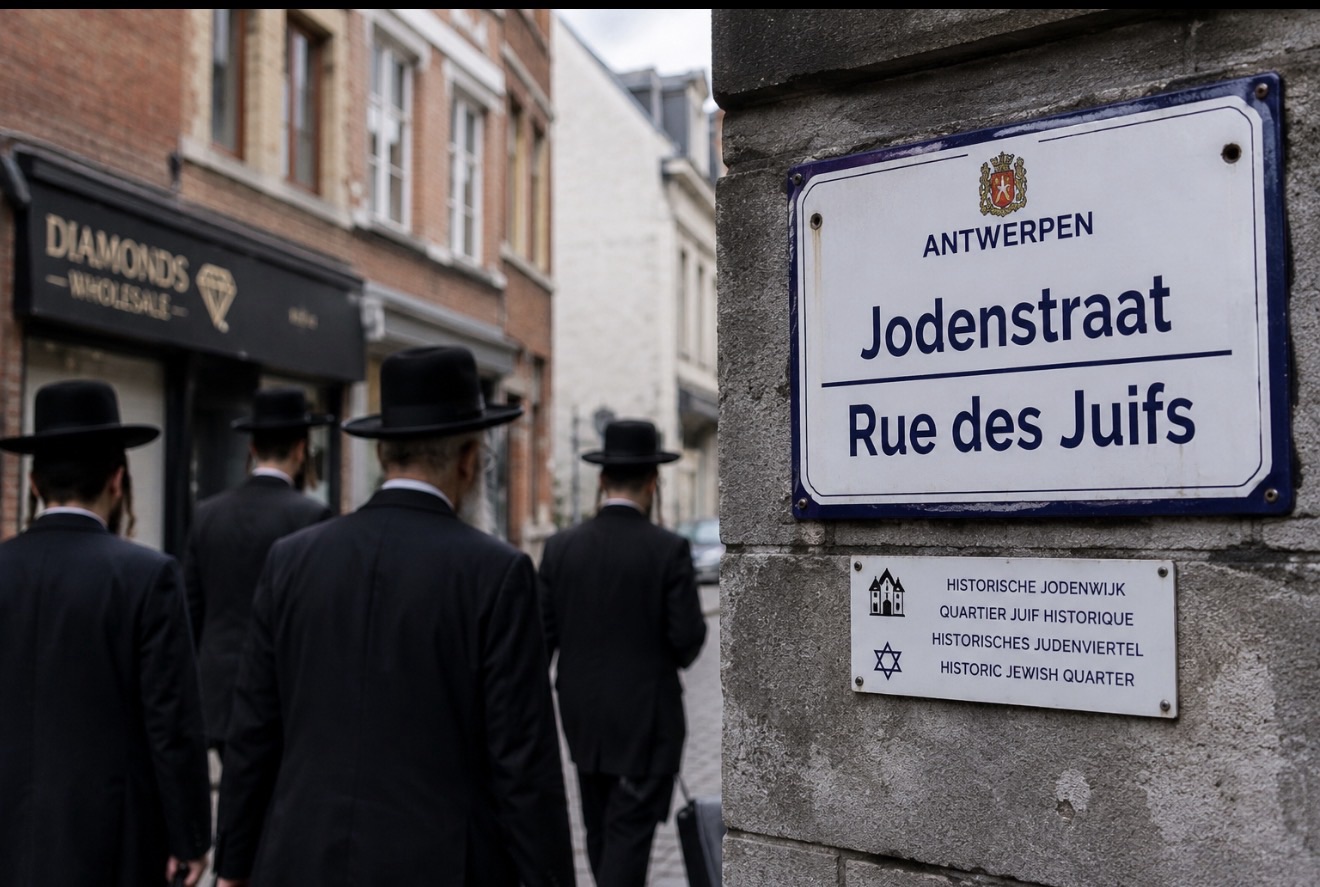
ANTWERP — Belgium is moving toward a prosecution that Jewish leaders across Europe say could fundamentally reshape the future of Jewish religious life on the continent — while also threatening one of Belgium’s most historically important business communities and export ecosystems.
On June 18, a Belgian court is expected to decide whether two mohels — Jewish ritual circumcisers — will stand trial on charges of “intentional assault or bodily harm with premeditation against minors” and the “unlawful practice of medicine.”
The case stems from police raids conducted last year in Antwerp’s historic Jewish quarter, where investigators reportedly seized circumcision instruments and demanded lists of recently circumcised infants.
For Belgium’s Jewish community, the issue extends far beyond a legal dispute.
Brit milah, ritual circumcision performed on the eighth day after birth, is among the oldest and most central practices in Judaism, observed continuously for thousands of years. Prosecuting mohels for carrying out the ritual is viewed by many Jewish leaders not as a regulatory matter, but as an attempt to criminalize a core religious obligation.
And because the case is unfolding in Antwerp, the economic implications are significant.
Antwerp has long served as the global center of the rough diamond trade, a business historically built and dominated by the city’s Orthodox Jewish community. For decades, the Antwerp diamond district handled the overwhelming majority of the world’s rough diamonds while supporting an interconnected ecosystem of trading firms, logistics providers, insurers, financiers, textile businesses, food suppliers and real estate operators.
At its peak, the broader trade was estimated in industry analyses at roughly $40 billion annually.
Jewish-owned businesses remain deeply embedded throughout those networks, even as the industry faces growing competition from Dubai, Mumbai and synthetic diamonds.
Now, many within the community see the prosecution as part of a broader pattern of pressure on Jewish religious life in Europe.
Earlier this week, 45 Jewish community leaders from across Europe signed an open letter accusing Belgian prosecutors of “effectively criminalizing the act of circumcision” and warning that the case was “reminiscent of efforts taken in Europe against Jewish practice prior to the Second World War.”
The letter, organized by the European Jewish Association, stated bluntly that “Belgian Jews are now second-class citizens with limited rights.”
Rabbi Menachem Margolin, chairman of the European Jewish Association, described the prosecution as “a clear attempt to misuse irrelevant constitutional provisions in order to effectively ban circumcision.”
“This is not borderline and not ambiguous — this is antisemitism,” Margolin said.
The dispute has already drawn international diplomatic attention.
Bill White, the United States ambassador to Belgium, publicly criticized the prosecution, calling it “a shameful stain on Belgium.” Earlier this year, White urged Belgian authorities to “stop this unacceptable harassment of the Jewish community.”
Israeli Foreign Minister Gideon Sa’ar called the case “a scarlet letter on Belgian society” and accused Belgium of joining “a short and shameful list” of countries using criminal law to target Jewish religious practice.
The economic pressure campaign escalated further Tuesday when Duvi Honig, founder and CEO of the Orthodox Jewish Chamber of Commerce and co-founder and secretary of the Multicultural Business Coalition, announced plans for a coordinated international response if the prosecutions move forward.
Honig described the Antwerp case as “a self-inflicted economic war by Belgium against its own Jewish business community, dressed up as medical regulation.”
He compared the situation to historical expulsions and restrictions on Jewish economic life in Europe, arguing that countries targeting longstanding Jewish communities often underestimate the economic consequences.
“The dressing has changed. The underlying act has not,” Honig said. “And the economic outcome will not change either.”
Honig said the Orthodox Jewish Chamber of Commerce would explore international boycott efforts targeting key Belgian export sectors, particularly pharmaceuticals and medical products, if the case proceeds.
The economic exposure is meaningful.
Belgium’s pharmaceutical sector is the country’s largest export industry, generating approximately $80.8 billion in exports in 2025, according to international trade data. Major global pharmaceutical companies including Pfizer, Johnson & Johnson, GSK Biologicals and Baxter maintain major operations in Belgium whom the Orthodox Jewish Chamber of Commerce has close working relationship with.
The Wallonia region alone reportedly derives more than one-third of its exports from pharmaceuticals, supporting tens of thousands of jobs directly and indirectly.
Honig argued that any boycott effort would focus not only on public pressure but also on reputational and procurement risks tied to Belgium’s treatment of religious minorities.
The broader concern inside the Jewish community is demographic and economic.
Belgium’s Jewish population has already faced growing security pressures amid rising antisemitic incidents across Europe. If families begin concluding they cannot freely practice core religious traditions inside Belgium, some leaders fear migration out of the country could accelerate.
For Antwerp, that would carry implications beyond religion alone.
The city’s Jewish business infrastructure is deeply intertwined with industries built on multigenerational trust networks, including diamonds, finance, trade logistics and specialty import-export sectors.
Those ecosystems are difficult to replace once they begin unwinding.
The issue also appears to be spreading.
Jewish organizations say authorities in Austria and Switzerland have begun examining similar legal theories surrounding ritual circumcision, raising fears that the Belgian case could become a broader European precedent.
For European governments already grappling with weak economic growth, high energy costs and political fragmentation, the prospect of alienating established business communities carries growing sensitivity.
The Antwerp hearing on June 18 will determine whether the two mohels formally stand trial.
But regardless of the court’s decision, many Jewish leaders say the signal has already been sent — not only to Belgium’s Jewish population, but to Jewish business communities across Europe watching closely to see whether longstanding religious practices can still be protected under modern European law.
Europe — JBizNews Desk
© JBizNews.com All Rights Reserved. Reproduction or distribution without written permission is prohibited.