
 JBizNews
OPINION: Bowen Gets $150 Million to Chair a Climate Conference He Isn’t Even Hosting — This Is the Climate Movement’s Real Business Model
By Duvi Honig
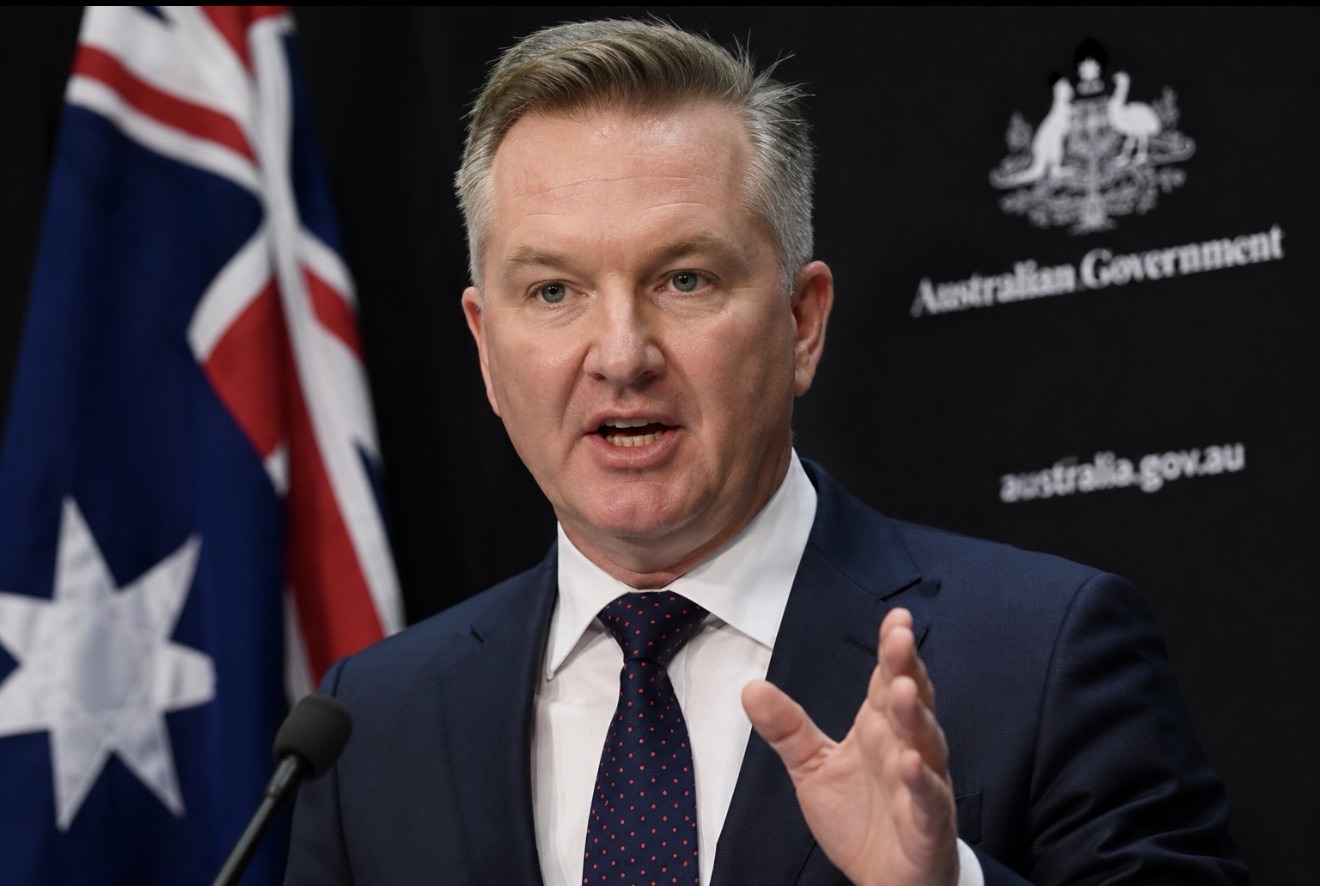
Australia’s climate minister, Chris Bowen, just gave the world a remarkably clear window into what large parts of the modern climate movement have actually become. Not simply a campaign to reduce emissions or protect the environment, but an international ecosystem capable of moving staggering amounts of taxpayer money under the protection of a cause few politicians feel safe questioning.
Bowen is defending more than 150 million Australian dollars — roughly 107 million U.S. dollars — tied to Australia’s role chairing the upcoming COP31 United Nations climate summit.
There is one important detail: Australia is not even hosting the conference. Turkey is.
Bowen’s government is spending that money largely to run the diplomatic process surrounding the summit, including staffing, travel, negotiations and administrative coordination. Documents obtained by The Australian newspaper showed government employees spent 485,602 Australian dollars on travel tied to the negotiations during just January and February 2026 alone, including trips to Turkey, Fiji, Germany and South Korea.
All of this is happening while Australian households face rising electricity bills, expensive mortgages, higher grocery prices and a cost-of-living crisis severe enough to dominate national politics.
And the most politically damaging part for Bowen is this: many of those same families struggling to pay their utility bills are living under the exact renewable-energy policies his ministry has aggressively promoted.
When opposition lawmakers called the spending a “vanity project,” Bowen responded by calling his counterpart “the biggest hypocrite in the federal parliament.”
That reaction misses the larger point entirely.
This is not really about one minister in Australia. It is about the operating structure that has grown around the global climate industry itself.
Every year, massive United Nations climate conferences draw anywhere from tens of thousands of delegates, activists, consultants, diplomats, corporate sponsors, nonprofit organizations and government officials from around the world. Entire hotel districts are reserved. International flights multiply. Temporary bureaucracies expand. Multi-million-dollar security operations are assembled.
Then the conference ends — usually with broad declarations, vague targets and promises that another conference will be needed the following year to revisit unresolved issues.
The summit itself increasingly becomes the product.
And the people paying for it are almost never the people attending it.
Bowen flies internationally to climate meetings while ordinary Australian families absorb higher power prices and taxes. Former U.S. climate envoy John Kerry faced criticism during the Biden administration for using private jets tied to climate-related travel while simultaneously warning Americans to reduce carbon emissions in daily life.
The contradiction is obvious to voters.
The pattern extends well beyond Australia.
The European Union has committed hundreds of billions of euros toward climate-transition policies even as parts of Europe struggle with energy affordability and industrial competitiveness. Germany, long viewed as the flagship of Europe’s green transition, has watched portions of its manufacturing base come under pressure from high energy costs.
In the United States, the Inflation Reduction Act authorized hundreds of billions of dollars in climate and clean-energy subsidies, much of it flowing into politically connected industries dependent on long-term government support.
Supporters argue these investments are necessary to accelerate technological transition and reduce future environmental risk.
Critics increasingly ask a different question: how much of the climate economy now exists primarily to sustain itself?
Meanwhile, the countries most responsible for future emissions growth continue expanding conventional energy production. China remains heavily dependent on coal and continues approving new coal-fired generation capacity. India is expanding fossil-fuel use to support industrial growth. Russia remains one of the world’s largest hydrocarbon exporters.
That geopolitical imbalance has become harder for Western voters to ignore.
They are being asked to absorb rising energy costs, taxes and lifestyle restrictions while many of the world’s largest emitters continue prioritizing industrial expansion and energy security.
Which brings the debate back to Bowen.
What exactly does 150 million Australian dollars buy here?
It does not directly lower electricity bills for Australian households. It does not immediately reduce global emissions. It does not suddenly solve the climate problem after three decades of increasingly large international conferences.
What it undeniably does buy is international visibility, diplomatic influence, conference infrastructure and participation inside a global climate system that has grown larger, more expensive and more bureaucratic every year.
Supporters call that leadership.
Critics increasingly call it a self-perpetuating ecosystem where the process itself has become the justification for more spending.
That perception matters politically because working families notice the contrast. They notice politicians and officials flying internationally to climate events while lecturing citizens about consumption, energy use and carbon footprints. They notice governments spending millions on conferences while households struggle with bills at home.
And once credibility begins eroding, rebuilding it becomes extremely difficult.
The danger for climate policymakers is not merely opposition from skeptics. It is broader public exhaustion with systems that appear expensive, permanent and disconnected from everyday economic reality.
The climate debate itself will continue. Serious people can disagree about policy, energy transition timelines and the balance between environmental goals and economic costs.
But the backlash now building around figures like Bowen reflects something deeper than emissions targets.
It reflects growing public suspicion that an international movement originally framed as an environmental necessity has, in some cases, evolved into a sprawling global spending structure whose most consistent outcome is the expansion of its own conferences, institutions and budgets.
And increasingly, voters are asking whether they can still afford it.
Duvi Honig is Founder & CEO of the Orthodox Jewish Chamber of Commerce and Co-founder and Secretary of the Multicultural Business Coalition.
Opinion — JBizNews Desk
© JBizNews.com All Rights Reserved. Reproduction or distribution without written permission is prohibited.