
 JBizNews
Robinhood Stock Rises as Company Opens Platform to AI Agents for Trading and Credit Card Purchases
By JBizNews Desk
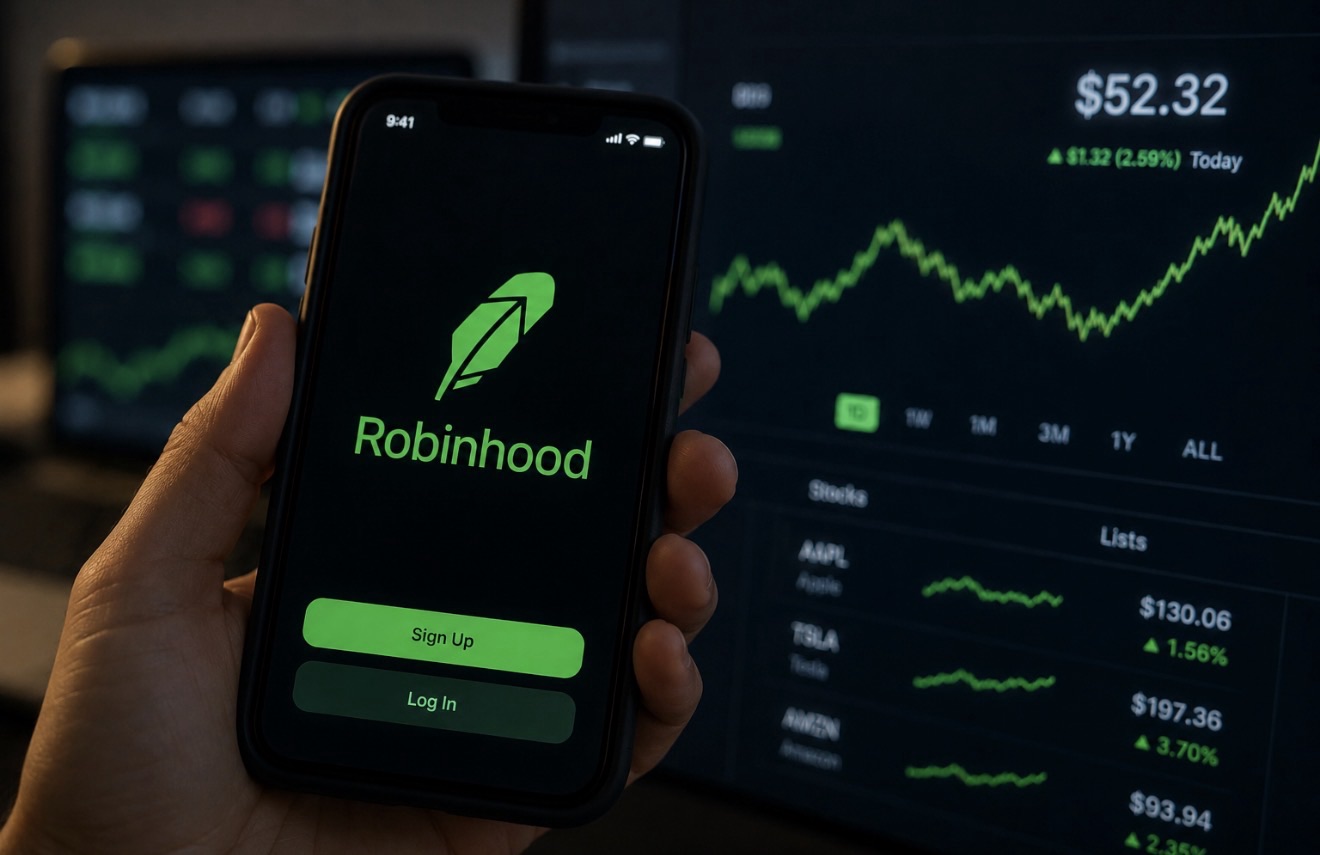
Robinhood Markets shares climbed Wednesday after the retail brokerage announced plans to allow artificial intelligence agents to trade stocks and make credit-card purchases on behalf of customers, marking one of the clearest signs yet that AI is beginning to move from a productivity tool into an autonomous financial decision-maker for ordinary consumers.
The company’s stock rose roughly 3% during trading and continued gaining after hours following the announcement by Robinhood Chief Executive Vlad Tenev, who described the move as the next step in the company’s effort to “democratize finance for all.”
“Our mission has always been to democratize finance for all, and now that mission extends to AI agents,” Tenev said.
Robinhood’s new products — called Agentic Trading and the Agentic Credit Card — are designed to let AI software systems carry out financial actions automatically once users set goals and rules. The technology connects through Model Context Protocol servers, an open standard allowing outside AI systems to interact with financial platforms securely and in a structured way.
Under the setup, customers can create a dedicated AI-managed account separate from their main brokerage portfolio. Users decide how much money the AI can access and receive notifications when trades are executed. Robinhood said the beta version initially supports stock trading but is expected to expand into options, cryptocurrencies, futures, and event contracts over time.
The company also unveiled an AI-enabled virtual credit card tied to its existing Robinhood Gold Card. Users can set spending limits, require manual approval for purchases, and earn 3% cash back on transactions.
For many Americans, the announcement raises a bigger question: what exactly is an AI agent?
Unlike a traditional app that waits for a user to tap a button or enter a command, an AI agent can operate independently after receiving instructions. A customer might tell the software to buy a stock if it falls below a certain price, rebalance a retirement portfolio automatically, find the cheapest airfare for a trip, or make purchases under specific conditions. The AI then continuously monitors the situation and acts when the criteria are met — without requiring constant human involvement.
In simple terms, it functions less like a search engine and more like a digital personal assistant capable of making decisions and taking actions on a user’s behalf.
Robinhood’s move reflects a broader shift now spreading across the economy. Artificial intelligence is increasingly evolving from software that merely provides information into systems that actively perform work.
Technology firms are already using AI agents to write code and manage cybersecurity tasks. Law firms are deploying them to review contracts and draft documents. Sales organizations use them to respond to customer inquiries and qualify leads. Financial services and commerce now appear poised to become the next major battleground.
The implications could be enormous for how consumers shop, invest, and manage money.
If AI agents consistently search for the lowest prices, retailers may face increasing pressure on pricing power. If AI systems handle purchases automatically, traditional advertising strategies aimed at influencing human behavior could weaken. Brand loyalty may also erode if machines prioritize price, efficiency, and product specifications over emotional attachment to companies.
Financial markets could also become faster and more volatile as millions of autonomous systems react instantly to changing conditions without human hesitation.
Robinhood attempted to address some of the risks by emphasizing safeguards. AI trading accounts are segregated from users’ primary portfolios, spending limits can be capped, and customers can require manual approval before purchases or trades occur.
Still, concerns remain.
The same automation capable of generating profits around the clock could also amplify losses just as quickly if systems malfunction, misinterpret data, or encounter unexpected market conditions. Critics have long warned that widespread algorithmic trading can intensify market swings, and the addition of consumer-level AI agents may accelerate that trend further.
Robinhood has spent years positioning itself as the platform bringing Wall Street tools to ordinary Americans. With more than 27 million funded accounts, the company now appears to be betting that the next major transformation in finance will not simply involve giving people easier access to markets — but giving them AI systems capable of acting inside those markets on their behalf.
For consumers, investors, and businesses alike, that signals the beginning of a very different kind of economic era — one where software increasingly handles not just information, but decision-making itself.
New York — JBizNews Desk
© JBizNews.com All Rights Reserved. Reproduction or distribution without written permission is prohibited.