
 Vos Iz Neias
IDF Admits “The Response We Developed For Drones Is Insufficient’, Scrambles For Solutions
JERUSALEM (VINnews) — “What about the drones? In the end, there will be a solution. It won’t be quick, it won’t be next week, and it won’t be total. There’s no magic fix. This is a threat that slipped under the radar, and although it wasn’t secret, nobody took it seriously,” says Israeli political commentator Ben Kaspit in a Maariv article.
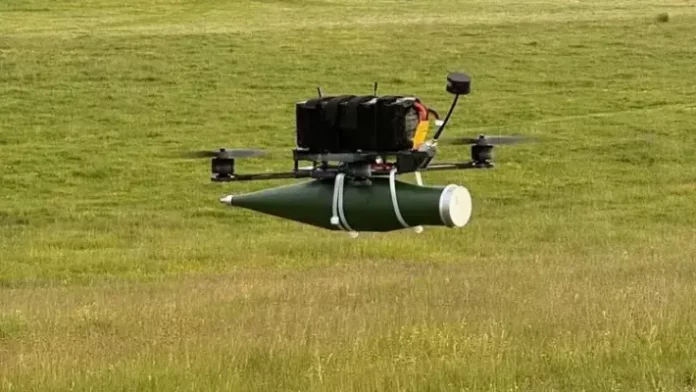
In closed-door discussions, IDF officials admit that the preparation and response to the threat of optical-guided drones was inadequate. “The response we developed is not sufficient,” they say.
On the one hand, it’s understandable. The military prepared for war involving the Iranian nuclear program, ballistic missiles weighing a ton, Hezbollah’s 170,000 rockets and precision missiles, tens of thousands of Radwan fighters, and that’s before even mentioning Gaza. So these small flying objects fell between the cracks, and now they’re literally falling on our heads.
In short: the response now being developed consists of three layers: early detection, meaning warning systems; defense, meaning protection and fortification; and interception, meaning a fast way to shoot down the drone before it explodes.
On detection, work is underway at full speed. Radar and listening systems capable of detecting approaching drones and issuing alerts are already on the drawing board. These systems are intended to provide warnings to tank crews, APC crews, and soldiers in the field. According to the plan, they will have 20 seconds to take cover or enter a protected area. According to the IDF, that is enough time. When will it be ready? Within weeks to a few months.
Interception efforts are also underway. Shotguns, fragmenting 5.56 ammunition, Iron Dome systems that are already intercepting many drones, and additional tools currently being developed are all part of the effort. It is important to remember that even now, most drones are intercepted; the damage is caused by the minority that get through.
As for protection, the IDF has already deployed hundreds of thousands of meters of protective netting and plans to deploy much more. Here too, procurement is happening rapidly, even frantically, and officials say there will be enough for everyone. Additional methods for stopping drones mid-flight are also being tested. According to the commander of the Ground Forces Command in a closed forum, “There is no idea, tool, or method in the world that we are not trying and examining.”
However this is only the beginning. These drones could eventually appear in Judea and Samaria, flying over Jewish communities beyond or within the Green Line. They could appear in Gaza. They could appear everywhere. Not only that, they may multiply and operate in swarms of 10, 20, or more.
At the moment, they can be compared to the primitive Sagger anti-tank missiles that turned the Yom Kippur War into a nightmare for Israeli armor, which only a few years earlier had swept through Sinai and earned legendary status. They can also be compared to the roadside bombs Hezbollah turned into a strategic weapon against IDF soldiers during the years of the security zone in Lebanon.
There is a saying in the Israeli Air Force: “What brings you down is what you don’t see.” Well, we didn’t really see these drones. Or rather, we saw them — especially after their appearance in Ukraine three years ago — but we did not understand the scale of the threat. That happened mainly because they looked small, harmless, and insignificant. Each carries only a tiny amount of explosives, nothing comparable to missiles, rockets, or air force munitions. But precisely because they are so small and simple, they are ingenious, and they slipped beneath our radar.
Meanwhile, Israel is also manufacturing drones of this kind. The country is in close contact with the Ukrainians, and the task force established by Ground Forces commander Major General Nadav Lotan includes former Ukrainian military personnel and Ukrainian speakers. The Low-Altitude Warfare Administration (“Rokak,” the official term) is working around the clock, 24/7, to assemble a package of solutions that will put this threat back in its place. “We’re not there yet, but we will be.”
One sad fact remains: meanwhile, our soldiers are being killed and wounded. Much of what they are doing in Lebanon is trying to evade drones. Someone has to decide whether it is worth it : whether the gains from remaining in southern Lebanon outweigh the damage and the loss of human life.