
 Yeshiva World News
Trump Presses Gulf States On Israel Normalization, But Experts See Little Chance Of Movement
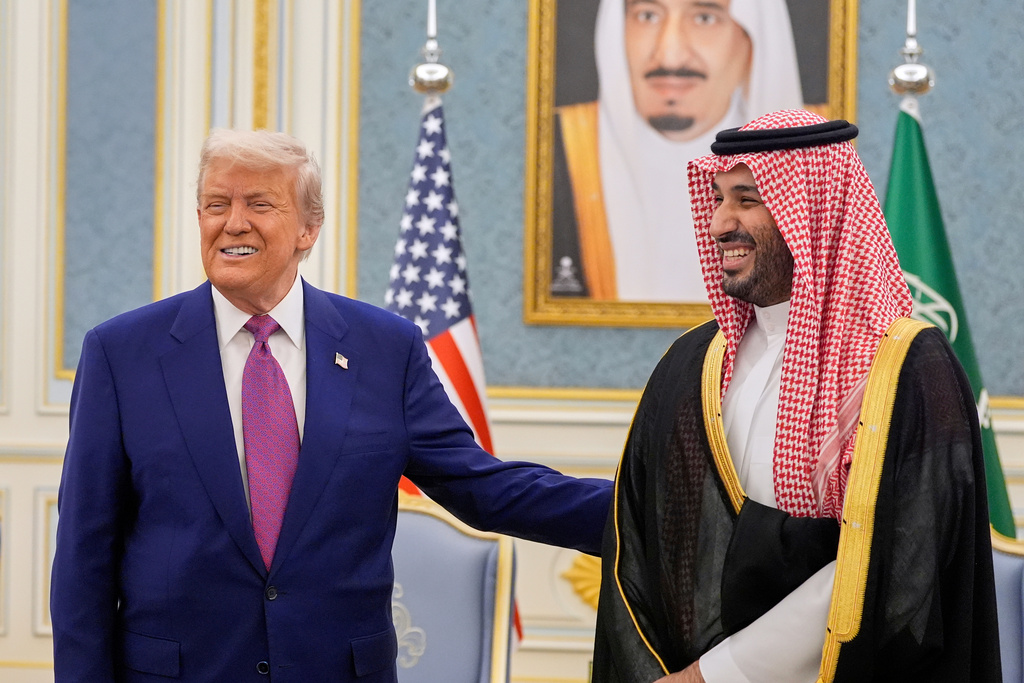
Gulf states are unlikely to take seriously President Donald Trump’s demand that they join the Abraham Accords as part of a broader regional deal, viewing the proposal as premature and disconnected from the current realities in the Middle East, two regional experts told The Jerusalem Post this week.
The comments come after Trump reportedly pressed several Arab and Muslim-majority countries to normalize relations with Israel and join the Abraham Accords, the U.S.-brokered framework that led to normalization agreements between Israel and several Arab states during Trump’s first term.
Trump has sought to link a potential agreement with Iran to a dramatic expansion of the Abraham Accords, urging countries including Saudi Arabia, Qatar, Egypt, Jordan, Pakistan and Turkey to join the normalization framework.
But experts say the demand is unlikely to gain traction in the Gulf at this stage, particularly with the war in Gaza still casting a long shadow over the region and with no clear political horizon for the Palestinians.
“Across much of the Persian Gulf, the proposal is viewed as premature and somewhat disconnected from post-war realities,” Mojtaba Dehghani, a senior political analyst who has written extensively on Iran and the region, told The Jerusalem Post.
The skepticism is especially significant because the Trump administration has long viewed Saudi normalization with Israel as the crown jewel of a potential Abraham Accords expansion. Riyadh, however, has repeatedly made clear that any normalization agreement with Israel would require a serious and irreversible pathway toward Palestinian statehood.
That position has become even more entrenched since the outbreak of the Gaza war, which has made public normalization with Israel far more politically sensitive across the Arab and Muslim world.
Several Gulf states already maintain quiet security, intelligence or economic channels with Israel, and the United Arab Emirates and Bahrain formally normalized ties with Israel under the Abraham Accords in 2020. But analysts say the regional mood has shifted dramatically since then.
The UAE and Bahrain entered the Accords before the current war, at a time when regional leaders were seeking to deepen economic and security cooperation with Israel while countering Iranian influence. Today, however, leaders across the Gulf are facing far greater domestic and regional pressure over Gaza, making open normalization far more difficult.
The Abraham Accords were originally signed by Israel, the UAE and Bahrain in September 2020, with Morocco and Sudan later joining the normalization process. Egypt and Jordan already had peace treaties with Israel dating back decades.
Trump has repeatedly described the Accords as one of his major foreign policy achievements and has pushed for additional countries to join them. His latest effort appears to be part of a broader diplomatic strategy aimed at reshaping the region after the Iran conflict and presenting a united front against Tehran.
But analysts say the demand may be too ambitious, particularly if it is framed as a condition for involvement in a separate Iran deal.
Saudi Arabia is the central question. Before the Gaza war, U.S., Israeli and Saudi officials had been discussing a possible normalization deal that could have included American security guarantees for Riyadh, civilian nuclear cooperation and Israeli concessions to the Palestinians. Those talks were effectively frozen after the Hamas attack on Israel on October 7 and the war that followed.
Since then, Saudi officials have publicly hardened their position, insisting that normalization cannot move forward without concrete progress toward a Palestinian state.
Qatar, meanwhile, has played a major role as a mediator between Israel and Hamas and is not seen as likely to formally normalize relations with Israel in the near term. Turkey already has diplomatic relations with Israel, though ties have been severely strained by the Gaza war. Egypt and Jordan also already have peace treaties with Israel, but both countries have faced intense public opposition to Israel’s military campaign in Gaza.
Pakistan has already signaled opposition to Trump’s push, with officials rejecting the idea of joining the Abraham Accords under current circumstances.
The result, experts say, is that while Trump may be trying to revive the momentum of his first-term Middle East diplomacy, the political environment today is far more complicated.
For Gulf leaders, normalization with Israel remains possible in theory, particularly if it brings major strategic benefits from Washington. But without a major change in the Palestinian arena, and without a clear endgame for Gaza, Trump’s demand is likely to be viewed less as a realistic diplomatic roadmap and more as an aspirational political message.
(YWN World Headquarters – NYC)