
 JBizNews
S&P and Nasdaq Hold Near Records as 3.8% Inflation Meets Iran Ceasefire Hopes; Microsoft and Oracle Lead While Nvidia Slips
JBizNews Desk — May 28, 2026
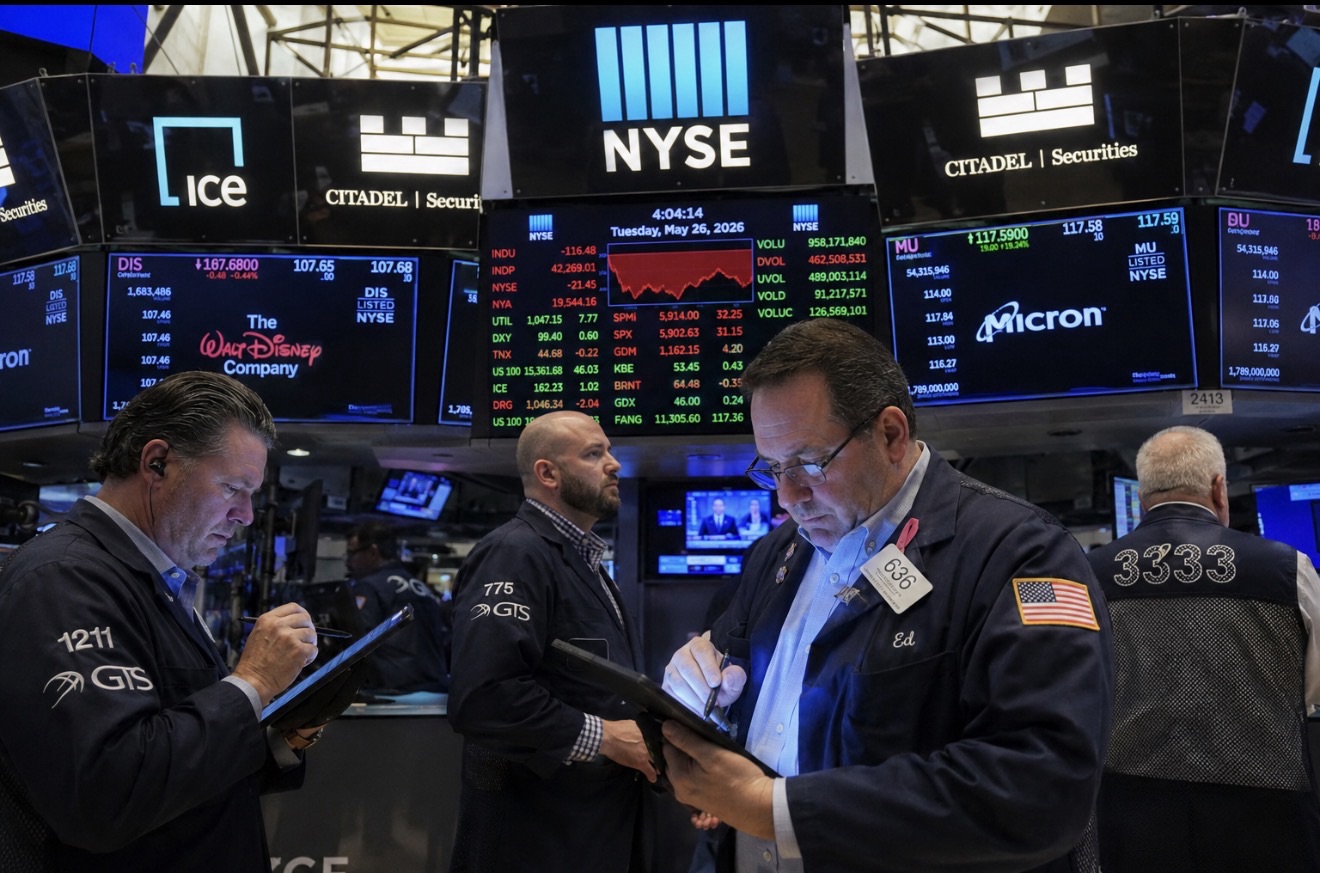
U.S. stocks closed mixed Thursday but remained near record highs after new inflation data showed consumer prices accelerating to their highest level in nearly three years, while reports of a ceasefire framework between the United States and Iran helped stabilize investor sentiment and keep broader markets from retreating.
The final numbers reflected a market struggling to balance economic strength, persistent inflation, and geopolitical relief all at once.
The S&P 500 finished nearly unchanged at 7,520.36, up just 0.02%, while the Dow Jones Industrial Average slipped 0.05% to close at 50,620.36. The Nasdaq Composite outperformed, gaining 0.39% to finish at 26,777.95, remaining close to the record highs set earlier this week.
The session’s central focus was inflation.
The Commerce Department reported Thursday morning that the Personal Consumption Expenditures Price Index (PCE) — the Federal Reserve’s preferred inflation gauge — rose 3.8% year-over-year in April, climbing from 3.5% in March and 2.8% in February. On a monthly basis, prices increased 0.4%.
The PCE index carries unusual weight inside financial markets because it measures what Americans are actually paying across goods and services, making it one of the clearest indicators of persistent pricing pressure throughout the economy. A reading approaching a three-year high signals that inflation remains stubbornly elevated despite aggressive interest-rate policies over the past two years.
The report arrives at a particularly sensitive moment for new Federal Reserve Chairman Kevin Warsh, who was sworn in last week. Hotter inflation data narrows the central bank’s flexibility on rate cuts and raises the possibility that borrowing costs could remain elevated longer than markets had previously hoped.
Yet despite the inflation surprise, investors largely held their ground.
Markets found support from signs that the broader economy remains resilient. Consumer spending stayed firm, weekly jobless claims remained relatively stable, and Treasury yields eased slightly during the afternoon as energy prices retreated from earlier highs.
Geopolitics delivered the day’s sharpest swings.
Stocks fluctuated throughout the session after reports emerged that Washington and Tehran had reached a temporary framework agreement aimed at extending a ceasefire and gradually restoring energy exports from the Persian Gulf region. The proposed arrangement reportedly includes a 60-day memorandum intended to prevent further escalation following months of military confrontation near the Strait of Hormuz.
Earlier in the session, oil prices had risen sharply amid renewed reports of clashes near key shipping lanes before reversing lower after ceasefire discussions surfaced.
Underneath the broader indexes, market leadership remained concentrated in artificial-intelligence infrastructure and enterprise software stocks.
Microsoft, Oracle, and Palantir each climbed between 3% and 4% as investors continued rotating toward companies viewed as long-term AI infrastructure winners. By contrast, semiconductor stocks weakened, with Nvidia slipping roughly 1% after a powerful recent rally.
Software company Snowflake surged approximately 30% following stronger-than-expected guidance, although the rally failed to broadly lift the rest of the cloud-software sector.
Within the Dow, Microsoft, Nike, and IBM led gains, while 3M and Caterpillar weighed on the index. Retailers also saw divergent results. Best Buy advanced after beating earnings expectations, and Kohl’s jumped following stronger comparable-sales figures, while Salesforce fell roughly 2% after its quarterly report disappointed investors.
Dell Technologies moved higher ahead of its earnings release after reports that the company secured a $9.7 billion software contract tied to the U.S. military.
Looking ahead, Friday’s economic calendar remains lighter but still carries several reports closely watched by traders.
The Commerce Department is scheduled to release advanced trade-in-goods data alongside wholesale and retail inventory figures, while the Chicago Purchasing Managers’ Index (PMI) will offer another early snapshot of manufacturing and business activity across the industrial Midwest.
Markets will also continue watching whether record-high equity valuations can hold together while inflation remains elevated and the Federal Reserve faces growing pressure to maintain higher interest rates for longer.
For one more session at least, investors chose stability over panic — leaning on hopes for a calmer Middle East and continued enthusiasm surrounding AI-linked companies to offset inflation data that, under different conditions, might have triggered a much sharper selloff.
New York — JBizNews Desk
© JBizNews.com All Rights Reserved. Reproduction or distribution without written permission is prohibited.