
 Matzav
After Nearly 20 Years, the Berach Moshe’s Estate Finally Divided Among His Heirs
A long-running chapter in Satmar reached its conclusion Thursday as representatives of the four sons of the late Satmar Rebbe, the Berach Moshe, gathered for a landmark meeting to complete the distribution of the Rebbe’s treasured estate, including rare sifrei kodesh, manuscripts, and sacred heirlooms worth millions of dollars.
The historic gathering, which followed nearly two decades of negotiations, delays, and quiet efforts to resolve the issue, took place under a veil of secrecy at the home of philanthropist Reb Lipa Friedman on the outskirts of Monsey.
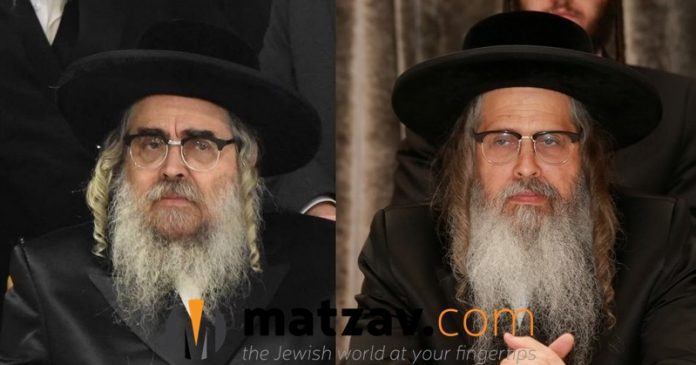
Representing the heirs were Rav Yoel Teitelbaum, Av Beis Din of Beis Baruch in Kiryas Yoel and son of the Satmar Rebbe, Rav Aharon Teitelbaum; Rav Chaim Hersh Teitelbaum, son of Rav Lipa Teitelbaum of Zenta; Rav Yaakov Dov Teitelbaum, Av Beis Din of Sighet and son of the Satmar Rebbe, Rav Zalman Leib Teitelbaum; and Rav Moshe Horowitz, son-in-law of Rav Shalom Eliezer Teitelbaum, Av Beis Din of Satmar 15.
Serving as witnesses to the lottery were Rav Sholom Glick, a senior member of Yeshivas Mesivta D’Satmar and Satmar rov in Lakewood, and Rav Shimon Katz, a dayan of the Satmar community in Monsey.
As first reported before Pesach, members of the family had signed a joint letter calling upon anyone in possession of items belonging to their father’s estate to return them so that the inheritance could finally be organized and distributed among the heirs.
Behind the scenes, mediators from various Satmar circles spent years attempting to resolve the complicated matter of the Rebbe’s financial estate and sacred possessions. During his lifetime, the Berach Moshe appointed his longtime attendant, Reb Moshe Friedman—widely known as Reb Moshe Gabbai—to oversee matters relating to the inheritance together with his close associate, philanthropist Reb Eliezer Kestenbaum.
Following the Berach Moshe’s passing, however, the deep division within Satmar prevented an orderly distribution of the estate.
Approximately a decade ago, Reb Moshe Gabbai arranged for the transfer of many of the items to the business premises of philanthropist Reb Meir Hirsch, a prominent supporter of the Mahar”א community and a close friend of Reb Moshe. Over the past year, the collection was carefully cataloged, examined, and appraised.
Among the items are rare books, handwritten manuscripts, and treasured artifacts passed down through the Sighet-Satmar dynasty, tracing their lineage from the Yismach Moshe through the Vayoel Moshe. The Berach Moshe inherited many of these possessions after the Vayoel Moshe passed away without leaving children. The collection is believed to be worth several million dollars.
Following publication of the family’s letter, additional valuable items that had remained in the possession of chassidim and associates were returned to the estate, reportedly with the encouragement of the Satmar Rebbe, Rav Aharon Teitelbaum. Once the collection was assembled and documented, preparations for the final division could proceed.
According to the Berach Moshe’s will, the sacred items and books were to be divided equally among his four sons. To fulfill that directive, organizers assembled four separate packages, carefully balancing both the monetary value and the historical and spiritual significance of each group of items.
Each package included a mixture of sacred objects, manuscripts, books, and family heirlooms so that no bundle would be viewed as more prestigious or valuable than another.
For example, one package contained the Rabbeinu Tam tefillin of the Kedushas Yom Tov, while another included a menorah that had belonged to the same revered ancestor. Other packages contained rare manuscripts, books, and additional treasured artifacts. Once the values were equalized, a lottery was conducted to determine which heir would receive each package.
Also present at the gathering were Reb Moshe Friedman, the longtime attendant of the Berach Moshe and official custodian of the estate; attendant Reb Shmuel Teitelbaum; philanthropist Reb Eliezer Kestenbaum; Reb Meir Hirsch, who safeguarded much of the collection for years; and Reb Moshe Yitzchok Wertheimer, the famed hoiz bochur of the Berach Moshe during the Satmar split, who managed many of the estate’s logistical details over the past year.
Sources familiar with the process said several individuals played critical roles in recent months as the negotiations approached their final stages. Among those credited with helping bring the matter to completion was the host, Reb Lipa Friedman, son of Reb Moshe Gabbai, who quietly worked to bridge gaps and finalize arrangements between the various parties.
Friedman, a well-known supporter of Satmar institutions with close ties to many leading philanthropists and community figures, is said to have helped create the channels of communication that ultimately enabled the agreement to be completed after nearly two decades.
The event also carried a personal dimension. It was held in Friedman’s home just days before the wedding of his eldest daughter, scheduled for this coming Sunday. As preparations for a family simchah continued, the residence simultaneously became the setting for one of the most significant and sensitive moments in recent Satmar history, bringing closure to a process that had remained unresolved for almost twenty years.
{Matzav.com}