
 JBizNews
Three Years to Rearm: Why the Iran War Left America Worried About China
By JBizNews Desk
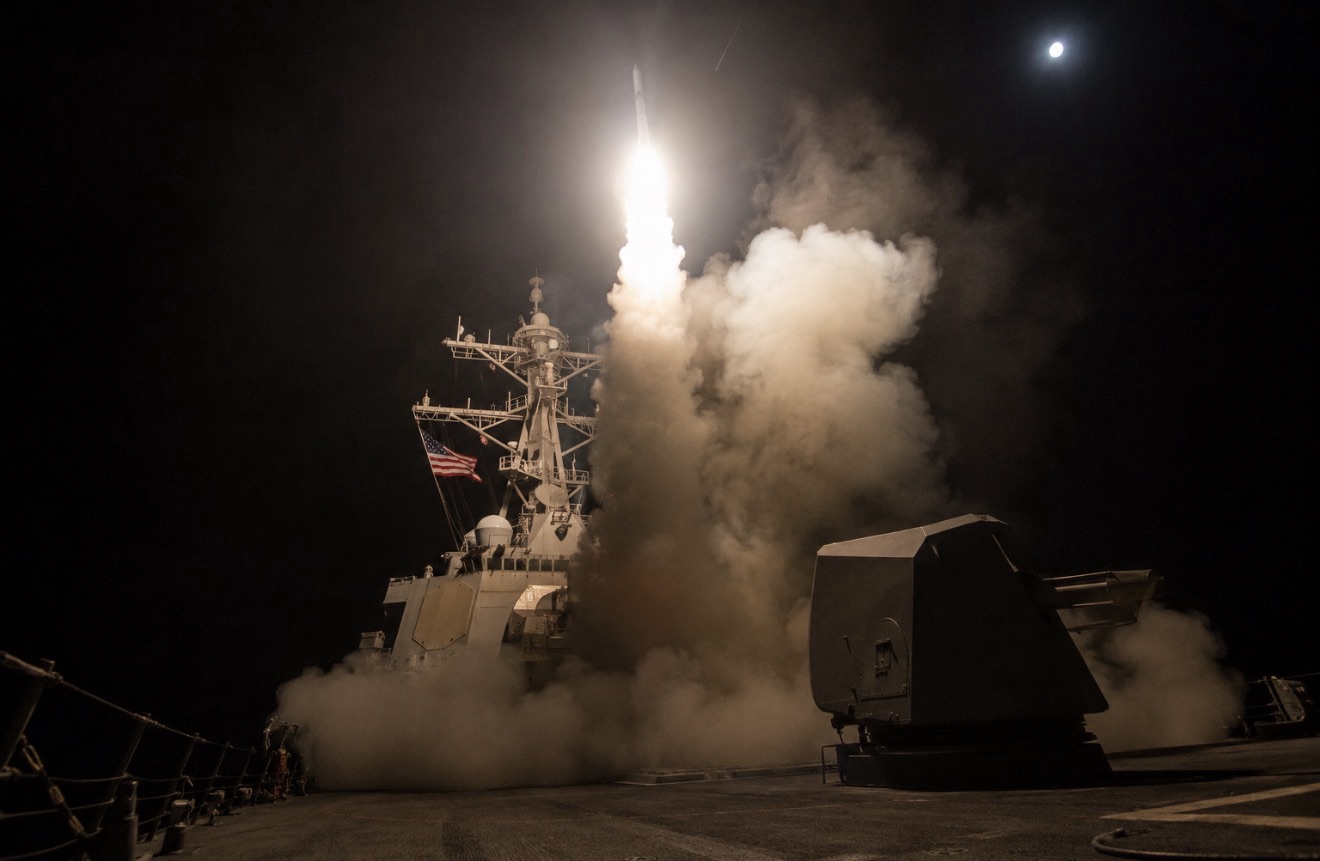
The United States fired more than a thousand Tomahawk cruise missiles at Iran.
Replacing them could take until late 2030.
That one number, from a new analysis released Wednesday, tells you most of what you need to know about the state of America’s weapons stockpile — and why Pentagon planners are increasingly focused on a country the U.S. has not fought yet: China.
The report came from the Center for Strategic and International Studies, a prominent Washington think tank. It was written by retired Marine Colonel Mark Cancian and researcher Chris H. Park.
Their conclusion was straightforward: U.S. defense contractors will need at least three years to fully rebuild the stockpiles of several key weapons systems used heavily during the Iran war.
The weapons matter.
Tomahawk cruise missiles are long-range precision weapons used to strike targets deep inside enemy territory. Patriot and THAAD interceptors are defensive systems designed to shoot down incoming missiles and drones.
The U.S. used all three extensively during the conflict with Iran.
Now comes the part that matters most — and the part many headlines miss.
The report does not say the United States is running out of weapons.
In fact, it explicitly says the opposite: the U.S. still has “enough munitions for any plausible scenario in the Iran war.”
What America lost was the cushion.
And the cushion matters because the Pentagon does not plan for one war at a time.
The military’s central long-term concern remains a possible conflict with China over Taiwan. The Iran war did not leave the U.S. defenseless against Iran. What it did was expose how quickly a modern high-intensity conflict can drain missile inventories that were originally built for shorter and more limited wars.
The concern inside Washington is not that Iran depleted the U.S. arsenal.
It is that fighting a medium-sized regional war was enough to reveal how thin the reserves could become before a larger confrontation with China.
The reason rebuilding takes years is surprisingly simple.
America never built these weapons in large enough numbers.
For decades after the collapse of the Soviet Union, the Pentagon assumed future wars would likely be smaller, shorter and regional. Expensive high-end missiles were produced steadily, but not at the massive industrial scale associated with Cold War stockpiles.
The Iran war tested that assumption.
In a normal year, the United States produces fewer than 200 Tomahawk missiles. During the Iran conflict, the military fired more than five years’ worth in a matter of weeks.
Raytheon, now part of RTX, is expanding facilities in Alabama and Arizona and aiming to eventually produce more than 1,000 Tomahawks annually. But those expanded production lines are still being built.
The defensive interceptors face the same issue.
The report estimates the U.S. fired as many as 290 THAAD interceptors during the war. Replacing them may take until the end of 2029. Rebuilding inventories of more than 1,000 Patriot interceptors could stretch into mid-2029.
Lockheed Martin, which manufactures both systems, says it plans to invest roughly $9 billion through 2030 to accelerate output.
The report also noted that the U.S. has started retaining THAAD interceptors for domestic use that might previously have been sold to allies overseas — a sign of how seriously officials are treating the stockpile issue.
Cancian argued the problem developed over decades, not under a single administration.
“A lot of people in the Trump administration are inclined to say that everything was terrible until they arrived, and that’s not true,” he said. “Now, it is true that the Trump administration really increased funding.”
In other words, the stockpile gap was created gradually through years of procurement decisions made under both Republican and Democratic administrations.
The politics surrounding the issue are already intensifying.
Democrats in Congress have pointed to the strain on missile inventories as evidence that President Donald Trump entered the Iran conflict without fully considering the long-term military consequences. Some Republicans, meanwhile, argue that years of military aid sent to Ukraine after Russia’s 2022 invasion also contributed to the pressure on inventories.
The Pentagon insists the situation remains under control.
Chief Pentagon spokesman Sean Parnell said the military “has everything it needs to execute at the time and place of the President’s choosing.”
Defense Secretary Pete Hegseth told lawmakers last month that rising defense spending will allow manufacturers to double or even triple output over time.
But not everyone inside the defense community is reassured.
Virginia Burger, a former Marine officer now with the watchdog organization Project On Government Oversight, said Pentagon officials almost certainly understood before the war that missile inventories would be pushed “to a critical level.”
That may ultimately be the most important takeaway from the report.
America did not run out of weapons fighting Iran.
What it discovered was how quickly a modern war can burn through advanced missiles — and how long rebuilding them actually takes.
For a country whose defense strategy is increasingly centered on deterring China, “three years to rearm” is not an especially comforting timeline.
The factories will eventually refill the shelves.
The uncomfortable question hanging over Washington now is what happens if the next major conflict arrives before they do.
Washington — JBizNews Desk
© JBizNews.com All Rights Reserved. Reproduction or distribution without written permission is prohibited.