
 JBizNews
MLB Owners Push First Salary Cap Since 1994 as Players Union Vows to Fight
By JBizNews Desk
Friday, May 29, 2026
Major League Baseball owners have formally proposed a hard salary cap for the first time since 1994, setting up what could become the sport’s most consequential labor battle in more than three decades and raising the prospect of another work stoppage when the current collective bargaining agreement expires later this year.
According to statements released following bargaining sessions held at the Commissioner’s Office in New York on May 28, MLB owners presented a proposal that would establish a payroll floor and ceiling beginning in 2027, fundamentally reshaping the economics of professional baseball. The proposal immediately drew fierce opposition from the Major League Baseball Players Association, which has long treated any salary cap as a non-negotiable issue.
The proposal would require teams to maintain payrolls between a floor of $171.2 million and a ceiling of $245.3 million, while also introducing a 50-50 revenue-sharing structure between players and owners. Under the framework, both the payroll floor and cap would increase as league revenues rise.
The union’s response was swift.
Bruce Meyer, the MLBPA’s chief negotiator, accused owners of attempting to suppress player compensation while protecting their own financial interests.
“Billionaire owners are not seeking to cap their profits or asset values, only player salaries,” Meyer said in a statement released following the meeting.
The dispute goes far beyond baseball’s labor negotiations. At stake is the economic structure of one of America’s most valuable sports businesses, an industry generating billions of dollars annually through media rights, sponsorships, ticket sales, and licensing agreements.
Unlike the NFL, NBA, and NHL, Major League Baseball remains the only major American professional sports league without a formal salary cap. Owners argue that the absence of spending limits has widened the gap between wealthy franchises and smaller-market clubs, creating competitive imbalances that ultimately hurt the sport.
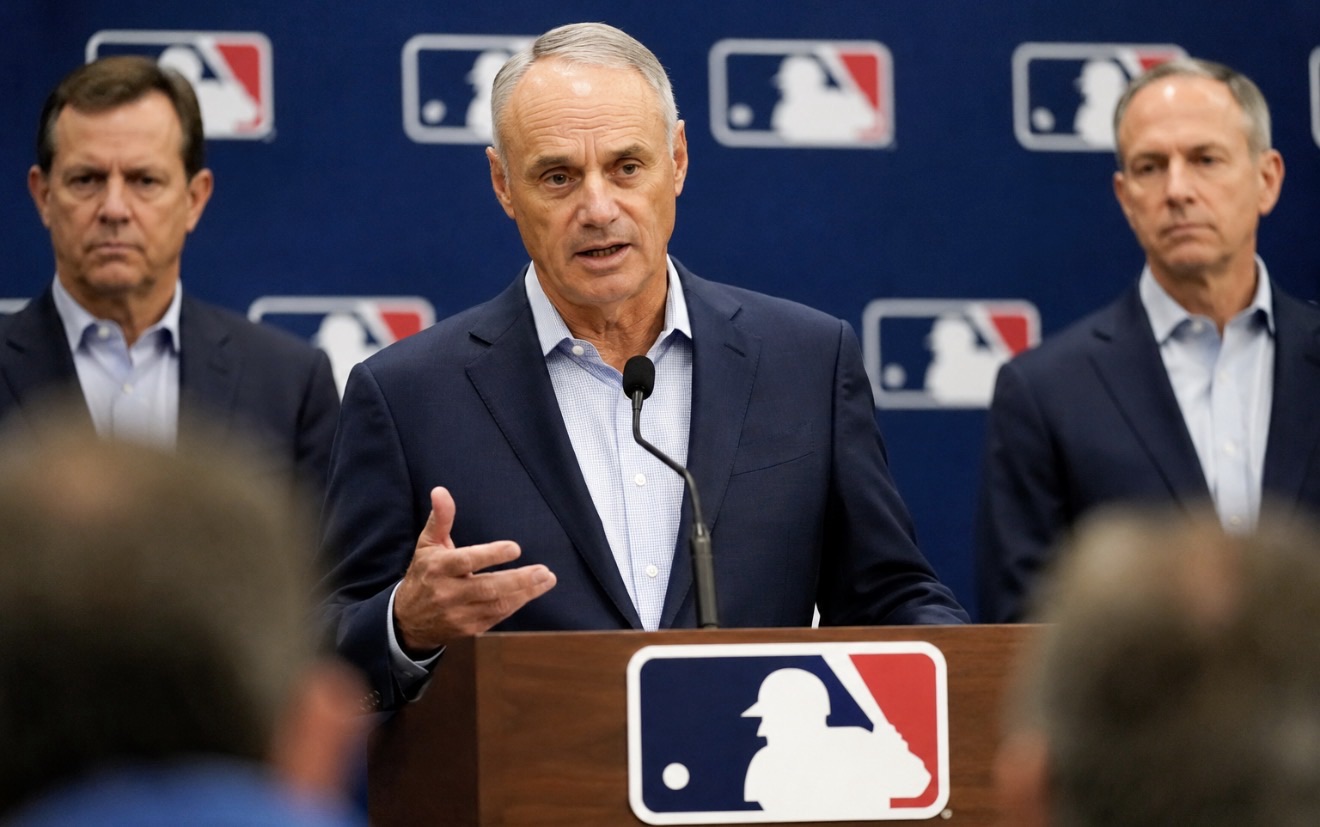
Commissioner Rob Manfred recently described the current payroll landscape as “not a fair fight,” pointing to the enormous disparity between baseball’s highest- and lowest-spending teams.
The numbers support that argument.
The defending champion Los Angeles Dodgers entered the season with an estimated payroll of approximately $415 million, far above the proposed cap. The New York Mets, led by owner Steve Cohen, carried a payroll approaching $379 million, while the New York Yankees stood near $340 million.
Other clubs that would exceed the proposed ceiling include the Toronto Blue Jays, Philadelphia Phillies, Boston Red Sox, San Diego Padres, and Atlanta Braves.
Supporters of the proposal point to the opposite end of the spectrum.
Under the proposed payroll floor, lower-spending franchises would be required to invest substantially more in player salaries. Teams such as the Miami Marlins, Tampa Bay Rays, Pittsburgh Pirates, Chicago White Sox, Cleveland Guardians, and Minnesota Twins would collectively need to increase payroll spending by hundreds of millions of dollars.
For fans in smaller markets, that provision may prove attractive. Many have spent years watching homegrown stars leave for wealthier franchises that can simply outbid competitors in free agency.
MLB officials have emphasized that a cap-and-floor structure could create greater competitive balance while encouraging additional investment by lower-spending clubs.
But the players’ association sees a much different picture.
Union leadership argues that salary caps inevitably limit earning potential, particularly for elite players whose contracts often drive salary growth across the league. The MLBPA also fears that tying compensation more directly to league revenues could introduce greater uncertainty into future earnings and weaken the negotiating leverage players have maintained for decades.
Beyond competitive balance, financial considerations are driving the debate.
Professional sports franchises have become increasingly attractive investment assets, with private equity firms and institutional investors showing growing interest in ownership stakes. Limiting labor costs could significantly improve operating margins while boosting franchise valuations, a prospect that appeals to ownership groups across the league.
The timing is equally important.
Baseball’s current labor agreement, signed in March 2022 following a 99-day lockout, expires on December 2, 2026. Industry observers increasingly expect another lockout once that deadline passes if significant progress is not made.
Historically, labor negotiations intensify only when the possibility of lost regular-season games becomes real. Until then, both sides are expected to maintain firm public positions while continuing negotiations behind closed doors.
For now, the proposal represents an opening bid rather than a final framework. Both MLB and the players’ association understand that any eventual agreement will likely look very different from what was presented this week.
Still, the significance of the moment is difficult to overstate.
More than thirty years after the labor conflict that canceled the 1994 World Series, baseball is once again confronting the question that has shaped every major labor dispute in the sport’s modern history: whether Major League Baseball should finally adopt the salary-cap model used by every other major American professional sports league.
The answer could determine not only the future economics of baseball, but whether fans find themselves watching games—or another labor standoff—when the 2027 season arrives.
New York — JBizNews Desk
© JBizNews.com All Rights Reserved. Reproduction or distribution without written permission is prohibited.