
 JBizNews
Bill Gates Built a Philanthropic Empire on Trust. Now That Trust Is Being Tested.
By JBizNews Desk
SEATTLE — May 31, 2026
For more than two decades, Bill Gates carefully transformed himself from one of the most feared executives in corporate America into one of the most trusted figures in global philanthropy.
The transition was remarkable. The hard-charging co-founder of Microsoft, whose company spent years battling antitrust regulators, evolved into the soft-spoken billionaire associated with vaccines, disease prevention, education reform, and global development. The image became so successful that many younger Americans know Gates primarily as a philanthropist rather than the businessman who built one of the world’s largest technology companies.
But a recent Wall Street Journal report is raising new questions about just how carefully that image was constructed—and whether the institution built around it can withstand mounting scrutiny.
According to current and former employees cited by the Journal, Gates’ public appearances have long been managed with extraordinary precision. Staff reportedly maintain a custom-sized mannequin used to test clothing selections in advance of appearances, while multiple pre-approved outfit combinations are prepared for events. The goal, according to individuals familiar with the process, was consistency: projecting a calm, approachable, thoughtful public persona.
The detail has generated headlines and social media commentary. But the larger issue extends far beyond sweaters, glasses, or wardrobe planning.
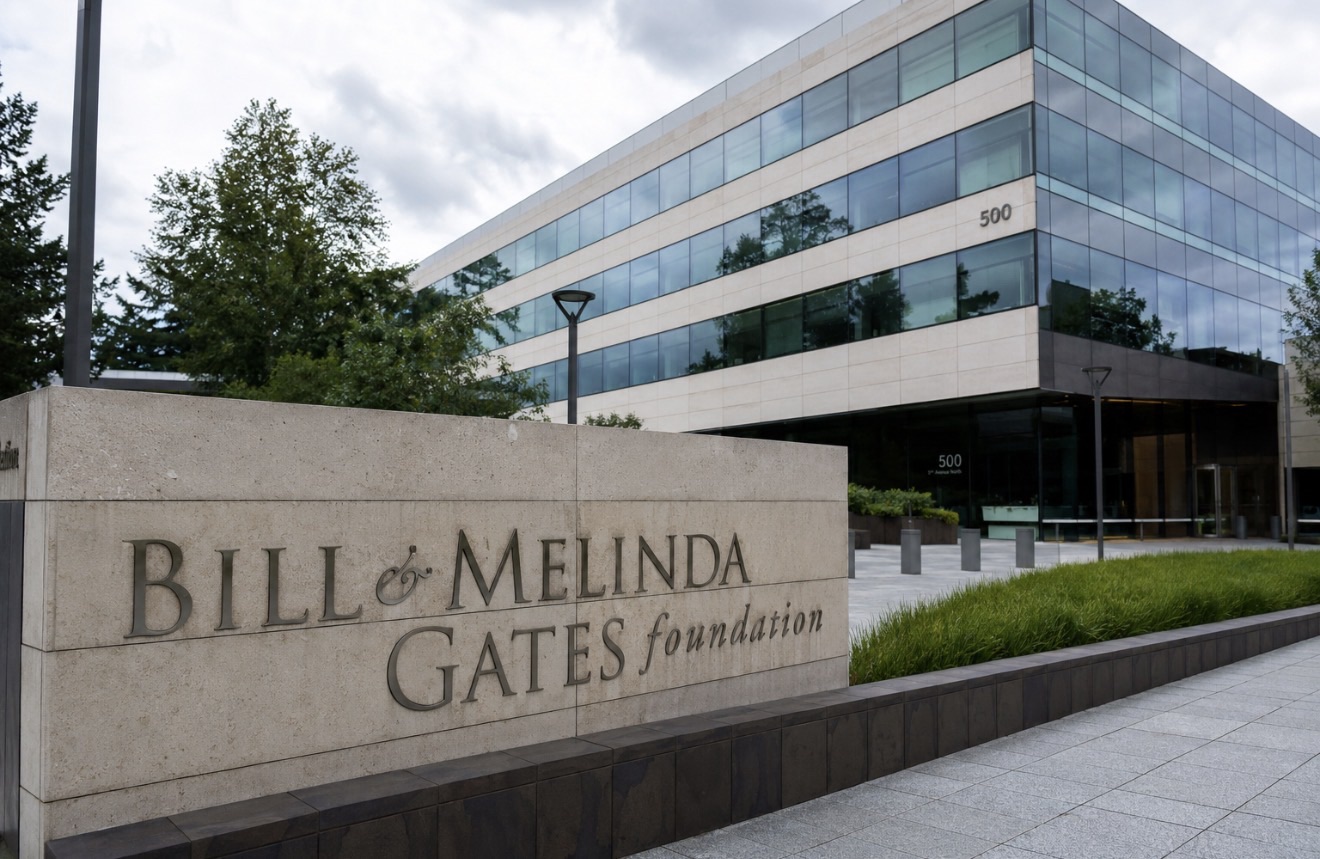
For the Bill & Melinda Gates Foundation and related philanthropic organizations, reputation is not merely a public-relations concern. It is a core asset.
Unlike traditional businesses that generate revenue by selling products or services, major philanthropic organizations depend heavily on trust, credibility, and relationships. Donors, governments, universities, pharmaceutical companies, nonprofit organizations, and international agencies often choose partners based as much on reputation as on financial resources.
That dynamic becomes especially important for institutions operating on the scale of the Gates Foundation.
The foundation supports programs across global health, agriculture, education, economic development, and disease prevention in more than 130 countries. Through initiatives such as Gates Philanthropy Partners and the Giving Pledge, the organization also helps attract additional capital from wealthy individuals, foundations, and institutional donors.
In many cases, the Gates name itself functions as a form of currency.
Potential donors gain confidence when they believe their contributions are associated with a respected and trusted institution. Companies become more willing to participate in public-private partnerships. Governments become more receptive to collaboration. Researchers become more eager to pursue joint projects.
That is why reputational damage can have consequences far beyond headlines.
The foundation’s investment activities provide one example.
Through strategic investments, guarantees, and partnerships, Gates-backed organizations frequently work alongside private companies to accelerate the development and distribution of vaccines, medicines, agricultural technologies, and public-health initiatives. Such arrangements often depend on mutual confidence and long-term trust between participants.
When a prominent public figure becomes the focus of controversy, that trust can become more difficult to maintain.
The timing of the renewed attention is particularly significant.
The Journal’s report arrives as Gates faces increasing scrutiny regarding past interactions with the late financier Jeffrey Epstein. Gates is expected to face questions about those relationships as congressional inquiries continue examining connections between prominent individuals and Epstein.
Regardless of the outcome of those proceedings, the publicity creates challenges for organizations that rely heavily on public confidence.
The situation also highlights a broader issue facing founder-led institutions.
Whether in business, politics, media, or philanthropy, organizations built around a single personality often benefit enormously during periods of success. A recognizable leader can attract donors, investors, employees, partners, and media attention more easily than a faceless institution.
The same concentration of influence, however, creates vulnerability.
When reputation becomes closely tied to one individual, personal controversies can quickly become organizational challenges. What begins as a public-relations problem can evolve into fundraising difficulties, partnership concerns, recruiting challenges, and broader institutional questions.
For the Gates Foundation, the stakes are particularly high because the consequences extend beyond executives and donors.
The foundation’s work supports researchers, healthcare providers, farmers, educators, and community organizations around the world. If reputational concerns eventually affect funding or partnerships, the impact would ultimately be felt far from Seattle—in clinics, laboratories, schools, and development projects that depend on philanthropic support.
None of that means the institution is in immediate danger. The Gates Foundation remains one of the largest and most influential charitable organizations in the world, with substantial resources and a global footprint developed over decades.
But the episode serves as a reminder that even the most carefully managed public image has limits.
For years, the sweaters, the measured tone, and the carefully cultivated persona helped create one of the most successful reputation transformations in modern public life.
The question now is whether the institution behind that image has become strong enough to stand independent of the man who created it.
Seattle — JBizNews Desk
© JBizNews.com All Rights Reserved. Reproduction or distribution without written permission is prohibited.