
 JBizNews
Monday Markets Preview: Wall Street Opens June at Records as Trump Weighs Iran Deal
Wall Street begins June the way it ended May — at record highs, but holding its breath. In a live update Sunday afternoon, CBS News reported that President Trump had still not decided whether to sign a potential peace agreement with Iran, leaving the single biggest question of the year hanging over Monday’s open.
Trump announced Friday he would make a “final determination” on the deal after a meeting in the White House Situation Room. As of Sunday, no decision had come. In a Truth Social post, Trump laid out his terms: any agreement must reopen the Strait of Hormuz, and Iran must work with the U.S. to have its highly enriched uranium destroyed. A source familiar with the talks said Trump had made significant late edits to the draft memorandum of understanding, with his changes focused on the Strait and the removal of that uranium.
The tension didn’t stay on paper over the weekend. The U.S. military disabled a merchant vessel in the Gulf of Oman that was allegedly trying to break through the American blockade of Iranian ports — a reminder that the shooting hasn’t fully stopped even as the diplomacy advances.
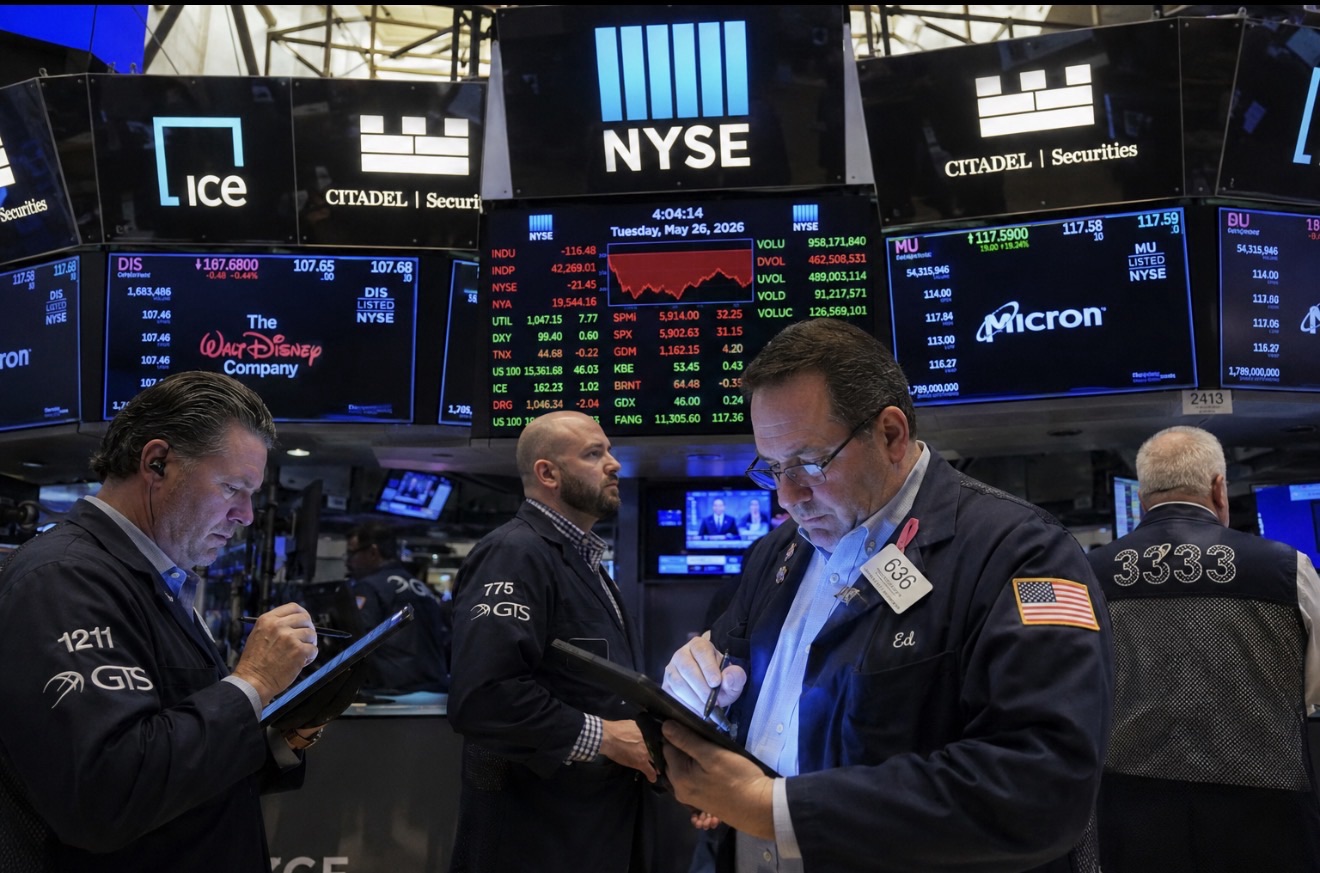
A market riding high into a risky week
The averages enter June on a tear. Friday’s close put the Nasdaq Composite at 26,972.62, the S&P 500 at 7,580.06, and the Dow Jones Industrial Average at 51,032.46. All three notched fresh all-time intraday highs and capped a winning May, powered by technology and by growing hope that the Iran war is winding down.
That hope did real work last week. According to Charles Schwab, oil prices fell nearly 10% and the 10-year Treasury yield dropped 11 basis points, both driven by expectations of a peace deal. Lower oil and lower yields are exactly the combination that lifts stocks — cheaper energy eases inflation, and lower yields make shares more attractive.
But Schwab also flagged a warning sign. Both the S&P 500 and the Nasdaq now carry relative strength readings above 70, a level that signals the market may be overbought in the near term. The firm noted that if the expected U.S.-Iran agreement breaks down and oil and yields climb back up, that could be the excuse for stocks to pull back 1% to 2%.
Why the next few days matter so much
The whole setup hinges on Iran. As Wayve Capital‘s strategist put it, the real bet investors are making is that a resolution arrives in the next two to three weeks. He added that it’s hard to imagine the Strait of Hormuz still being closed in October without a serious market reaction.
Not everyone is convinced a signature ends the story. London-based defense analyst Alex Alfirraz Scheers said Trump’s declaration on a possible deal should be taken with a degree of healthy skepticism, noting that Iran has its own demands that remain unfulfilled. Analysts broadly expect markets to stay sensitive to every headline out of the negotiations, with any confirmed reopening of the Strait likely to push global stocks higher — and any breakdown likely to bring volatility back fast.
The week’s economic calendar
Beyond Iran, there’s a full slate of data. Monday kicks off at 9:45 a.m. ET with S&P Global’s final May manufacturing reading, followed at 10:00 a.m. by the Institute for Supply Management‘s Manufacturing PMI for May — the first hard economic data of the new month. The week then builds toward Friday’s main event: the May jobs report from the Bureau of Labor Statistics, due June 5 at 8:30 a.m. ET.
There’s also a seasonal headwind worth knowing. June has historically been the weakest month for stocks in a midterm election year, and many investors expect a stretch of sideways trading after the spring run to records.
What it means for everyday Americans
Strip away the Wall Street jargon and it comes down to the price at the pump and the cost of borrowing. A signed deal that reopens Hormuz would pull oil — and gasoline — lower and ease the inflation pressure that has squeezed household budgets since the war began in late February. That would also give the Federal Reserve more room to cut interest rates, which feeds straight into mortgages, car loans, and credit cards.
A breakdown would do the reverse: energy prices climbing again, inflation worries returning, and the Fed staying on hold. One detail from last week underlines how thin the cushion is. The April personal consumption expenditures data showed Americans’ savings rate dropping — meaning households have less of a buffer to absorb another shock.
So as the new month opens, the records on the board matter less than the decision sitting on the President’s desk. Watch for word on the Iran signature, watch oil, and watch Friday’s jobs number. Those three will decide whether June’s strong start holds — or whether the spring rally finally takes a breather.
JBizNews Desk
© JBizNews.com. All rights reserved. This article is original reporting by JBizNews Desk. Unauthorized reproduction or redistribution is strictly prohibited.