
 JBizNews
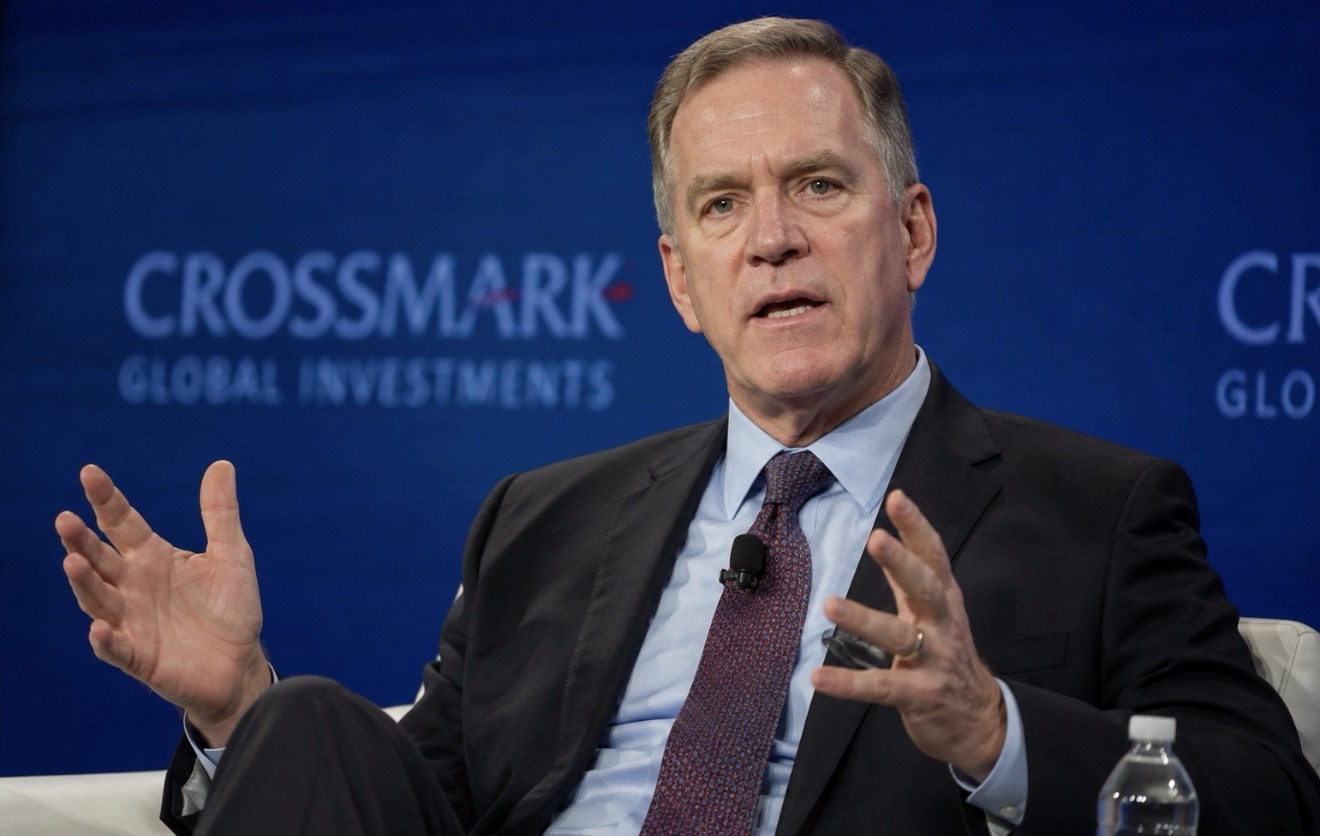
Crossmark CEO Bob Doll Warns Wall Street Is in a ‘High-Risk Bull Market’
For much of the past two years, Wall Street’s message to investors has been remarkably simple: stay long equities, ride the AI boom, and trust the economy to keep delivering.
Bob Doll thinks the situation is more complicated than that.
Doll — the longtime market strategist and current CEO and chief investment officer of Crossmark Global Investments, with more than four decades of investment experience across multiple market cycles — entered 2026 describing the current environment with a phrase that has increasingly resonated across institutional finance: a “high-risk bull market.”
At first glance, the phrase sounds contradictory. Bull markets imply confidence, momentum, and expanding risk appetite. High-risk environments usually imply caution and instability.
But what Doll is describing is a market where gains remain possible — even likely — while the underlying foundation supporting those gains grows increasingly fragile.
Five months into 2026, that framing may be proving unusually accurate.
Stocks remain elevated, artificial intelligence spending continues driving earnings growth across major technology companies, and the broader economy has avoided recession despite higher interest rates and geopolitical instability.
At the same time, inflation remains stubbornly elevated, oil prices are rising again amid Middle East tensions, Treasury yields remain volatile, valuations are historically stretched, and markets are increasingly dependent on a narrow concentration of mega-cap technology firms.
That combination is exactly what Doll means by a “high-risk bull market.”
The Bull Case Is Still Real
Doll’s broader thesis is not bearish.
In fact, he continues to argue that several major structural forces remain supportive for equities.
The U.S. economy has proven significantly more resilient than many economists expected entering 2025. Consumer spending has slowed but not collapsed. Corporate earnings, particularly in technology and AI-linked sectors, continue expanding. Fiscal stimulus and industrial spending remain historically elevated. And the Federal Reserve appears increasingly cautious about tightening policy further unless inflation reaccelerates materially.
Artificial intelligence remains central to that optimism.
The AI investment cycle is producing one of the largest capital spending booms seen in decades, with hyperscalers, semiconductor firms, data infrastructure companies, software providers, and cloud operators all experiencing surging demand tied to enterprise AI adoption.
For equity investors, that matters enormously because it creates real earnings growth rather than purely speculative enthusiasm.
That distinction helps explain why markets continue climbing despite persistent macroeconomic concerns.
Doll has also pointed toward continued government spending, regulatory easing, and a labor market that remains relatively healthy as additional support pillars for equities heading into the second half of the year.
Under normal circumstances, those conditions would form a relatively strong backdrop for stocks.
The problem is that markets are no longer priced for merely “good.”
They are priced for near perfection.
Why The Risk Side Matters More Now
This is where Doll’s warning becomes more important.
The market’s vulnerability comes less from current economic weakness and more from how little room investors now have for disappointment.
Inflation remains the clearest example.
While price pressures cooled significantly from their 2022–2023 peaks, inflation has stopped falling consistently toward the Federal Reserve’s 2% target. Recent data has shown renewed firmness in core prices, while higher oil prices tied to geopolitical tensions risk feeding additional inflation into transportation, manufacturing, food, and consumer expectations.
That leaves the Federal Reserve trapped in a difficult position.
If inflation remains sticky, aggressive rate cuts become difficult. But if rates remain elevated too long, economic growth eventually slows and financial conditions tighten further.
Markets are effectively betting policymakers can engineer a narrow “soft landing” where growth slows just enough to control inflation without damaging earnings or employment significantly.
Historically, that balancing act has been extremely difficult.
Doll has repeatedly warned about that “tightrope” dynamic.
The stock market has already delivered multiple consecutive years of double-digit gains, while corporate earnings expectations remain elevated. Historically, periods of sustained double-digit earnings growth rarely continue uninterrupted for extended stretches without eventually encountering economic or valuation pressure.
That does not mean a crash is inevitable.
But it does mean expectations leave very little room for mistakes.
The Concentration Problem
Another issue increasingly worrying strategists is market concentration.
A growing percentage of market gains continues coming from a relatively small group of mega-cap technology and AI-related companies. That concentration creates a situation where headline indexes can appear healthy even while large portions of the broader market remain weaker underneath.
In practical terms, markets are becoming more dependent on a handful of companies continuing to deliver exceptional earnings growth.
If even one or two major AI leaders stumble, the impact on broader sentiment could be disproportionate.
That concentration risk is one reason Doll continues emphasizing diversification rather than blind momentum chasing.
Why Investors Still Stay In
Despite the warnings, Doll has not advocated abandoning equities.
That is what makes the “high-risk bull market” concept more nuanced than a standard bearish forecast.
His argument is essentially that investors probably still need exposure to equities because earnings growth and economic resilience continue supporting higher prices over time. Sitting entirely in cash risks missing further upside if AI-driven growth persists longer than expected.
But participating in the market now requires accepting greater volatility, tighter margins for error, and a much wider range of possible outcomes than many investors became accustomed to during the long post-2009 bull market.
In other words: the bull market may continue, but it is becoming less forgiving.
What Wall Street Is Really Debating
Underneath the headlines, Wall Street is increasingly arguing over one central question:
Is artificial intelligence productivity growth strong enough to offset the macroeconomic pressures building elsewhere in the economy?
If AI-driven earnings expansion continues accelerating, markets may justify current valuations longer than skeptics expect.
But if inflation, interest rates, or geopolitical instability begin undermining broader growth, the market’s current optimism could face a much more difficult stress test.
That tension explains why markets in 2026 often appear strangely divided — with investors simultaneously optimistic and anxious.
Doll’s phrase captures that contradiction better than most.
This is not a euphoric bull market built on easy money and broad confidence.
It is a bull market still climbing higher while carrying an increasingly visible list of risks underneath it.
And that may ultimately make it more dangerous than it first appears.
New York — JBizNews Desk
© JBizNews.com All Rights Reserved. Reproduction or distribution without written permission is prohibited.