
 Vos Iz Neias
Satmar Wedding Draws Rival Factions in Unprecedented Show of Harmony
BOROUGH PARK, N.Y. (VINnews) — A wedding celebration in Brooklyn’s Satmar community became an unexpected display of reconciliation and unity Sunday night, drawing prominent members of both branches of the influential Hasidic dynasty to an event many attendees described as historic.
The occasion was the wedding of the daughter of philanthropist and Satmar community figure Lipa Friedman, a prominent supporter of the Williamsburg-based Satmar faction led by Rabbi Zalman Leib Teitelbaum. In recent months, Friedman has been widely credited by community members with helping facilitate dialogue and goodwill between members of the rival Satmar camps.
Lipa Friedman is the son of Moshe Friedman, known throughout the Satmar world as “Moshe Gabbai,” the longtime chief aide and one of the most influential figures in the court of the late Satmar Rebbe, Rabbi Moshe Teitelbaum. Following the split within Satmar more than two decades ago, Moshe Friedman became closely identified with the Williamsburg-based faction, and for many Hasidim came to symbolize the painful divisions that emerged within the movement. Against that backdrop, some community members view the recent efforts by his son, Lipa Friedman, to bridge differences and foster dialogue between the rival camps as particularly significant.
For more than two decades, the Satmar movement has been divided between followers of brothers Rabbi Aaron Teitelbaum and Rabbi Zalman Leib Teitelbaum. The dispute, which emerged following succession disagreements after the leadership of their father, the late Satmar Rebbe Rabbi Moshe Teitelbaum, resulted in years of legal battles, competing institutions and separate communal structures despite the groups sharing the same Satmar heritage.
The wedding came just days after what many Satmar Hasidim viewed as a breakthrough moment in efforts to ease longstanding tensions within the movement. Last week, descendants of the late Berech Moshe completed the division of religious heirlooms, manuscripts, sacred objects and family artifacts that had remained part of his estate for more than two decades.
The gathering, held at Friedman’s home, brought together representatives of the various branches of the Teitelbaum family to oversee the distribution of historically significant items according to the late Rebbe’s wishes. Among the artifacts divided among the heirs were rare manuscripts, family heirlooms, religious articles and items tracing their lineage to earlier generations of Satmar and Sighet rabbinic leaders.
Several community members credited Friedman and a small group of intermediaries with helping bring the complex process to a successful conclusion after years of discussions. Participants said the cooperation required to complete the distribution helped foster a spirit of goodwill among family members and community leaders who have often found themselves on opposite sides of the Satmar divide.
For many attendees at Sunday’s wedding, the scenes of unity were viewed as a continuation of the atmosphere created during last week’s inheritance ceremony. Some community members described the successful resolution of the decades-old estate matter as one of the most significant confidence-building measures between the various branches of the family in recent memory and a possible foundation for further reconciliation efforts.
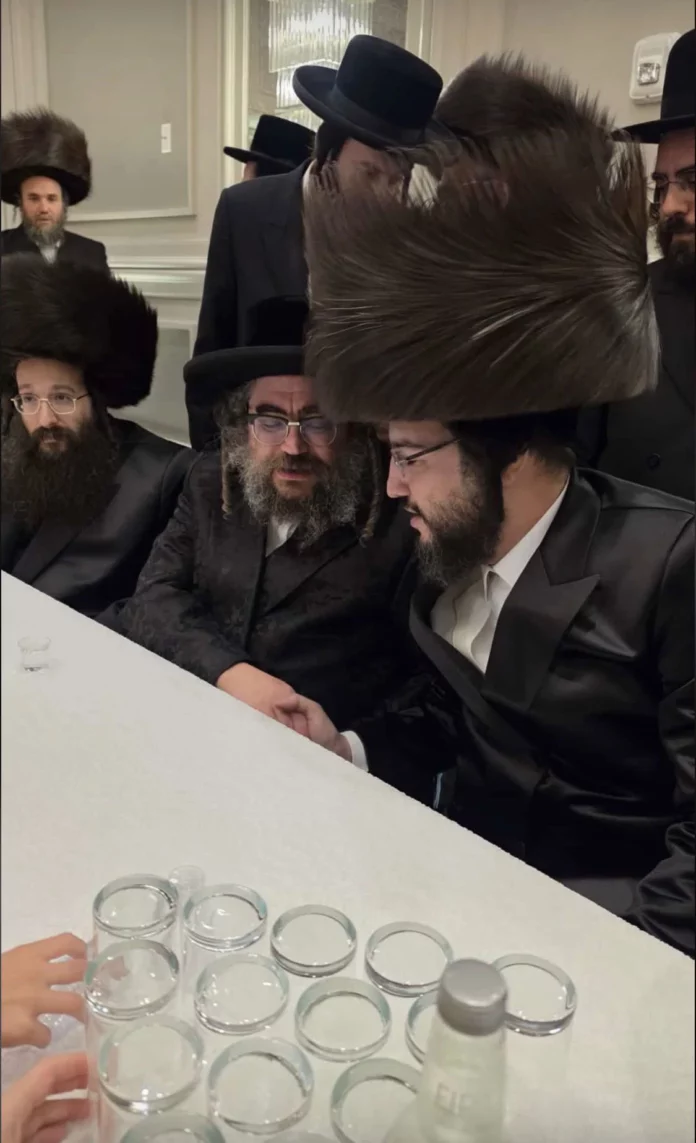
Against that backdrop, guests said Sunday’s wedding featured scenes that would have been difficult to imagine in previous years, as individuals associated with both factions greeted one another warmly, exchanged congratulations and participated in celebrations together.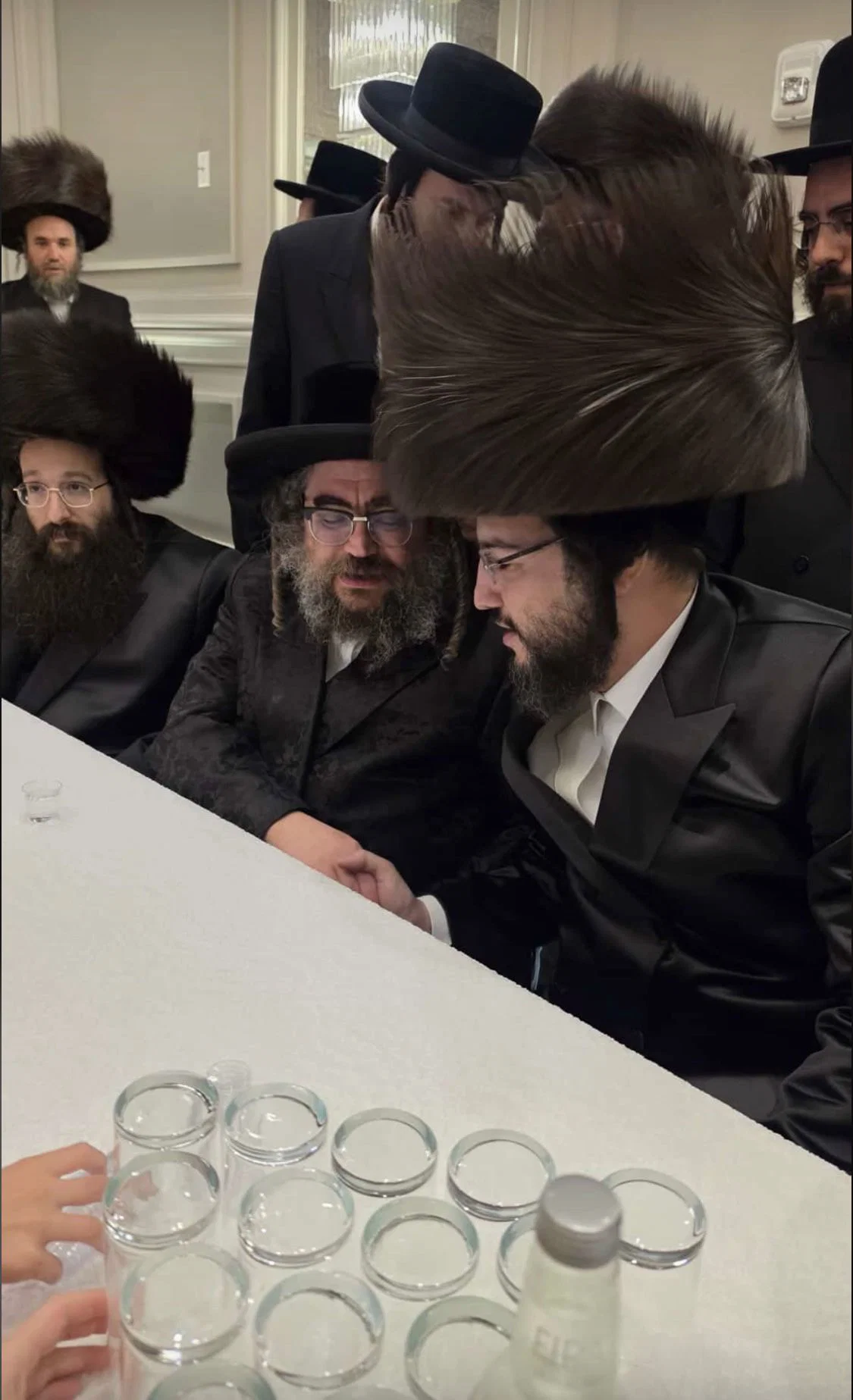
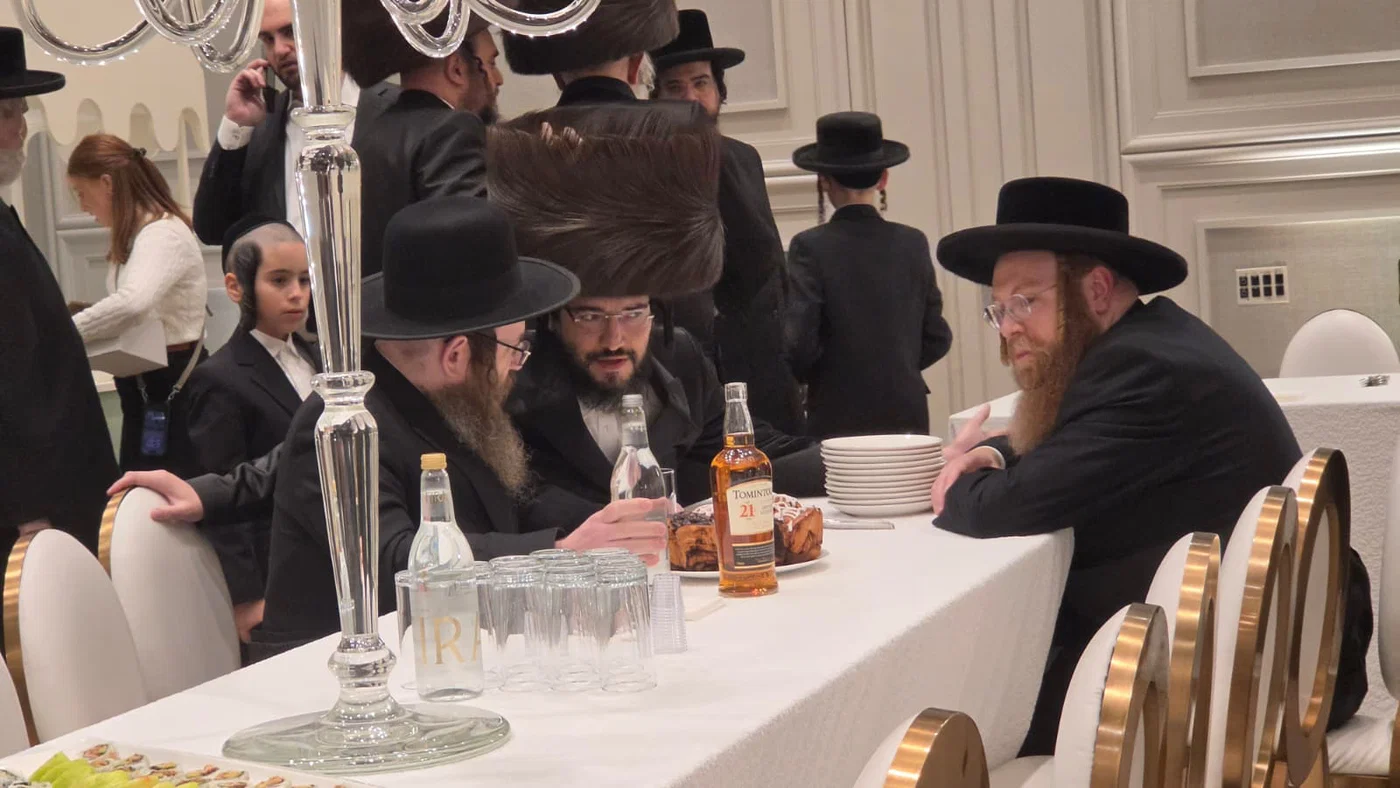
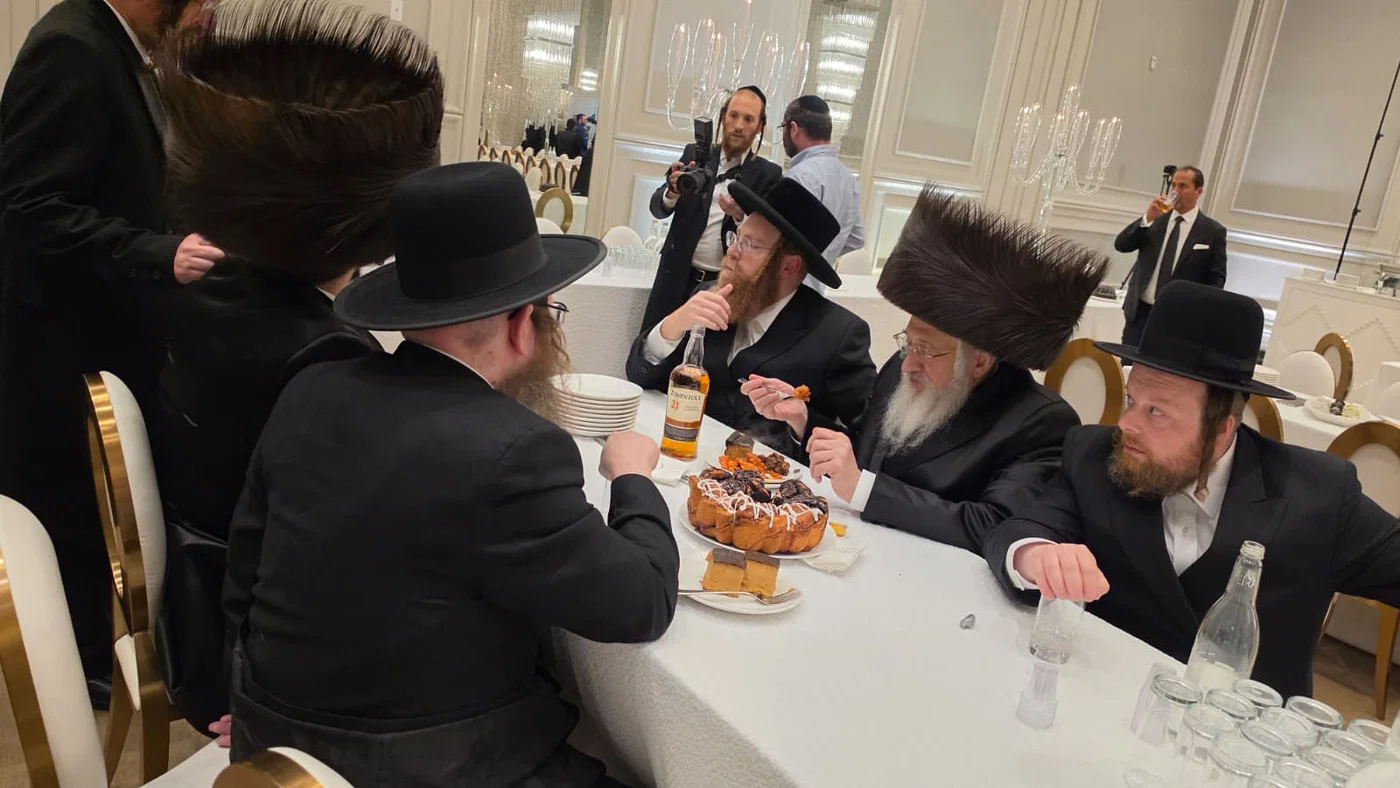
Among those attending were senior members of both Satmar courts, including representatives and family members associated with the Williamsburg and Kiryas Joel factions. Attendees said many of those present had not appeared together publicly in years.
Among those seen offering congratulations was Rabbi Menachem Mendel Teitelbaum, a son of Rabbi Aaron Teitelbaum. Guests said he warmly extended mazal tov wishes to the families and participated in portions of the evening’s festivities.
Also in attendance were senior aides and gabbaim associated with Rabbi Aaron Teitelbaum, including Chaim Shlomo Fisher and Mr. Stein, both of whom were seen greeting guests and taking part in the celebration. Their presence, together with that of Rabbi Menachem Mendel Teitelbaum, drew considerable attention from attendees, many of whom viewed it as another indication of the increasingly cordial atmosphere surrounding recent reconciliation efforts.
One of the evening’s most notable moments occurred during the dancing, when family members and rabbinic figures from different segments of the Satmar community joined together in celebration, drawing enthusiastic reactions from guests who viewed the scenes as symbolic of a thaw in relations.
Later in the evening, the gathering was highlighted by the arrival of Rabbi Zalman Leib Teitelbaum, who participated in traditional wedding festivities with members of the Friedman and Teitelbaum families.
While the wedding marked the establishment of a new family, many participants said its broader significance was the spirit of unity it represented. Community members described the event as a rare and powerful display of goodwill, reconciliation and mutual respect within one of the world’s largest Hasidic movements.
According to several well-placed sources within the Satmar community, activists and intermediaries continue to work behind the scenes to build on the spirit of reconciliation seen at Sunday’s wedding. Sources said efforts are underway to arrange the participation of Rabbi Aaron Teitelbaum at a Sheva Brachos celebration later this week.
It remains unclear whether Rabbi Aaron Teitelbaum will ultimately attend, and no official confirmation has been announced. However, several Hasidim familiar with the discussions said community leaders are actively working to make such an appearance possible, viewing it as another potentially significant step in ongoing efforts to foster goodwill and unity within the broader Satmar community.
For many attendees, Sunday’s celebration served as a reminder that even after decades of division, efforts toward peace and cooperation can produce moments that resonate far beyond a single wedding hall. Should additional joint appearances materialize in the coming days, some community members believe they could further strengthen a reconciliation process that until recently appeared unlikely.