
 JBizNews
Air Taxis Flew Over Manhattan This Spring. Why You Still Can’t Book One
The future of New York transportation made a brief appearance over Manhattan this spring.
It arrived quietly, flew from John F. Kennedy International Airport to Midtown in just seven minutes, landed successfully, and then disappeared without carrying a single paying customer.
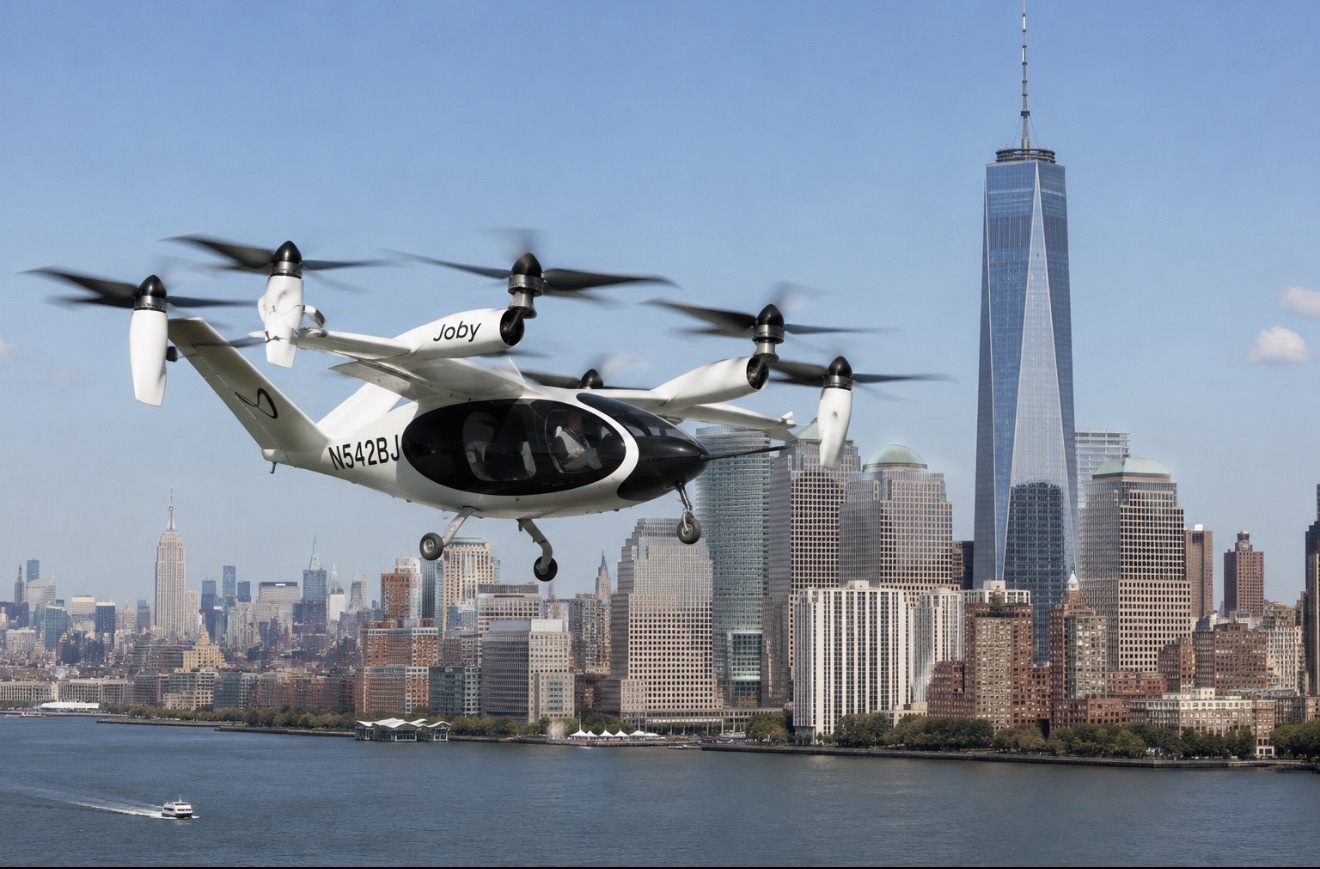
The aircraft belonged to Joby Aviation, which announced on April 27 that it had completed the first point-to-point electric air taxi flights in New York City history. The demonstration flights connected JFK Airport with the East 34th Street Heliport and later included stops at the Downtown Skyport near Wall Street and the West 30th Street Heliport.
For New Yorkers accustomed to spending an hour or more crawling through traffic between Manhattan and the city’s airports, the promise is obvious.
A trip that can take anywhere from 60 to 120 minutes by car was completed in approximately seven minutes by air.
The technology worked.
The challenge now is turning a successful demonstration into a viable business.
Joby Aviation remains one of the leading companies racing to commercialize electric vertical takeoff and landing aircraft, commonly known as eVTOLs. These aircraft are designed to combine the convenience of a helicopter with the lower operating costs and quieter operation of electric propulsion.
The vision is ambitious: fleets of electric aircraft transporting passengers between airports, downtown business districts, and suburban communities with the convenience of a ride-sharing app.
But there remains one major obstacle.
The aircraft cannot yet carry paying passengers.
Before commercial operations can begin, Joby must complete the final stages of certification with the Federal Aviation Administration. The company recently reached a milestone by flying its first aircraft configured for formal FAA inspection and testing, but regulators must still complete extensive evaluations before passenger service can begin.
For investors and industry observers, that certification process has become the defining challenge for the entire air-taxi sector.
The technology is advancing rapidly.
The regulatory framework is moving more slowly.
What makes New York’s demonstration particularly significant is its connection to a broader federal initiative.
The flights are part of the eVTOL Integration Pilot Program, a federal effort launched following a 2025 executive order focused on strengthening America’s leadership in advanced aviation technologies.
Earlier this year, Transportation Secretary Sean Duffy and the FAA selected eight projects nationwide to participate in the program. The Port Authority of New York and New Jersey was chosen as one of the key partners.
Under the initiative, companies, regulators, airports, and local governments are working together to test how electric aircraft can operate safely within complex airspace environments before large-scale commercial deployment begins.
New York presents one of the most challenging test cases in the country.
The region’s crowded airspace, dense population, major airports, and existing helicopter traffic make it an ideal proving ground for future urban air mobility operations.
Yet even if regulators approve passenger flights, another question remains.
Can air taxis become affordable enough to attract widespread adoption?
That debate has become increasingly important as investors scrutinize the industry’s economics.
Early estimates suggest airport shuttle flights could cost approximately $200 per seat or more. While that price point may appeal to executives, business travelers, and affluent customers seeking to avoid traffic, it remains far above the cost of traditional transportation options.
Joby’s strategy reflects that reality.
In 2025, the company acquired Blade Urban Air Mobility, a business already serving premium travelers with helicopter transportation between Manhattan and regional airports. Rather than creating an entirely new customer base, Joby intends to replace existing helicopter services with quieter electric aircraft.
The approach offers a more realistic path to commercialization than attempting to immediately serve mass-market commuters.
Even so, Wall Street remains cautious.
After a strong rally in 2025, Joby Aviation’s stock has struggled in 2026 as investors wait for regulatory approvals and clearer evidence that commercial operations can generate sustainable profits.
The broader industry has faced even greater challenges.
Several eVTOL developers have entered insolvency proceedings in recent years, highlighting the enormous capital requirements and regulatory hurdles associated with bringing entirely new aircraft categories to market.
Supporters argue that such setbacks are normal for transformative transportation technologies.
After all, commercial aviation itself required decades of investment, regulatory development, and infrastructure construction before becoming a routine part of daily life.
For now, New Yorkers have received a glimpse of what that future may look like.
The aircraft has flown.
The technology has been demonstrated.
The federal government is actively supporting pilot programs.
The remaining questions are whether regulators will approve passenger service—and whether enough travelers will be willing to pay for it.
The sky may be ready.
The business model is still being tested.
New York — JBizNews Desk
© JBizNews.com All Rights Reserved. Reproduction or distribution without written permission is prohibited.