
 JBizNews
IMF Chief Meets With Venezuela for First Time in Years as Country Seeks Economic Recovery
JBizNews Desk
A meeting that would have been unthinkable just months ago is now being viewed as a potential turning point for one of the world’s most troubled economies.
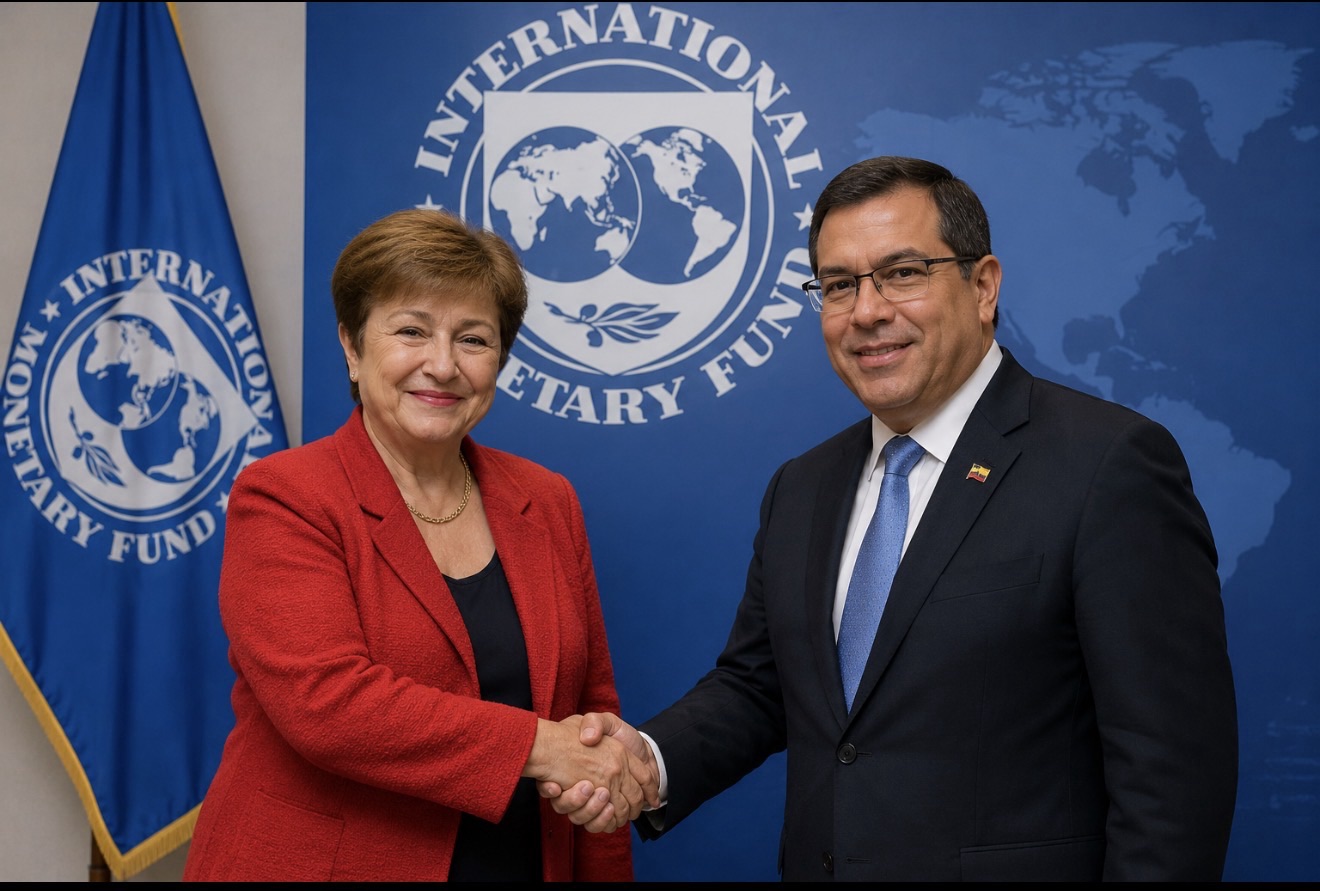
In a post on X on May 30, International Monetary Fund Managing Director Kristalina Georgieva confirmed that she met in Washington with Calixto Ortega, Vice President of Venezuela’s Economy Ministry, marking the first in-person meeting between the IMF’s top official and Venezuelan representatives since the fund resumed formal engagement with the country earlier this year.
“We discussed how the IMF can support efforts to strengthen macroeconomic stability, including through capacity development,” Georgieva wrote.
While brief, the meeting represents a significant step toward rebuilding relations between Venezuela and the global financial institutions that have largely been absent from the country for years.
A Break From Years of Isolation
The IMF and World Bank largely suspended dealings with Venezuela in 2019 amid disputes over the country’s political leadership and questions surrounding international recognition of its government.
That changed on April 16 when the IMF announced it would resume formal engagement with Venezuela under the administration of Interim President Delcy Rodríguez, reopening communication channels that had been frozen for years.
The renewed relationship follows major political changes inside Venezuela and has created an opportunity for international institutions to begin assessing the country’s economic condition after years of limited transparency and unreliable economic reporting.
According to IMF officials, current discussions are focused primarily on rebuilding economic data collection and reporting systems, a necessary first step before the fund can evaluate the country’s financial health or consider broader assistance programs.
Why the IMF Matters
For countries facing severe economic challenges, the IMF often serves as the gateway to broader international financial support.
Before debt restructuring, economic reform programs, or large-scale international financing can occur, governments typically must work with the IMF to establish credible economic data, policy frameworks, and stabilization plans.
That process is especially important in Venezuela.
The country remains burdened by one of the most severe economic collapses in modern history. Years of hyperinflation, declining oil production, economic mismanagement, sanctions, and political instability have dramatically weakened public finances and living standards.
According to IMF estimates, Venezuela’s public debt stands at approximately 180% of gross domestic product, one of the highest debt burdens in the world.
Inflation remains elevated, the currency continues to face pressure, and economic conditions remain fragile despite recent improvements.
Oil Markets Are Watching Closely
The implications extend beyond Venezuela.
The country possesses some of the largest proven oil reserves in the world, making its economic recovery a matter of interest for global energy markets.
A more stable Venezuelan economy could eventually support increased oil production, additional exports, and greater participation in international energy markets.
For global consumers, increased supply from a major producer could help ease long-term pressure on energy prices.
Several international energy companies have already begun exploring opportunities in Venezuela as conditions improve. Among them is Chevron, which has expanded engagement with the country following changes in U.S. policy and sanctions.
While a full recovery remains years away, investors are closely monitoring whether improved relations with international institutions could accelerate the process.
The Human Dimension
Behind the financial statistics lies a humanitarian crisis that has reshaped the region.
Since 2014, approximately 8 million Venezuelans have left the country, according to international organizations, making it one of the largest migration and displacement events in the world.
Many fled because of economic hardship, shortages of essential goods, collapsing public services, and limited employment opportunities.
Economic stabilization would not immediately reverse that trend, but it could create conditions that encourage investment, job creation, and eventually the return of some who left.
The outcome also matters for neighboring countries that have absorbed millions of Venezuelan migrants and for the broader Western Hemisphere, where migration pressures remain a major political and economic issue.
What Happens Next
The meeting between Georgieva and Ortega does not signal immediate financial assistance or an IMF lending program.
Instead, it marks the beginning of what could be a lengthy process involving economic assessments, data collection, policy reviews, and negotiations.
If progress continues, Venezuela could eventually receive a formal IMF economic evaluation for the first time in roughly two decades.
Such a review could open the door to future financial support, debt restructuring discussions, and access to resources currently beyond the country’s reach.
For now, the significance lies less in what was announced and more in the fact that the meeting happened at all.
After years of isolation, Venezuela is once again sitting at the table with one of the world’s most influential financial institutions.
Whether that conversation ultimately leads to economic recovery remains uncertain, but the reopening of the dialogue marks a notable shift in a relationship that many believed would remain frozen indefinitely.
JBizNews Desk
© JBizNews.com All Rights Reserved. Reproduction or distribution without written permission is prohibited.