
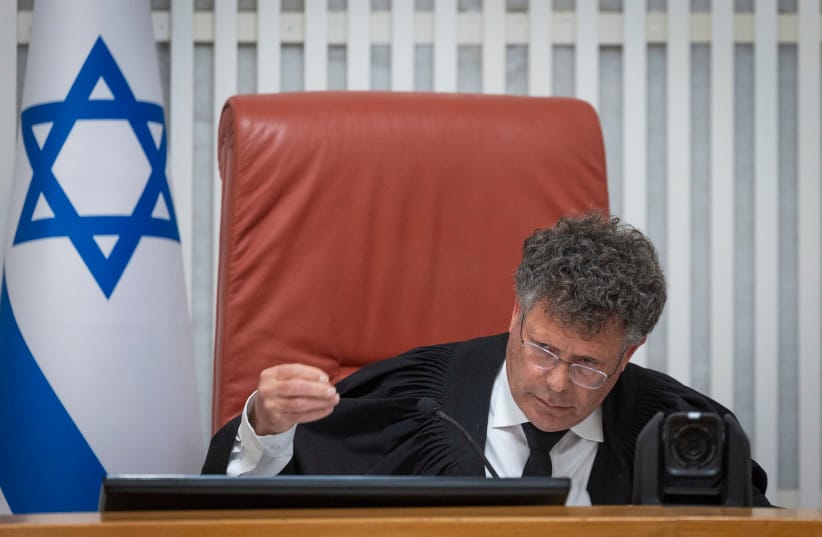

After a delay request, the hearing in the criminal trial of Prime Minister Benjamin Netanyahu was scheduled to begin at 10 a.m. on Tuesday.
At the start of the hearing on Tuesday, Netanyahu told the judges he would need to leave at 11:15 a.m. The judges said they would try, and the hearing began.
The prime minister’s defense team requested on Monday that Tuesdays be significantly delayed due to the transition of Netanyahu’s military secretary, IDF Maj.-Gen. Roman Gofman, as he steps into the role of chief of the Mossad.
After a lengthy legal battle, the High Court of Justice cleared Gofman’s appointment on Sunday.
The cross-examination section of the trial is in its final stretch. The hearings come on the backdrop of the fragile developments with Iran, and as the offer from President Isaac Herzog to sit for negotiations surrounding a plea bargain still stands.
Netanyahu was indicted in 2019 in three cases on charges of bribery, fraud, and breach of trust. He denies all wrongdoing.
The prosecution’s questions are focusing on Case 2000, which centers on Netanyahu’s conversations with Yediot Aharonot publisher Arnon “Noni” Mozes ahead of the 2015 election.
Netanyahu allegedly exploited his power to gain favorable coverage
Prosecutors allege that Netanyahu and Mozes discussed a corrupt deal: Netanyahu would help advance or support steps to weaken Israel Hayom, Yediot’s main competitor, and in exchange, Mozes would provide Netanyahu with more favorable coverage in Yediot Aharonot and on Ynet.
Netanyahu is charged in Case 2000 with fraud and breach of trust. Mozes is charged with offering and promising a bribe.
The case is based heavily on recorded conversations from December 2014, made by Netanyahu’s then-chief of staff Ari Harow, who later became a state’s witness. In the recordings, Netanyahu and Mozes discussed the possibility of legislation that would limit Israel Hayom’s circulation or business model, while also discussing the tone and extent of Yediot’s coverage of Netanyahu.
The prosecution’s argument is that even if the deal was never completed, the discussions themselves crossed a criminal line because Netanyahu, as prime minister, allegedly entertained using his political power to benefit a media owner in exchange for personal political benefit through coverage.
Netanyahu denies wrongdoing. His defense argues that he never intended to carry out any deal with Mozes, that he was trying to expose or neutralize Mozes, and that he ultimately worked against the Israel Hayom bill by dissolving the government and going to elections.
The defense also argues that politicians routinely speak with media figures and that the conversations did not amount to a criminal agreement.
Mozes also denies wrongdoing, arguing that the conversations did not constitute a real bribery proposal and were part of the normal, if tense, relationship between politicians and media owners.