
 JBizNews
Canada’s $124 Billion Oil Advantage Is Shaping High-Stakes Trade Talks With Washington
By JBizNews Desk
June 2, 2026
WASHINGTON — When Canadian officials arrived in Washington this week for trade talks with the Trump administration, they led with a message that sounded almost backwards: the United States needs Canada just as much as Canada needs the United States.
At first glance, that seems like a difficult argument for Ottawa to make. Canada depends heavily on access to the U.S. market, and Washington holds far more economic leverage in any trade negotiation. Yet Canada’s negotiators arrived carrying one asset that remains critically important to the American economy: oil.
Ahead of Monday’s meeting with U.S. Trade Representative Jamieson Greer, Canada-U.S. Trade Minister Dominic LeBlanc emphasized the importance of protecting the deeply integrated North American energy market. The message, delivered through spokesperson Gabriel Brunet, came just hours before LeBlanc and Canada’s chief negotiator, Janice Charette, sat down with U.S. officials.
The focus on energy was no coincidence.
It reflects a reality that often gets lost amid political debates over tariffs, trade deficits, and manufacturing jobs. While Canada depends heavily on American consumers, the United States also depends heavily on Canadian energy.
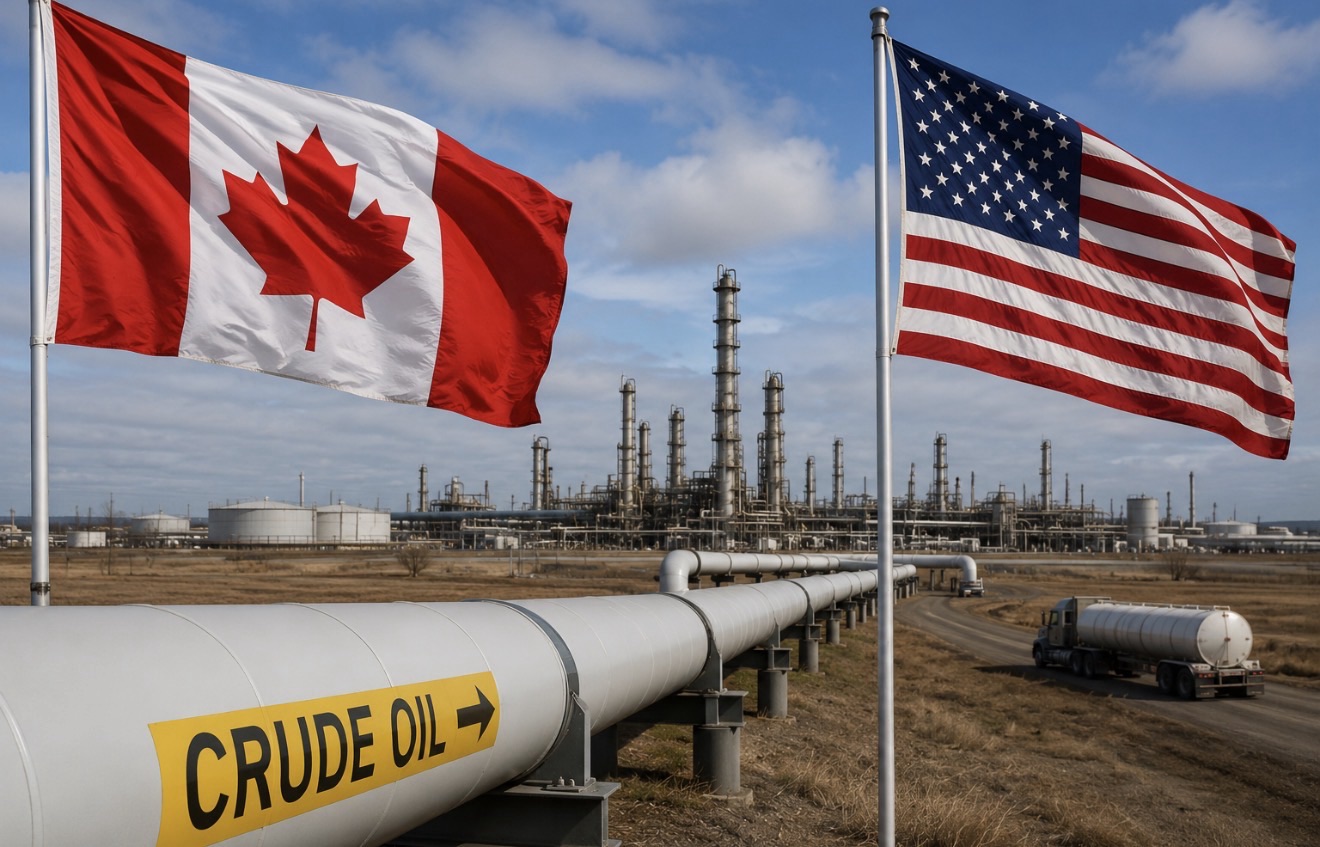
According to data from the U.S. Energy Information Administration, the United States purchases approximately $124 billion worth of Canadian energy annually. More importantly, Canada supplies roughly 4.1 million barrels of crude oil per day to the United States, accounting for more than half of all U.S. crude imports.
No other foreign supplier comes close.
Mexico, America’s second-largest source of imported crude, shipped less than 460,000 barrels per day during portions of early 2025. The gap highlights just how dominant Canada has become in the North American energy system.
The relationship goes beyond simple trade volumes.
Many American refineries, particularly in the Midwest and Gulf Coast regions, were specifically designed to process the heavy crude oil produced in Alberta’s oil sands. Replacing that supply would not be as simple as purchasing oil from another country.
The infrastructure, refining systems, transportation networks, and investment decisions built over decades have created a deeply interconnected market that neither country can easily unwind.
That reality gives Canada leverage.
It may not be enough to dictate terms in a broader trade negotiation, but it provides Ottawa with a powerful reminder that economic dependence runs both ways.
The timing is significant.
The Canada-United States-Mexico Agreement (CUSMA) — known in the United States as the USMCA — faces a mandatory review process beginning this summer. The review will determine whether the agreement continues unchanged, is renegotiated, or becomes the subject of more extensive discussions.
For Canada, the stakes are enormous.
The agreement protects most Canadian exports from tariffs and provides the framework governing one of the largest trading relationships in the world. Any disruption could affect industries ranging from manufacturing and agriculture to energy and technology.
There is also growing pressure on Canadian Prime Minister Mark Carney to demonstrate progress.
Mexico has already moved more aggressively in its discussions with Washington, while Canada’s formal negotiating track has advanced more slowly. That has fueled criticism from business groups and political opponents concerned about the country’s position heading into the review process.
LeBlanc’s trip to Washington was designed in part to address those concerns.
The one-day visit signaled urgency and an effort to demonstrate active engagement with the administration.
By emphasizing energy before discussions even began, Canadian officials effectively highlighted the area where Ottawa holds its strongest negotiating hand.
The message was straightforward: North America’s energy system functions because both countries benefit from it.
Disrupting that relationship would impose costs on consumers, refiners, producers, and businesses on both sides of the border.
Whether that argument gains traction remains uncertain.
Greer has publicly suggested that Canada has been slower than other trading partners in engaging with the administration’s trade agenda. He has also indicated that Washington intends to conduct a serious review of the agreement rather than automatically extending existing arrangements.
At the same time, industry participants describe a more nuanced picture behind closed doors.
Executives who attended recent meetings with administration officials have said the White House appears interested in preserving the core energy relationship even as it pushes for broader trade changes.
That distinction matters.
While trade negotiations often focus on political disagreements, the North American energy market operates according to economic realities that cannot easily be altered by policy alone.
Canada needs American buyers because most of its oil infrastructure is built to serve the U.S. market. The United States needs Canadian crude because much of its refining system was designed around those supplies.
Both sides understand that reality.
The result is a negotiation in which oil serves not only as a commodity but also as a strategic reminder of how deeply intertwined the two economies have become.
The immediate story is about one meeting and one round of trade discussions.
The larger story is about a North American energy partnership worth more than $124 billion annually that neither side can afford to ignore.
As the CUSMA review approaches, Canada is making a simple argument: trade relationships may be negotiable, but energy interdependence is much harder to replace.
Washington — JBizNews Desk
© JBizNews.com All Rights Reserved. Reproduction or distribution without written permission is prohibited.