
 Vos Iz Neias
Lt.-Col. Yossi Levi: Govt. Turned Mainstream Into Extremists, Less Charedim Will Enlist Now
JERUSALEM (VINnews) — The charedi community is in turmoil, and the growing tension between the sector, Israeli society, and state authorities threatens to completely undo the quiet progress that has been made in recent years.
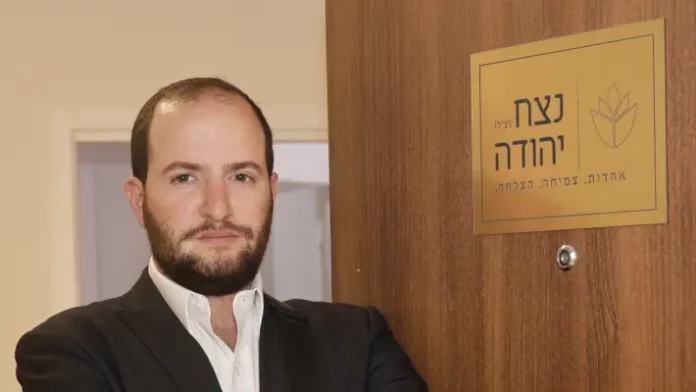
One person who knows the situation firsthand is Lt. Col. (res.) Yossi Levy, CEO of the “Shomer Israel – Charedi Tracks in the IDF” Association, who has spent the last 15 years helping establish and support military service frameworks tailored to the charedi community. He has now decided to speak out.
In a strongly worded letter sent to Prime Minister Benjamin Netanyahu and the Defense Minister, Levy warned that current policies are leading to disaster and producing the exact opposite of their intended effect.
In an interview with journalist Yossi Sergovsky, Levy described what he sees in the streets of Jerusalem and Bnei Brak:
“The current approach of sending mass draft orders, carrying out arrests, and conducting raids into neighborhoods and yeshivas reminds me of very dark days in Israel.”
He continued: “I am so concerned that I will say this clearly: we are on a direct path to once again seeing stones thrown at charedi soldiers in the streets. I remember 2013 and 2014 very well. In 2013 I walked proudly through my neighborhood. Young Haredim appreciated me, supported me, and understood that those who were not studying needed to do something. But then Amendment 19 to the Security Service Law—the infamous ‘Lapid Law’—arrived, along with attempts to impose criminal sanctions. The Haredi street erupted against the army. From that day on, stones were thrown at me and my soldiers, and we had to close apartments housing lone soldiers in Givat Shaul. Today’s situation is heading back to exactly that place—and perhaps worse.”
According to Levy, the greatest damage is being done not to extremists but to the mainstream charedi population. “Look at what has happened since October 7. At the beginning of the war, people from the heart of the Haredi community who had never spoken to me before called to express support and said, ‘We’re praying for you.'”
He argues that this support has largely disappeared: “The radicalization has reached the core of the community. When you attack an entire sector and collectively label everyone who doesn’t enlist as a criminal, you take normal people and turn them into extremists.”
Levy claimed that the hardline anti-draft Jerusalem Faction has effectively won a tactical victory: “Ten years ago they told mainstream Lithuanian rabbis, ‘Join our hardline approach.’ Today they can point and say, ‘We told you so.’ That has to be stopped immediately.”
Levy challenged the common claim that legal pressure and economic sanctions are increasing charedi enlistment. “Yes, there is some increase in Haredi enlistment numbers. But let’s tell the truth: 100 percent of that increase is in technological positions, service without uniforms, and places where reserve soldiers are not serving. That is not the issue and it does not solve the national need.”
He emphasized that the country’s urgent need is for combat soldiers: “The real need right now is fighters on the ground so that reserve soldiers who are collapsing under the burden can be relieved. I myself recently completed 80 days of reserve duty in Tulkarm. My battalion includes high-tech CEOs and leading figures in the economy who are exhausted.”
Regarding combat recruitment, he said: “There has been no growth throughout three years of war. In the most recent recruitment cycle, 96 soldiers joined the Hasmonean Brigade, and people issued celebratory announcements about a 24 percent increase. Have you lost your minds? In 2013, before the laws and coercion, we opened two companies per recruitment cycle and had twice as many Haredi combat soldiers as today, while the charedi population has since doubled in size.”
He concluded:”Anyone claiming that economic sanctions have brought Haredim into combat service is talking nonsense.”
Levy directed sharp criticism toward the political system. “The fact that two and a half years after the outbreak of the war there is still no enlistment law regulating the status of Torah scholars while enabling rapid enlistment of those who are not studying, a proposal that had broad rabbinic support except among the most extreme faction, is the greatest domestic failure imaginable.”
He said that senior politicians have approached him seeking solutions but have failed to produce results. Levy also criticized much of the charedi political leadership:”Almost all of the charedi representatives have provided zero assistance to these programs. Shas is the only party that was intelligently involved and helped through its government ministries.”
He recounted speaking with a senior Lithuanian-Haredi politician:”I told him that we support hundreds of lone soldiers from classic Lithuanian-charedi homes in Jerusalem and Bnei Brak. He simply denied reality and said, ‘That can’t be. They aren’t real charedim.'”
According to Levy, many young men who enlist are rejected by their families and left without support. Asked what solution he proposes, Levy said Israel needs a comprehensive government strategy based on education and accommodation rather than coercion.
“In 78 years of existence, the State of Israel has never succeeded in writing a single coherent plan for integrating charedim.”
He praised the establishment of the Hasmonean Brigade but said that meaningful recruitment requires long-term educational work. He also noted that a new association of Haredi hesder yeshivas has recently been established with official recognition from the Defense Ministry.
“There are already 15 charedi hesder yeshivas with about 1,000 students. We invest enormous effort there, but the state needs to tell every charedi entrepreneur:’Establish a hesder yeshiva or a pre-military academy, and we’ll support you.'”
Toward the end of the interview, Levy sharply criticized attempts by liberal activists and media outlets to challenge the gender-segregated nature of Haredi military frameworks. Referring to the Netzah Yehuda Battalion and the Hasmonean Brigade, he said: “Netzah Yehuda has existed for 26 years, and there isn’t a month when it isn’t attacked in the pages of Haaretz and other newspapers over questions like whether women should be allowed into the unit.”
He added: “Women will not enter Netzah Yehuda or the Hasmonean Brigade, and anyone who thinks otherwise is disconnected from reality and does not understand that charedim simply will not join under those conditions.”
According to Levy:”I can be an excellent combat soldier, defend the country, and not serve alongside women. If you want charedim in the IDF, stop talking about these issues and adapt the system to them.”
Alongside his criticism of military policy, Levy praised developments within the Israel Police and the Israel Border Police, stating that “Wonderful processes are taking place there.”
Levy specifically praised National Security Minister Itamar Ben-Gvir and Border Police Commander Yitzhak Brik, saying they have made charedi integration a priority. “Together we established a charedi company in the Border Police.
He also praised Police Commissioner Danny Levy and Chief Police Rabbi Rami Berachyahu, saying that while the numbers remain small, those institutions understand the issue and are approaching it in a respectful and effective manner.