
 JBizNews
Trump’s Green-Card Shift Rattles Employers as Lawyers Scramble for Answers
By JBizNews Desk
June 2, 2026
WASHINGTON — A Trump administration effort to reshape how certain immigrants obtain permanent residency has created uncertainty for employers, foreign workers, immigration attorneys, and families navigating the U.S. immigration system.
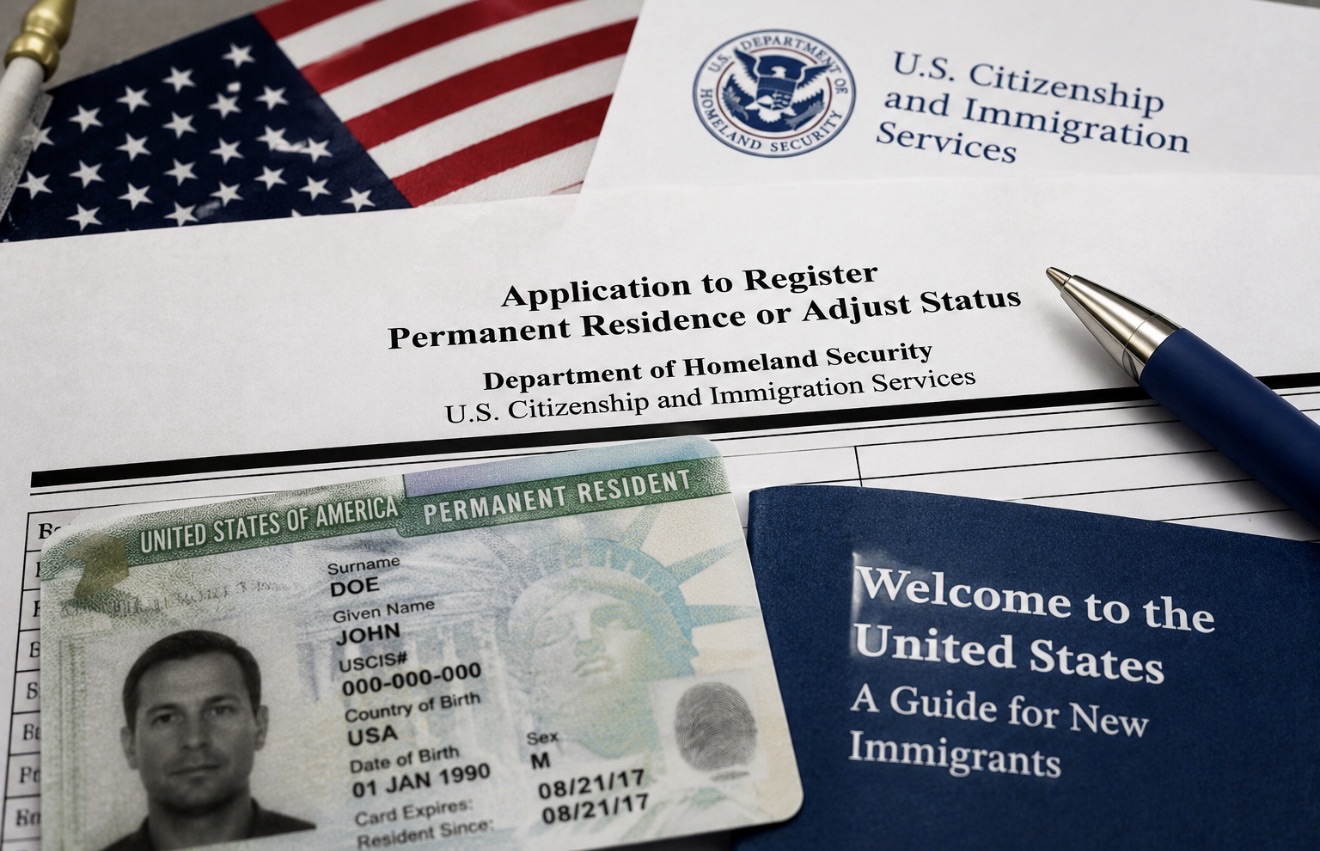
The confusion began after U.S. Citizenship and Immigration Services (USCIS) issued a policy memorandum on May 21, 2026, addressing green-card applications filed from within the United States. Days later, agency statements suggested that some foreign nationals seeking permanent residency could be required to leave the country and complete the process through U.S. consulates abroad rather than finishing it inside the United States.
The announcement immediately sparked concern because it appeared to challenge a process that has been a central feature of U.S. immigration law for decades.
For more than fifty years, many immigrants legally present in the United States have been permitted to obtain permanent residency through a process known as adjustment of status, which allows applicants to complete their green-card process without leaving the country. The pathway is commonly used by spouses of U.S. citizens, employment-based visa holders, students transitioning to permanent residency, refugees, and asylum recipients.
The administration argues the policy represents a return to what officials describe as the original intent of immigration law.
USCIS has characterized the move as closing what it views as a loophole that expanded beyond its intended scope over time. The Department of Homeland Security subsequently stated that individuals who properly qualify for permanent residency would still be able to receive green cards, although some applicants could be directed toward overseas consular processing rather than domestic adjustment procedures.
What remains unclear is exactly who will be affected.
After initially suggesting the policy could apply broadly, USCIS later indicated implementation would occur on a case-by-case basis. The agency has not fully detailed which applicants may be required to leave the country, how pending applications will be handled, or whether specific visa categories will face greater scrutiny.
That uncertainty has become the central issue.
Immigration attorneys report being flooded with calls and emails from concerned clients seeking clarification. Many legal professionals say employers and applicants are struggling to understand how the changes could affect long-term immigration plans already years in the making.
Shev Dalal-Dheini, Senior Director of Government Relations for the American Immigration Lawyers Association, warned that the policy could fundamentally alter a process that Congress has repeatedly reaffirmed through legislation over many decades.
Other immigration attorneys argue that adjustment of status is not an administrative loophole but a statutory process explicitly created and maintained by Congress.
The business implications extend far beyond immigration law.
Many U.S. companies rely heavily on foreign-born talent in sectors including technology, healthcare, engineering, finance, research, manufacturing, and higher education.
For employers sponsoring workers for permanent residency, uncertainty surrounding green-card processing creates operational challenges.
A company may spend years recruiting specialized talent, investing in visa sponsorship, and planning long-term staffing needs. If key employees are suddenly required to leave the country for consular processing, businesses could face disruptions ranging from delayed projects to staffing shortages.
Technology companies are viewed as particularly vulnerable.
Many engineers, software developers, data scientists, and artificial-intelligence specialists working in the United States initially arrive on temporary visas before pursuing permanent residency. Any process that increases uncertainty surrounding that transition may affect both recruitment and retention.
Healthcare providers face similar concerns.
Hospitals and medical systems already experiencing physician and nursing shortages often rely on foreign-born professionals who eventually pursue green cards through employment-based immigration pathways.
Business leaders also worry about America’s broader competitiveness.
The United States has historically attracted highly skilled workers from around the world in part because it offered a predictable path to permanent residency and eventual citizenship. Critics of the policy argue that increased uncertainty may encourage talented workers to consider alternative destinations including Canada, the United Kingdom, Australia, and parts of Europe.
Complicating matters further are applicants from countries where U.S. consular operations are limited or unavailable.
In certain cases, requiring overseas processing could create logistical obstacles for individuals who may have difficulty accessing functioning U.S. embassies or consulates.
Attorneys also report increased scrutiny in immigration cases more broadly.
Requests for additional evidence appear to be rising, and lawyers say applications that previously moved through the system with relative predictability are increasingly encountering delays and requests for further documentation.
For families and employers alike, the most immediate challenge is not necessarily the policy itself but the lack of clarity surrounding its implementation.
Immigration law often depends on predictability. Businesses make hiring decisions, families make life plans, and foreign workers make career choices based on expectations about how government procedures will operate.
When those expectations suddenly become uncertain, the economic consequences can spread quickly.
The Trump administration maintains it is enforcing immigration law as intended and restoring integrity to the green-card process.
Immigration attorneys argue the rollout has created confusion around one of the most important pathways to permanent residency in the United States.
Until federal officials provide clearer guidance regarding who is affected, how applications will be evaluated, and when new procedures will take effect, employers and applicants will remain caught between competing interpretations of a policy that could affect millions of future green-card seekers.
Washington — JBizNews Desk
© JBizNews.com All Rights Reserved. Reproduction or distribution without written permission is prohibited.