
 JBizNews
Judge Blocks Trump Administration Effort to Take Control of Key U.S. Weather Supercomputer
By JBizNews Desk
June 2, 2026
WASHINGTON — A federal judge has temporarily halted a Trump administration effort to transfer control of one of America’s most important weather and climate supercomputing facilities, delivering the first significant legal setback to a broader plan targeting the nation’s premier atmospheric research center.
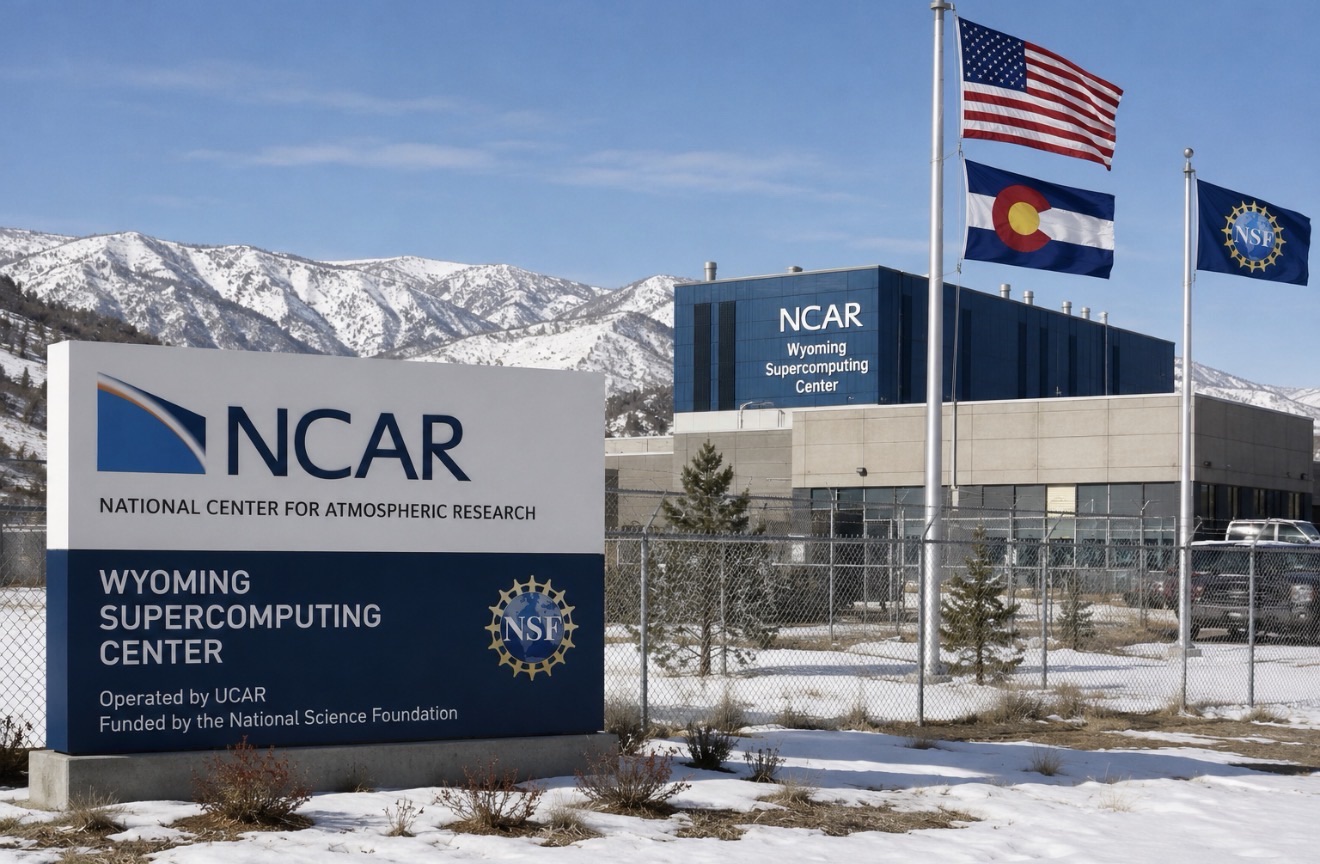
In a ruling issued Monday, Senior U.S. District Judge R. Brooke Jackson granted a preliminary injunction preventing federal agencies from removing control of the NCAR-Wyoming Supercomputing Center from the nonprofit organization that currently operates it.
The judge sharply criticized the government’s actions, writing that the decision appeared “arbitrary, capricious, and an abuse of discretion” under federal administrative law.
The dispute centers on the National Center for Atmospheric Research (NCAR), a Boulder, Colorado-based institution widely regarded as one of the world’s leading weather, climate, and atmospheric science organizations.
Founded in 1960, NCAR is operated by the University Corporation for Atmospheric Research (UCAR), a nonprofit consortium representing approximately 130 universities and research institutions across the United States.
The conflict began late last year when the administration announced plans to restructure and significantly reduce NCAR’s role. Supporters of the move argued that federal research programs needed reform, while critics warned the changes could disrupt weather forecasting, climate research, and critical scientific infrastructure relied upon by both government agencies and private industry.
Monday’s ruling does not end the case.
Instead, it freezes one of the administration’s most immediate actions—the planned transfer of the supercomputing center in Cheyenne, Wyoming—while litigation continues.
Judge Jackson found that the National Science Foundation (NSF) failed to adequately explain its decision and did not follow procedures typically required before implementing such a significant change.
“NSF’s failure to provide any explanation for its decision renders the challenged action arbitrary and capricious,” the judge wrote.
The case may appear technical, but its implications extend well beyond the scientific community.
NCAR’s supercomputing systems perform some of the most sophisticated weather and climate calculations in the country.
Its flagship systems, including the Derecho supercomputer and the Casper artificial-intelligence computing platform, process enormous amounts of atmospheric data used in hurricane forecasting, wildfire prediction, severe-weather modeling, climate analysis, aviation planning, and disaster preparedness.
The organization employs more than 800 scientists, engineers, and support staff and supports thousands of researchers annually.
According to court filings, approximately 3,700 researchers used NCAR resources during the past year, including scientists from more than 500 universities and institutions.
The reach of that research extends into virtually every major sector of the economy.
Insurance companies rely on severe-weather models to price risk.
Agricultural businesses use seasonal forecasting data to guide planting and harvesting decisions.
Airlines depend on atmospheric modeling to improve flight planning and safety.
Electric utilities use weather projections to prepare for extreme heat, storms, and power-demand fluctuations.
Federal agencies—including NOAA, NASA, the Department of Defense, the Federal Aviation Administration, and the Department of Energy—also depend on NCAR-generated research and forecasting tools.
The economic stakes are substantial.
According to federal disaster data, extreme-weather events caused more than $100 billion in damages during the first half of 2025 alone.
Accurate forecasting is widely viewed as one of the most cost-effective tools available for reducing those losses by giving businesses, governments, and households additional time to prepare.
Judge Jackson’s ruling also highlighted concerns about damage already occurring within the organization.
Court records indicate that dozens of employees have departed NCAR and related programs in recent months, with many citing uncertainty about the institution’s future.
The judge found that the loss of specialized scientific expertise, potential damage to UCAR’s credit profile, and risks to active maintenance and service contracts constituted irreparable harm warranting judicial intervention.
The ruling contained another notable element.
Jackson suggested that political considerations may have influenced aspects of the government’s actions, pointing to ongoing tensions between the administration and Colorado officials over unrelated policy disputes.
The judge also referenced internal documents indicating concerns about diversity-related programs within the organization and raised questions about restrictions placed on UCAR’s public communications.
Federal officials had argued that the transfer remained under consideration and therefore was not subject to court review.
Jackson rejected that argument, concluding that agency communications demonstrated a final decision had effectively already been made.
For now, the injunction preserves the status quo.
UCAR retains control of the supercomputing center, ongoing contracts remain in place, and researchers can continue accessing critical computing resources while the broader lawsuit proceeds.
The larger battle over NCAR’s future, however, remains unresolved.
The case could ultimately determine the future structure of one of America’s most important scientific institutions and influence how federal agencies manage research infrastructure that supports weather forecasting, climate analysis, national security, and economic planning.
For businesses that depend on accurate weather predictions—from insurers and utilities to farmers and airlines—the outcome could carry consequences far beyond the courtroom.
Washington — JBizNews Desk
© JBizNews.com All Rights Reserved. Reproduction or distribution without written permission is prohibited.