
 Matzav
Court Extends Detention of Dozens Arrested in Solberg Riot as Detainees Allege Harsh Conditions
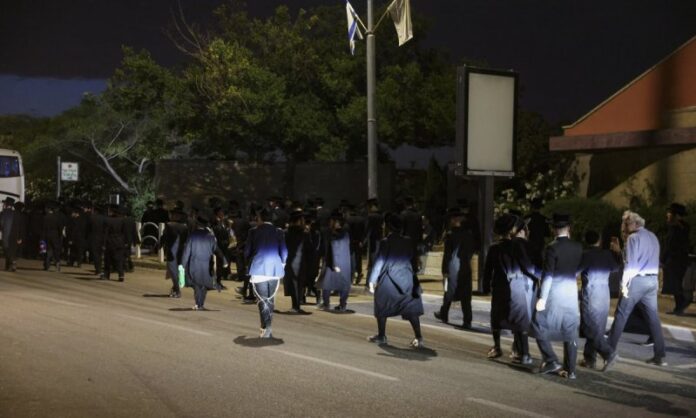
A court in Yerushalayim on Thursday heard requests to extend the detention of dozens of individuals arrested following the violent protest outside the home of Deputy Supreme Court President Justice Noam Solberg. During the proceedings, several detainees and their attorneys raised serious allegations regarding the conditions under which they were held after their arrests.
The hearings, held at the Yerushalayim Magistrate’s Court, involved 62 suspects arrested in connection with the disturbance and alleged damage caused to Justice Solberg’s home and vehicle.
At the conclusion of the hearings, the court approved continued detention for 44 of the suspects. The detention of five minors was extended until Friday, while some adult suspects will remain in custody until June 9 and others until June 10.
In a separate ruling, the court ordered 19 suspects released to house arrest. However, it granted a police request to delay implementation of those releases until Friday. The bus driver who was arrested in connection with the incident was released, while hearings involving additional suspects were still ongoing.
Police had sought a 12-day extension of the suspects’ detention, arguing that they posed a danger. Because of the unusually large number of detainees, the proceedings were divided among three courtrooms and heard by three different judges, creating the possibility that suspects facing similar allegations could receive different rulings.
During the hearings, it emerged that some of the detainees have refused to identify themselves to authorities. Statements made in court indicated that this refusal has weighed against them when judges considered requests for release or alternative detention arrangements.
Attorney Roi Polity, who represents many of the suspects, sharply criticized the manner in which they were held following their arrests. Addressing a police investigator, he asked, “Since they were arrested until now, they were kept on a bus? Did you create a prison on wheels and violate the arrest laws?”
The investigator responded, “I can state that for most of the time they were on the bus. There is not enough room at the Chevron police station.”
One detainee personally addressed the judge and described what he claimed were difficult conditions following the arrests. He alleged that the bus was sealed without air conditioning, that detainees were restrained with plastic handcuffs behind their backs, and that those who stood up were knocked down. He further claimed that despite repeated requests as temperatures rose and detainees felt faint, the air conditioning was not turned on. According to his account, some detainees eventually lost consciousness, prompting emergency medical volunteers to respond. He said they were later returned to the bus, and that conditions at the Russian Compound detention facility were similarly unbearable, with no ventilation, drinking water, or restroom access for approximately 24 hours.
The proceedings also revealed that a police vehicle was reportedly present at the scene when the incident began and observed the events as they unfolded but did not intervene. According to the investigator, the reason was a significant disparity between the number of police officers and the number of demonstrators.
Attorney Polity questioned how authorities could argue that Justice Solberg’s family had been in danger if police officers had withdrawn from the scene. Police representatives countered that some detainees allegedly attempted to escape while being transported to the Hebron police station and that officers successfully prevented those efforts.
The defense attorney also raised allegations regarding the use of force against detainees. He argued that authorities should investigate claims that suspects were struck while handcuffed behind their backs. In addition, he asserted that cameras confiscated by police contained no footage, leaving investigators without evidence against many of the suspects.
A police representative responded that the investigation remains ongoing and insisted that additional evidence is expected to emerge, saying, “There will be evidence.”