
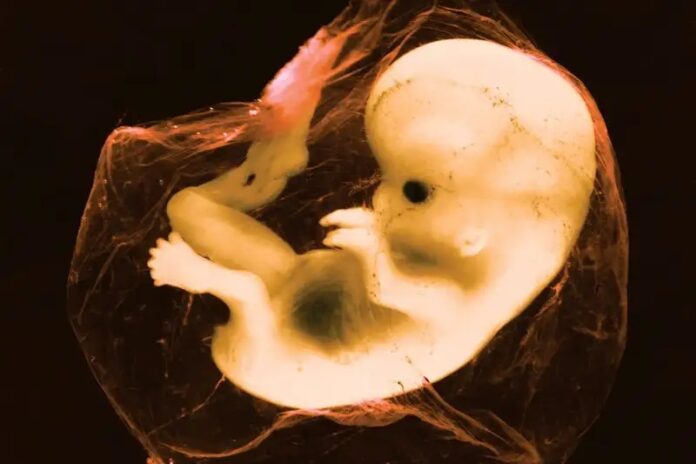

Researchers at Columbia University say they have achieved a major breakthrough in gene editing by modifying the DNA of early-stage human embryos with a level of precision not previously demonstrated, the New York Times reports. The development is being hailed as a scientific milestone, but it is also renewing concerns that advances intended to prevent disease could eventually be used to engineer babies with selected traits.
Supporters of the technology argue that it could one day allow doctors to correct harmful genetic mutations before birth, potentially preventing inherited illnesses. Critics, however, warn that the same tools could pave the way for selecting characteristics unrelated to health, raising concerns about a modern form of eugenics.
Dieter Egli, the Columbia University geneticist who headed the project, said society must engage in a broader discussion about the implications of altering embryonic DNA. “As a scientist, you can provide the data for discussion, but then essentially there you stop and let others take over,” he said, according to the New York Times report.
The team relied on a technique known as base editing, a newer form of gene editing that allows scientists to change individual DNA letters with remarkable accuracy. Unlike traditional CRISPR methods, which cut DNA strands and can create unintended damage, base editing makes highly targeted corrections while avoiding many of those risks.
Even so, Dr. Egli emphasized that significant safety questions remain unresolved. “We’re not saying this is going to be used tomorrow in the clinics,” he said.
The findings have been posted online and are currently undergoing peer review before possible publication in a scientific journal.
The debate over modifying human embryos dates back more than a decade to the emergence of CRISPR technology.
Scientists first unveiled CRISPR in 2012 as a method for precisely targeting and cutting DNA. The tool rapidly transformed biological research because it offered an inexpensive and efficient way to investigate gene function by altering genetic code.
The technology soon attracted commercial interest, with biotechnology firms pursuing treatments for inherited disorders. In 2023, the Food and Drug Administration approved a CRISPR-based therapy for sickle cell disease.
Despite its success, researchers recognized that CRISPR was not flawless. In some cases, the molecular machinery missed its intended target or made cuts in unintended locations within the genome.
Those concerns did not prevent Chinese researcher He Jiankui from conducting a controversial experiment in 2018 that involved editing the DNA of human embryos.
Dr. He later said his objective was to create children resistant to HIV infection. The scientific community widely denounced the experiment, however, and Chinese authorities ultimately sentenced him to three years in prison.
In a January interview with The New York Times, Dr. He said his experiment resulted in three “healthy, beautiful babies.” Independent experts, however, have never been permitted to evaluate the children’s condition.
Several years later, in 2020, Dr. Egli and fellow researchers began examining how CRISPR behaves in human embryos.
The scientists obtained donated sperm carrying a mutation in the EYS gene, which is associated with inherited blindness. They used the sperm to fertilize healthy eggs, creating embryos that carried one normal copy of the gene and one defective version. CRISPR was then used to remove the mutated section.
Earlier research had suggested embryos might repair the damaged gene by copying information from the healthy version. Some embryos successfully completed that repair, resulting in two functional copies of EYS.
In roughly half the embryos, however, the repair process went awry. Some experienced the loss of large stretches of DNA, while others lost an entire chromosome containing the gene.
“It had absolutely catastrophic consequences,” Dr. Egli said.
For many scientists and bioethicists, those results reinforced the belief that editing human embryos remained far too dangerous to contemplate clinically.
Meanwhile, the New York Times reports, researchers continued developing safer alternatives. In 2016, Harvard geneticist David Liu and his colleagues introduced base editing, which combines CRISPR components with additional molecules to make tiny, controlled changes to DNA rather than cutting out larger sections. The technique directs cells to repair mutations with far greater precision.
Base editing has since demonstrated significant promise. Last year, doctors successfully treated a baby suffering from a potentially fatal genetic disease using a customized base-editing therapy.
Encouraged by those advances, Dr. Egli’s team decided to test the approach in human embryos.
The researchers focused on two genes. One, known as PCSK9, can contain mutations that elevate LDL cholesterol and increase the risk of heart disease. The second, HBG, plays a key role in fetal hemoglobin production.
Using donated embryos and fertilized eggs, the team introduced base-editing molecules and monitored the results. Unlike earlier CRISPR experiments, they did not observe widespread DNA destruction or chromosome loss.
Instead, the researchers successfully altered both PCSK9 and HBG. In some cases, they were able to modify both genes within the same embryo.
The process was not flawless. Occasionally, the editing molecules failed to locate their intended targets, leaving some cells unchanged while others carried the edits.
That inconsistency produced mosaic embryos, meaning different cells within the same embryo contained different versions of the gene. If such embryos were brought to term, the resulting genetic mixture could potentially cause health problems.
Despite those shortcomings, Dr. Paula Amato, a fertility specialist at Oregon Health & Science University who was not involved in the research, said the findings appeared “promising.”
She added, however, that a fuller evaluation would have to wait until the study completes peer review and appears in a scientific journal.
Ana Iltis, a bioethicist at Wake Forest University, urged caution, arguing that chromosome analysis alone may not be sufficient to assess long-term safety.
“It is possible that some of the potentially harmful effects would not be evident until after birth,” she warned, according to the the New York Times report.
Nathan Treff, chief clinical officer of Nucleus Genomics and one of the study’s co-authors, said embryo editing could eventually help IVF patients preserve embryos that would otherwise be discarded because of disease-causing mutations.
“There’s still work to do before getting to that point, but this research gets us closer,” Dr. Treff said.
Nucleus Genomics plans to help fund future phases of Dr. Egli’s work. Federal funding is generally unavailable for research involving human embryos.
Future experiments will focus on reducing mosaicism and evaluating the technique in embryos that have developed to roughly 100 cells, the stage at which fertility clinics typically freeze and genetically screen embryos.
Founded in 2021, Nucleus Genomics already offers screening services that examine embryos for thousands of inherited disorders. The company also estimates future risks for conditions such as diabetes and heart disease, while analyzing genetic markers linked to characteristics including height and intelligence.
The company drew criticism last November after launching a New York City subway advertising campaign urging prospective parents to “have your best baby.” Some geneticists have questioned the reliability of the firm’s predictions regarding traits such as intelligence.
Critics have also accused Nucleus Genomics of promoting a technologically advanced form of eugenics, an allegation the company strongly disputes.
“We see ourselves as a natural pathway for eventually bringing technologies like this into clinical care as part of a broader genetics platform — a full ‘Genetic Optimization’ stack,” Kaitlyn Gallacher, head of communications at Nucleus Genomics, wrote in an email.
Fyodor Urnov, a geneticist at the University of California, Berkeley, who was not involved in the project, said the new findings are generally consistent with previous research involving base editing in living cells.
At the same time, he argued that applying the technology to human embryos introduces unique risks. Since IVF clinics already screen embryos for genetic abnormalities, he questioned whether embryo editing is necessary given the uncertainties involved.
“Do we do what we’ve done safely and effectively 15 million times since 1978, or do we instead try something that we can never truly de-risk, and where the risks are clear?” he asked.
Dr. Urnov suggested that once perfected, the technology could attract individuals interested not only in preventing disease but also in enhancing genetic traits.
“What they are really doing is providing the ‘baby improvers’ with a how-to manual for forays beyond the ethical pale,” Dr. Urnov wrote in an email.
Whether such enhancements will ever become practical remains uncertain. Most human traits are influenced by large numbers of genes working together rather than a single genetic switch.
Dr. Egli acknowledged that attempting to edit multiple genes within one embryo increases the likelihood of errors and technical failures.
“I think you can probably combine three or four, maybe even five, but I think there’s a limit,” he said. “Where that limit is remains to be determined.”
{Matzav.com}