
 Matzav
Religious Zionist Rabbi: ‘Most of the Public Does Not Share the Extreme Voices’
Amid growing tensions over the draft of yeshivah students and the widening divide between segments of the chareidi and Religious Zionist communities, Rav Aviad Gadot said the overwhelming majority of the Religious Zionist public does not identify with the harsh rhetoric often directed at Torah learners.
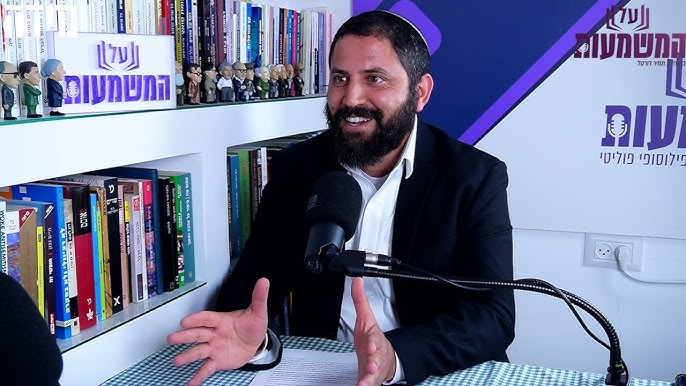
Speaking on the Kol Chai program Tzav Ma’atzar, hosted by Bnei Brak Deputy Mayor Gudi Silman, Rav Gadot—who heads the Torat HaLechima and Chotam organizations—discussed the future of the Torah world, relations between the chareidi and Religious Zionist sectors, and the broader struggle over the Jewish identity of the State of Israel.
At the outset of the conversation, Rav Gadot referred to a story highlighted in an earlier broadcast involving the wife of an avreich who has been detained in a military prison. He said the suffering described by the family reflects far more than an isolated personal hardship.
According to Rav Gadot, the issue represents “the pain of the entire Jewish people” and underscores a deeper crisis concerning the relationship between the state and its Jewish character.
Silman noted that some voices within the Religious Zionist community have become increasingly critical of the chareidi public and those dedicated to Torah study. He asked whether those sentiments represent a broad trend within the sector or merely the views of certain groups.
In response, Rav Gadot argued that the phenomenon should not be viewed as representative of the Religious Zionist community as a whole. Instead, he described it as part of a broader ideological process involving the formation of what he called the “faith-based camp,” a movement seeking to redefine and strengthen the Jewish identity of the state.
He said that while tensions sometimes exist between different factions within Religious Zionism, those disagreements do not reflect the views of the entire community.
Expanding his remarks to Israeli society at large, Rav Gadot maintained that there is a growing desire among many Israelis to reconnect with Judaism and Torah values. At the same time, he argued that the country’s educational system and other public institutions have drifted away from their Jewish foundations.
He also voiced criticism of both the judicial system and elements of the security establishment, claiming that flawed underlying assumptions within those institutions have had a broader impact on Israeli society.
Addressing the draft controversy, Rav Gadot said he believes a sustained public campaign surrounding chareidi military service has significantly influenced public discourse, including discussions within the Religious Zionist community itself.
Nevertheless, he stressed that most Religious Zionist Israelis do not embrace the more extreme anti-chareidi rhetoric that has emerged in certain circles.
“Most of the public is not a partner to the extreme voices,” he said.
The discussion also touched on the military service of Religious Zionist soldiers. Rav Gadot argued that tensions have developed in recent years between senior military commanders and leaders of the hesder yeshivah world, creating additional friction within the broader religious community.
As the interview concluded, Rav Gadot called for greater unity among Israel’s various religious sectors, emphasizing that preserving the Torah world and safeguarding the Jewish identity of the state should be viewed as a shared national mission rather than a political dispute.