

NEW YORK (VINNEWS/Rabbi Yair Hoffman) The Maharam Schick (Yoreh Deah 170) writes that saying Kaddish benefits both the deceased and the one who says it. By saying Kaddish for a Jew who has no one else to do so, we fulfill the mitzvah of chesed shel emes—true kindness—that has no expectation of reciprocity.
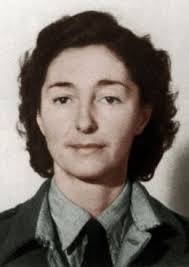
Her code name was Christine Granville. The British called her “Churchill’s favorite spy.” Vera Atkins of the SOE described her as “very brave, very attractive, but a loner and a law unto herself.” Historian Alistair Horne called her “the bravest of the brave.”
But her real name was Maria Krystyna Janina Skarbek, born in Warsaw in 1908 to Count Jerzy Skarbek, a Roman Catholic nobleman, and nebach, Countess Stefania, née Goldfeder—the daughter of a wealthy, assimilated Jewish banking family.
Stefania was the daughter of Adolf Goldfeder, a successful Warsaw banker who had transformed a modest bookkeeping firm into one of the city’s most prestigious financial institutions, reportedly using winnings from a lottery ticket as initial capital. The Goldfeders were part of a prosperous, highly assimilated Jewish elite that had largely severed itself from Torah observance. Stefania herself was raised without any meaningful Jewish education or practice.
In 1898, under significant family pressure and financial inducement, Stefania married Count Skarbek. The marriage required her formal conversion to Roman Catholicism, a condition quietly facilitated through ecclesiastical channels after a substantial “donation” secured clerical approval. The wedding itself took place discreetly, in a secluded chapel reserved for the nobility—far from public scrutiny.
From a halachic standpoint, of course, such a conversion carried no validity. Stefania Goldfeder remained Jewish, and therefore, so did her children.
She was raised entirely as a Catholic, educated in Catholic institutions, and lived her entire life seemingly unaware of her Jewish lineage. Her mother, though wealthy and socially elevated, was deeply unhappy in her marriage and sought solace in European high society, particularly in Paris. Her father’s repeated infidelities and absences further fractured the home.
Krystyna grew up in privilege but without stability—surrounded by status, yet lacking rooted identity. She absorbed the values of courage, independence, and defiance from her environment, but never had the opportunity to encounter Torah, mitzvos, or even the knowledge that she belonged to Klal Yisrael.
In halachic terms, she was the clearest possible example of a tinokes shenishba—a Jewish soul captured by circumstance, never given the chance to know who she truly was.
Which means, of course, that halachically, Krystyna Skarbek was Jewish.
She never knew it mattered. She was raised as a Roman Catholic, attended church, and lived her entire life unaware that according to Torah law, she possessed a neshama that traced back to Har Sinai. She died on the evening of June 15, 1952—the 23rd of Sivan, 5712—stabbed to death in London by an obsessed suitor, and is buried in St. Mary’s Catholic Cemetery in Kensal Green.
And so we must ask ourselves a question that carries profound implications: Should someone be saying Kaddish for her neshama?
The Remarkable Life of a Jewish Heroine
Before we address the halachic question, we must appreciate what this woman accomplished.
Krystyna Skarbek became the first female British agent to serve in the field during World War II and the longest-serving of all Britain’s wartime women agents. Perhaps her pintele yid within her inspired her to make multiple dangerous crossings through the snow-covered Tatra Mountains into Nazi-occupied Poland. She smuggled microfilm containing intelligence about German troop buildups that reached Winston Churchill himself. She organized networks of couriers bringing vital intelligence from Warsaw to Budapest.
When she and a person working with her were arrested by the Gestapo in Budapest in January 1941, she saved them both through sheer cleverness—biting her tongue until it bled to fake symptoms of tuberculosis, convincing doctors she was terminally ill, leading to their release.
But her most famous exploit came in August 1944. SOE agents Francis Cammaerts and Xan Fielding had been captured by the Gestapo in Digne, France. They were hours away from execution. Cammaerts was the creator and the organiser (leader) of the Jockey network (or circuit) in southeastern France in 1943 and 1944. He recruited and supplied with arms and training a large number of resistance networks and cells over an extensive area east of the Rhone River extending to the border with Italy and north from the Mediterranean Sea to the city of Grenoble.
Skarbek, at tremendous personal risk, walked into the lion’s den. She met with the Gestapo commander, told him she was a British agent, and through a combination of threats, lies and a two-million-franc bribe, secured the release of all three prisoners. Only after the escape did the reality hit her: “What have I done! They could have shot me as well.”
She subverted Polish conscripts in the German army, convincing them to desert and destroy their own fortress. She helped organize the French Resistance. She saved lives—countless lives.
And she was a Jew.
The Status of Tinokes Shenishba
The Rambam (Hilchos Mamrim 3:3) introduces a remarkable concept that has profound relevance to our discussion. He writes about the children of the Karaites—Jews who rejected the Oral Torah:
“But their children and grandchildren, who were misled by their parents… and were raised among the Karaites according to their views—such a person is like a child who was captured [tinokes shenishba] and raised among them. He is not eager to grasp the ways of mitzvos, for he is like one who was coerced.”
The Rambam continues: “Even if he later hears that he is Jewish and sees Jews and their Torah, he is still considered as one who was coerced, for he was raised in their mistaken ways.”
This is the halachic category known as “tinokes shenishba”—literally, “a child who was captured.” The concept derives from the Gemara in Shabbos (68b), which discusses a person who was captured as a child and raised among non-Jews, never knowing they were Jewish.
Krystyna Skarbek fits this category precisely. She was raised by an assimilated Jewish mother who had completely abandoned Jewish practice, in a home that practiced Roman Catholicism. She never had the opportunity to learn about her Jewish heritage or the obligations that came with it.
Can One Say Kaddish for a Tinokes Shenishba?
The Kaddish serves multiple functions. The Zohar (Parshas Vayakhel 196b) explains that a son’s Kaddish elevates the soul of the departed parent. The Sefer HaPardes (attributed to Rashi) and the Ohr Zarua both discuss the power of Kaddish to rescue souls from Gehinnom.
But what about a Jew who never practiced Judaism? What about someone who, through no fault of their own, was completely disconnected from Torah?
The Gesher HaChaim (Vol. 1, Chapter 30) deals extensively with this question. He notes that Kaddish is said for all Jews, regardless of their level of observance during their lifetime. The Pischei Teshuvah (Yoreh Deah 376) cites authorities who maintain that we say Kaddish even for sinners.
But Krystyna Skarbek was not a sinner in the traditional sense. She was a tinokes shenishba—someone who cannot be held accountable for what she did not know.
The Chazon Ish (Yoreh Deah 2:16) expanded the concept of tinokes shenishba dramatically. He wrote that in our era, even Jews who reject Torah are often in the category of tinokes shenishba because they were never properly exposed to authentic Torah and mitzvos. They cannot be held to the same standard as someone who knew the truth and rejected it.
How much more so does this apply to Krystyna Skarbek, who literally had no idea she was halachically Jewish!
The Zechus of Saving Lives
There is another dimension to consider. The Gemara in Sanhedrin (37a) famously teaches: “Whoever saves a single life, it is as if he saved an entire world.”
Krystyna Skarbek saved multiple lives. She rescued Allied soldiers from certain execution. She organized resistance networks that protected countless others. She risked her own life repeatedly for the sake of others.
The Chofetz Chaim (Ahavas Chesed, Part II, Chapter 2) writes that acts of chesed create tremendous zechus for a person’s neshama. The Vilna Gaon (Even Shleima 1:7) emphasizes that middos tovos—good character traits—are the foundation upon which everything else rests.
Krystyna Skarbek exemplified mesiras nefesh—self-sacrifice—at the highest level. She was fearless in the face of evil. She stood up against the Nazi regime that sought to destroy her own people—even though she didn’t know they were her people.
Is there not something deeply significant, even providential, in the fact that this woman—halachically Jewish, a descendant of Avraham, Yitzchak and Yaakov—devoted her life to fighting the very enemy that was systematically murdering her fellow Jews in the Holocaust?
The Practical Question
Rav Moshe Feinstein (Igros Moshe, Yoreh Deah I:162) discusses whether one can say Kaddish for someone who is not one’s own relative. He rules that anyone can say Kaddish for any deceased Jew, though ideally it should be a relative.
The question, then, is straightforward: Should someone—anyone—be saying Kaddish for the neshama of Krystyna Skarbek?
Her yahrzeit is the 23rd of Sivan. In 5786 (2026), this falls tonight. The Hebrew date shifts from year to year on the secular calendar, so those wishing to observe the yahrzeit should consult a Hebrew calendar converter each year.
This author believes that there is significant merit in doing so. Consider the following:
She was halachically Jewish, as her mother was born Jewish. She was a tinokes shenishba in the most classic sense—she never had the opportunity to learn about her Jewish identity. She performed acts of tremendous chesed and mesiras nefesh, saving multiple lives. She fought against the Nazi regime during the darkest period of Jewish history. Her neshama may have no one advocating for it in Shamayim through the traditional channels of Kaddish.
A Call to Action
Krystyna Skarbek lived a life of extraordinary courage. She was, in the words of those who knew her, “the bravest of the brave.” She fought evil and saved lives. She exemplified the highest ideals of human courage and self-sacrifice.
And she was one of us—a Jewish neshama, sent into this world through a Jewish mother, carrying within her the spark of Kedusha that has passed through our people since Sinai.
She didn’t know it. But we do.
Perhaps there is a Jew somewhere who will take upon himself or herself to say Kaddish on the 23rd of Sivan each year. Perhaps a shul will remember her on that day, when we recite Kel Malei Rachamim.
She saved lives during the darkness of the Holocaust. Can we not do this small act of chesed for her neshama?
The “bravest of the brave” deserves no less.
The author can be reached at [email protected].