
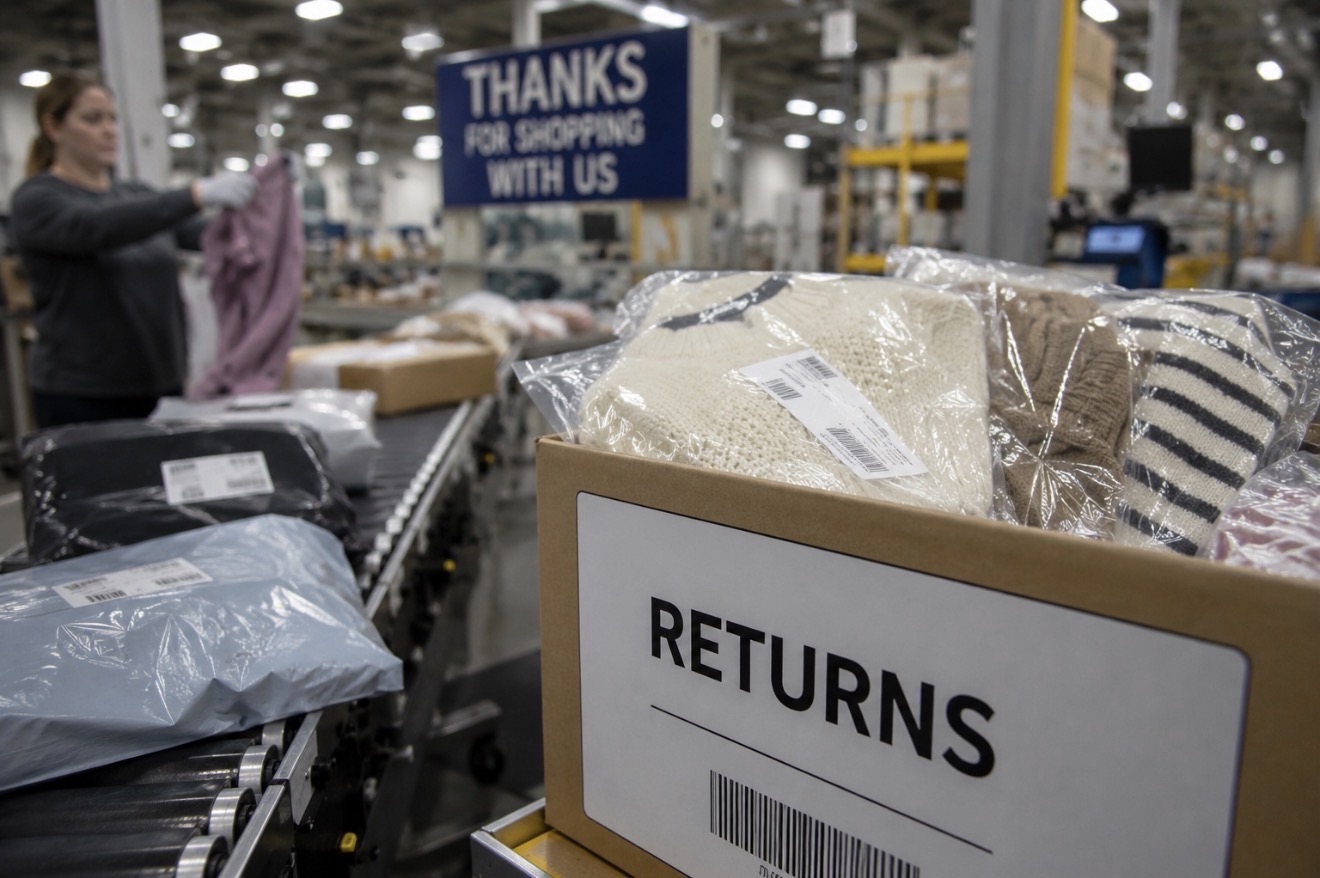

Farnam Elyasof, founder of the online budget suit retailer FlexSuits, has watched his returns climb 50% over the past year, and he traces much of the increase to a single cause: customers losing weight on prescription drugs.
When a shopper orders the same suit in two or three sizes at once, Elyasof said, it is a warning sign. He now often checks measurements, asks whether the customer is losing weight, or suggests they wait to buy until closer to the event they need it for.
The returns keep coming anyway.
“It’s a loss for me,” he said.
Elyasof’s experience reflects a problem spreading across American apparel retail. The rapid adoption of GLP-1 medications, the class of weight-loss and diabetes drugs that includes Ozempic and Wegovy, is reshaping how customers buy clothes and, increasingly, how often they send them back.
Shoppers are ordering multiple versions of the same garment and returning the ones that no longer fit, or exchanging larger sizes for smaller ones as the pounds come off.
The data shows the shift is accelerating.
The share of apparel exchanges in which shoppers traded down to a smaller size has risen in each of the past three full calendar years, reaching a high of 14.6% in 2025, according to a review of 38 retailers by Narvar, a firm that manages returns on behalf of stores.
For retailers, returns are among the costliest problems to manage, especially for online sellers.
Each returned item carries shipping, labor, and warehousing expenses, and merchandise that comes back may be out of season, forcing the retailer to resell it at a discount or absorb the loss entirely.
The math is punishing.
For a company with $1 billion in sales that typically sees about 20% of purchased items returned, an increase of five to ten percentage points in the return rate can cut gross margins by roughly $20 million, according to Prashant Agrawal, chief executive of Impact Analytics, which helps retailers manage inventory.
He called it “a huge headache.”
The firm found that returns for medium, large, and extra-large items jumped the most, as customers buy several sizes at once to see what fits as their bodies change.
The pace of change is unusual for retailers used to stable sizing patterns.
At peak weight loss, people taking GLP-1 drugs can drop a clothing size every month, Agrawal said.
Jeans, bras, and athleisure wear tend to be the first items replaced, followed by tops and dresses, with later adjustments to ring, bracelet, and shoe sizes.
Major retailers including Levi Strauss, Costco Wholesale, and Walmart are working to better understand the shift.
The scale of drug use behind the trend is large and growing.
About 10 million Americans are on GLP-1 treatments in 2026, a figure JPMorgan estimates could exceed 30 million by 2030.
Roughly 23% of U.S. households reported using the medications as of September 2025, according to market-research firm Circana, which found that 80% of users expect to need new clothing because of changing sizes and 55% had already purchased new apparel or footwear.
The January 2026 launch of the first GLP-1 pill drove the fastest spike yet in users.
The strain is most visible among retailers built around larger sizes.
Torrid reported a 14.3% drop in fourth-quarter sales for its 2025 fiscal year and a net loss of $8.1 million, and plans to close 30 stores in the first half of 2026 after shuttering 151 locations last year.
Destination XL, which sells big-and-tall menswear, posted a 6% decline in quarterly sales, and chief executive Harvey Kanter said the company underestimated the impact.
The retailer estimates up to 25% of its customers are on weight-loss drugs and are delaying purchases until they reach their goal weight.
Larger retailers are adjusting as well.
Women’s extended-size offerings on Target’s website fell 37% from March 2025 to March 2026, while plus-size options at Old Navy dropped 12% over a comparable period, according to retail-intelligence firm EDITED.
The shift is not entirely negative for the industry.
Research firm Bernstein estimates GLP-1 adoption could add between $3 billion and $13 billion annually in apparel spending as users rebuild their wardrobes over one to three years, benefiting discount retailers, off-price chains, and resale platforms.
James Reinhart, chief executive of ThredUp, said sales of large, extra-large, and plus-size items on the resale platform rose about 6% as customers cleared out clothing that no longer fit.
For now, however, the immediate pressure is on returns and inventory management.
Retailers are trying to recalibrate how much they stock in each size and how they process a rising tide of returned merchandise, a forecasting challenge made more difficult by a customer base whose measurements are changing faster than ever.
JBizNews Desk — Retail
© JBizNews.com All Rights Reserved. Reproduction or distribution without written permission is prohibited.