
 Matzav
Secret U.S.-Iran Nuclear Talks Advance as 15-Year Enrichment Freeze Emerges
The Trump administration and Iran are reportedly moving closer to a framework agreement aimed at curbing Tehran’s nuclear program, with negotiators discussing a deal that would suspend Iranian uranium enrichment for 15 years and dramatically restrict the regime’s nuclear activities.
According to a report published Tuesday by The New York Times, citing American officials and diplomats familiar with the confidential negotiations, discussions have centered on four key provisions that U.S. officials believe could effectively neutralize Iran’s nuclear ambitions for well over a decade.
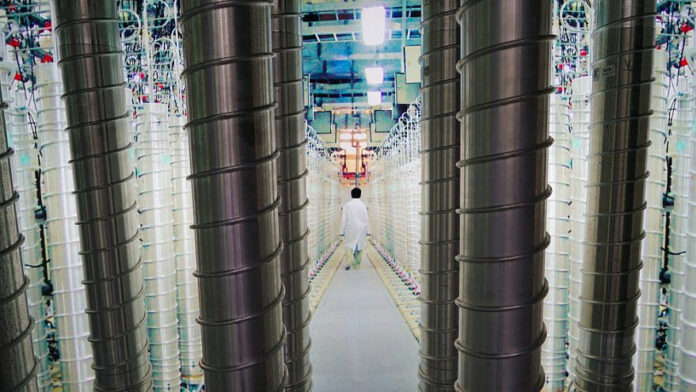
Under the proposed framework, Iran would agree to halt uranium enrichment for 15 years, reduce and dilute its current stockpile of enriched uranium, dismantle critical elements of its nuclear infrastructure, and allow expanded international monitoring of its nuclear activities.
American negotiators initially pushed for a 20-year enrichment ban, while Iran countered with a 10-year proposal. Officials involved in the talks now believe Tehran may be willing to accept a 15-year suspension, though it remains uncertain whether President Donald Trump would consider that duration sufficient.
Secretary of State Marco Rubio has consistently maintained that any agreement must address the entire Iranian stockpile of enriched uranium, estimated at roughly 11 tons, including approximately half a ton enriched to levels approaching weapons-grade material.
One proposal under consideration would place the process of diluting Iran’s uranium reserves under the supervision of the International Atomic Energy Agency.
While U.S. officials favor a direct American role in overseeing and handling the material, Iranian negotiators have reportedly insisted that Washington participate only as an observer.
A central American demand involves the dismantling of Iran’s major nuclear installations at Natanz, Fordo, and Isfahan.
Iran has signaled a willingness to shut down two of those facilities but continues to insist on keeping one operational, arguing that doing so preserves what it views as its sovereign right to enrich uranium.
Inspection powers remain another major obstacle. U.S. negotiators are pressing for so-called snap inspections that would permit international inspectors immediate access to locations across Iran, including military sites that traditionally have been inaccessible to outside monitors.
The negotiations have continued against the backdrop of escalating regional tensions. On Tuesday, President Trump announced that Iran had shot down a U.S. Army Apache helicopter near the Strait of Hormuz and warned that the United States would respond.
Despite the military confrontation, diplomatic communications between Washington and Tehran have remained active. According to The Times, Special Envoy Steve Witkoff and Iranian Foreign Minister Abbas Araghchi stayed in contact during recent exchanges involving Iran and Israel, helping to prevent the conflict from expanding further.
U.S. officials told the newspaper that both sides had been approaching a preliminary framework agreement before the latest hostilities threatened to complicate the process.
The report also indicated that administration officials are actively preparing for the possibility that a deal could be reached. As part of those efforts, Witkoff and Jared Kushner recently traveled to Oak Ridge National Laboratory in Tennessee to examine potential methods for processing and neutralizing Iran’s enriched uranium reserves.
Another major point of contention involves approximately $25 billion in frozen Iranian assets.
Iranian negotiators are reportedly seeking access to a substantial portion of those funds at the outset of any agreement, while American officials are insisting that the money be released gradually as Tehran meets specific obligations under the deal.
According to the report, White House officials remain confident that the recent military tensions will not permanently derail negotiations and are hopeful that more detailed talks can begin in Switzerland later this month.
Even if a framework agreement is finalized, significant hurdles remain. Any deal would require approval from Iran’s senior leadership and could encounter fierce opposition from hardline factions within the Islamic Revolutionary Guard Corps, which some American officials believe remain determined to preserve the country’s nuclear capabilities.
{Matzav.com}