
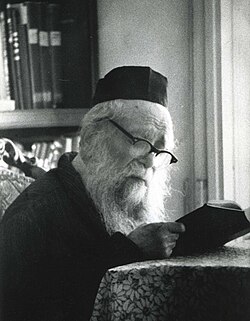

New York (VINNEWS/Rabbi Yair Hoffman) Before looking at one of the most painful dilemmas a frum family can face, it is worth examining a teaching from the great Mussar giant Rav Meir Chodosh zatzal (Ohr Meir, p. 151). His words shine a light on the entire question.
Rav Meir Chodosh taught that a parent must love his children more and more, without limit. This love should be so complete that a person gives up his own boundaries in order to pour out love on his children. Avraham Avinu is the model, because he loved his sons deeply and was loved by them in return.
Avraham had two sons who could not have been more different. One was Yitzchak, a righteous and holy man who devoted his life to serving Hashem. The other was Yishmael, who in his youth committed the three most serious sins, as Rashi explains on the word “metzachek” (Bereishis 21:9) — idolatry, immorality, and bloodshed (Bereishis Rabbah 53:11).
Talk about off-the-derech.
Yet when Hashem tested Avraham and told him to take “your son, your only one, whom you love,” the Yalkut Shimoni (Lech Lecha, remez 72) describes the exchange this way.
When Hashem said “your son,” Avraham answered that he had two sons. When Hashem said “your only one,” Avraham replied that each was the only child of his own mother. When Hashem said “whom you love,” Avraham answered, “I love both of them.” Then comes the unforgettable question: “Is there any limit to the love inside a parent’s heart?”
Avraham knew exactly who his sons were. He knew one was wise and good and the other did not behave properly. He did not pretend the difference away. And still his love for both was without any limit — so deep that he could not even say which son he loved more.
That is the lesson to carry into everything that follows. Clear eyes about a child’s choices and boundless love for the child are not opposites. Avraham held both at once. The dilemma below is hard precisely because a parent is being asked to do the same.
The Dilemma
Yes, it is painful. Child number six, or seven, or eight — whichever she was, whichever he was — never quite fit in with the rest of them. The siblings of that child sat nicely in the bais medrash or the seminary classroom. Their behavior was perfection itself.
This one sat in the principal’s office.
The report cards came home with notes instead of grades. The phone calls came at hours when phone calls are never good news.
And so Mommy and Tatty did everything a devoted parent is supposed to do. Therapist after therapist. School after school. Each transfer carried its own quiet hope that this time, this place, this mechanech would be the one to reach the child.
Each one ended in the same phone call — the apologetic principal, the gentle suggestion that perhaps the child would be “better served elsewhere,” and the unspoken truth underneath it all that nobody quite knew what to do.
And the child made bad choices.
Alcohol, first on weekends and then not only on weekends.
The wrong friends — the kind who circle a vulnerable kid the way scavengers circle something wounded. Not out of cruelty exactly, but because a lonely child who is desperate to belong is, to a certain kind of person, simply an opportunity. The child moved out.
In a certain sense it was a relief — and that relief is itself one of the quiet agonies of this whole story, because what kind of parent feels relief that a child is gone? But there were other children in the house, younger ones, watching and absorbing. And so a corner of the heart exhaled even as the rest of it broke. The child was no longer at the Shabbos table, no longer a daily presence the others had to navigate around.
And the child’s shmiras hamitzvos went down the tubes — but not all at once. That is the part nobody warns you about. There was no dramatic declaration, no slammed door, no single moment you could point to and say, there, that was when we lost him. It went one mitzvah at a time, so gradually that no single moment marked the break. The yarmulke that stayed in the pocket more often than on the head. The Shabbos that became “mostly” Shabbos, and then only a memory of Shabbos. Each erosion was small enough to absorb, until one day the parents looked up and realized the size of the chasm.
Then came boyfriend after boyfriend, or girlfriend after girlfriend. And then one in particular who stayed. They moved in with each other. And now, after a year together — living under the same roof, building the rough scaffolding of a shared life — they want to get married.
These are not the parents arguing with each other. The parents, truth be told, are too exhausted and too frightened to know what they think. These are the voices of the well-meaning askanim, the rabbeim, the relatives, and the friends who mean every word they say — the two camps that descend on every family in this situation, each absolutely certain that it is the one telling the parents the truth. The two options laid before them are these:
Option A: Embrace the idea. Find them a chosson teacher and a kallah teacher. Help buy them what they need. Be there for them.
Option B: Listen to those who say: What are you, crazy? They are not ready to get married! The pressures of life, of not having steady jobs — they will inevitably fight. He will leave her. She will be stuck with a child. He will not give her a get. He will not support her. This will ruin her life!
And so the two voices go, back and forth, each with its own logic, each with its own “Torah,” each convinced the other is leading the parents off a cliff:
Option A: They are in violation of kares issurim right now. Marriage — with chevrusos learning hilchos taharas hamishpacha alongside them — can stop that. Torah can provide a stabilizing element for two lives that have had no stability at all. They could lead a normal life. The baalei chessed that Klal Yisroel is famous for can help them with jobs, with housing, and with the thousand decisions they do not know how to make. They can find chevrusos and re-enter Torah life through a door that is actually open to them — maybe the only door that is!
Option B: Do not be naïve! They will drop taharas hamishpacha like a hot potato the day after the chasunah. The “chevrusah” talk is the bait, and you are the fish. They are using you, you fool!
Option A: If your course is followed, their children will not see the inside of a yeshiva. You will have grandchildren who are tantamount to goyim. If you embrace them now, those same children have a chance to claim their Torah birthright!
Option B: Do not be dramatic. If Hashem wants them to return, they will return anyway. Their teshuvah is not your project to engineer. Do not bankroll this wedding — they will eventually break up and find the right people.
Option A: No — you are obligated to do the right hishtadlus. Rus was embraced by Naomi and by Boaz, and from that embrace came Dovid HaMelech and ultimately Moshiach. Greatness came through precisely the person the “respectable” world would have turned away at the door.
Option B: Rus was special — and besides, Naomi originally gave her the cold shoulder and tried three separate times to send her back! Rus had extraordinary midos. He has rotten midos!
Option A: He says he wants a chevrusah!
Option B: He is using you! Did he start learning? No. This is a charade, and they are con artists.
Option A: Maybe yes, and maybe no. But Torah has a way of working itself in and changing people.
Option B: People do not change. Once a rotten mida, always a rotten mida! That is precisely why Avrohom Avinu made sure that Yitzchok would not marry a Kna’anis!
And there the opinions stand, between two walls of certainty, each built from real sources and real concern, with no clear way to know which voice to follow.
Analysis
The hardest part of this situation is that both voices speaking to the parents are saying things that are true, and both, if they are honest, know they could be wrong. The one urging embrace knows there is a real chance of being used. The one urging caution knows there is a real chance of pushing away a child who could have come back. Neither is a fool, and neither is certain.
What Rav Meir Chodosh’s Teaching Adds Here
This is exactly where Avraham Avinu’s example becomes more than a nice thought. Notice that Avraham’s boundless love for Yishmael did not depend on Yishmael being righteous. Avraham did not love him because he expected him to turn out well. He loved him fully even while knowing the truth about him.
That reframes the debate.
Option B often treats love as something a child has to earn back by changing first. But Rav Meir Chodosh teaches the opposite order. The love comes first, without limit, and it is offered to the child as he actually is right now — not to the improved version we are hoping for. A parent can see a child’s rotten midos with complete clarity, exactly as Avraham saw Yishmael’s, and still refuse to put any ceiling on the love.
This does not mean Option A is automatically correct or that caution is wrong. It means the deciding question is not only “Will this work?” but also “What does boundless love actually call for in this case?” Sometimes love calls for support, and sometimes love calls for an honest warning. What Avraham’s example rules out is the cold shoulder dressed up as principle — the response whose real message to the child is, “You are not worth the risk.”
Why Love and Understanding Usually Matter Most
Experience bears this out. The tough-love approach often does not end well. The couple frequently marries anyway, now feeling that this partner is the only person in the world who truly understands them. The relationship with the parents and siblings grows awkward, and slowly the family drifts apart. On the other hand, the embracing approach, while it is no guarantee of success, can and does yield success.
A Suggestion: Look at a Thousand Cases, Not One
A very instructive exercise is this: do not look at only this one case. Instead, imagine a thousand families in this exact situation. Over a thousand cases, how would things turn out? It is highly likely that a person will gain far more clarity using this wider, macro view than by staring at the single case in front of him, where fear and hope distort everything.
So let us assign values. The instructions are simple: fill in actual numbers that total 1,000 for each approach. Be honest as you fill them in — and then make the decision with this fuller picture in mind.
The Embracing Approach (out of 1,000 cases)
| Outcome when the couple is embraced | Number |
| Eventually became more frum; had ups and downs but sent their children to yeshiva. | ______ |
| Eventually became non-frum but kept a relationship with their own parents and siblings. | ______ |
| Eventually became non-frum but kept a degree of observance and sent their children to yeshiva. | ______ |
| Eventually divorced and remained non-frum, but now had a child or two. | ______ |
| Eventually became non-frum anyway and had no relationship with their own parents. | ______ |
The Rejection Approach (out of 1,000 cases)
| Outcome when the couple is rejected | Number |
| Their child broke it off, found a frum individual to marry, and built a wonderful family. | ______ |
| Broke it off and found someone else; had ups and downs but sent their children to yeshiva. | ______ |
| Remained bitter and struggled for the rest of life, never marrying. | ______ |
| Eventually became non-frum but kept a degree of observance and sent their children to yeshiva. | ______ |
| Eventually divorced and remained non-frum, but now had a child or two. | ______ |
| Eventually became non-frum anyway and had no relationship with their own parents. | ______ |
| Eventually married a non-Jew. | ______ |
| Broke it off and remained in and out of psychiatric wards. | ______ |
For each scenario above, fill in real numbers that total 1,000. Be honest as you fill them in, and then make the decision with this new information in mind.
And through it all, remember Avraham Avinu. He saw his sons clearly, he loved them without limit, and he turned to Hashem at every step. We have much to learn from the care that the Avos brought to leading their own homes. Our task is to study mussar, to weigh every thought and deed, to daven, and to ask for Hashem’s help.
May we all have siyata d’shmaya in all that we do.
The author can be reached at [email protected]