
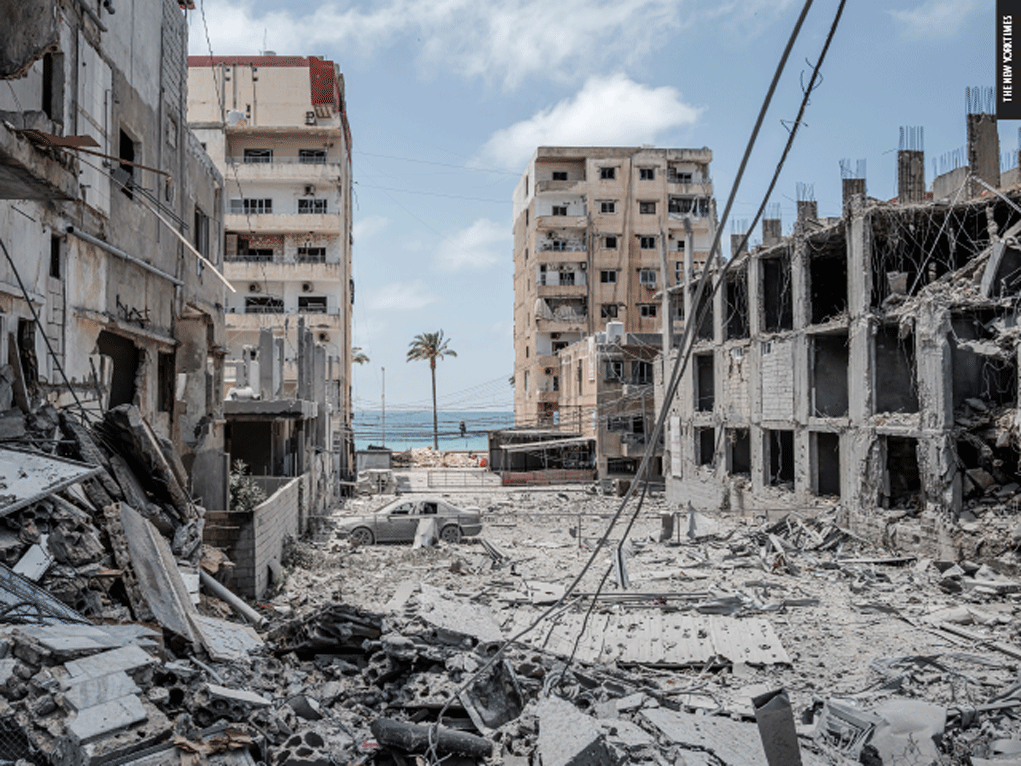

The 15-hour flare-up in tit-for-tat attacks between Israel and Iran was ended this past Monday thanks to President Donald Trump’s call to Israeli Prime Minister Binyomin Netanyahu, ordering him not to retaliate to Iran’s last salvo of missile strikes. As a result, Israel and its friends are more worried than ever, both about the terms of the deal Trump claims he is about to finalize with Iran to re-open the Strait of Hormuz and the negotiations that are supposed to finally put an end to Iran’s nuclear threat.
Iran started the latest round of reciprocal attacks by launching a missile barrage on northern Israel Sunday night, in response to Israel’s attack on the Beirut stronghold of Hezbollah, Iran’s Lebanese proxy. That, in turn, was Israel’s response to the resumption of Hezbollah’s missile attacks on the residents of northern Israel, who are tired of acting as defenseless targets for Hezbollah’s endless supply of lethal anti-tank rockets.
The outcome of the brief conflict, in which Israel was forced by Trump to back down twice, has further emboldened Iran’s hardline new leaders. They have been able to use Trump’s reluctance to allow Israel to attack Hezbollah strongholds in southern Beirut to drive a wedge between Trump and Netanyahu. By exploiting that division and using the issue of Hezbollah’s fate in Lebanon as a diversion, the Islamic regime appears to be emerging from the conflict with the U.S. and Israel weakened militarily and economically, but still in power and positioned to reconstitute its ballistic missile arsenal and rebuild its network of terrorist allies as it continues to drag out the nuclear negotiations with Trump.
Nevertheless, despite having been forced by Trump to scale back on their original Iran attack plans and ultimately stand down, permitting Iran’s final missile attack on Israel Monday to go unanswered, Prime Minister Netanyahu and his defense minister, Israel Katz, insist that the IDF’s expanded operations against Hezbollah in southern Lebanon are continuing. They also claim that Israel’s abbreviated air strike against Iran on Sunday has helped to re-establish Israel’s military deterrent against fresh attacks by its enemies.
Nevertheless, the new hardline leaders of Iran’s Islamic regime are still claiming the exclusive right to determine who may pass through the Strait of Hormuz. They are also claiming the right to dictate the extent of Israeli retaliation against its reinvigorated Hezbollah ally in Lebanon for the renewal of missile strikes on the civilian population of northern Israel, and the highly effective use of advanced drone technology to inflict casualties on the IDF forces in southern Lebanon.
Reigniting a Long-Simmering Conflict Inside Lebanon
In passing judgment on who was to blame for starting this latest flare-up in the long-simmering conflict, a Wall Street Journal editorial pointed to Hezbollah’s clear rejection of President Trump’s latest Lebanon ceasefire last week, in which he declared that Israel would refrain from attacking Hezbollah’s Beirut stronghold in exchange for Hezbollah’s agreement to stop firing missiles at towns in northern Israel.
Early on Sunday, Hezbollah launched another such barrage while Iran warned that it would also launch strikes at Israel if it tried to retaliate against Hezbollah in Beirut, which it clearly had a right to do under both the terms of Trump’s latest Lebanon ceasefire deal and Israel’s basic obligation to protect the safety of its citizens in their own homes. In that respect, Israel’s retaliatory single strike against Hezbollah Sunday night was both necessary and inevitable.
The editorial also criticized Trump for saying that Israel should not strike back because “The Iranian [missile] strikes didn’t hurt anybody,” effectively penalizing Israel for the success of Israeli air defenses.
Trump then said, “I am going to call Bibi [Netanyahu] right now and tell him not to retaliate [because] each of them had their fun. Israel had its strike, and Iran had its strike. We don’t need another one.”
The editorial then pointed out that Trump was ignoring the fact that Israel hadn’t attacked Iran at all. It was striking Hezbollah for attacking northern Israel. Furthermore, by insisting that Trump forbid the Israeli strike, Iran was effectively calling on him to deny Israel’s right to defend itself.
Trump Threatened to Abandon Israel to Its Enemies
In addition, the Wall Street Journal editorial noted that Trump reinforced the impression of a growing rift between him and Israel’s prime minister when he later told a reporter, “I said, ‘Bibi, you better be careful, or you will be on your own very soon.’”
The impression that Israel and the U.S. are no longer proceeding against Iran and its terrorist allies in lockstep with one another was further strengthened by Vice President JD Vance’s comments in an interview with Fox News in which he stated that the emerging peace deal between the U.S. and Iran would be a “home run for the American people,” whether Israel liked it or not.
Vance also said that while the U.S. and Israel “have a lot of shared interests, we also have some situations [such as the effort by Israel to neutralize the threat from Hezbollah in Lebanon] where our interests diverge.”
Vance then said explicitly that “I think where the president has been very clear here is that while Israel obviously has some [other] objectives [of its own], the United States’ main objective in Iran is to ensure that Iran does not have a nuclear weapon.” In other words, Vance was implying that anything that might interfere with reaching the objective of closing the deal with Iran, such as permitting Israel’s war against Hezbollah to continue in Beirut, must be put aside.
The vice president then added, “Over the last year and a half, we’ve created the space necessary where the president believes — and I think that he’s right — that we can get the long-term settlement to Iran’s nuclear deal.
Israel Will Be Stuck With Trump’s New Iran Deal, Like It or Not
“Now, Israel may like that, they may not like that. But fundamentally, we think this [emerging deal with Iran] is in the best interest of the United States of America.”
Vance also argued that Trump’s new deal with Iran was better than Obama’s deal with Iran in 2015, which Trump walked away from in 2018, because the earlier deal lacked a “proper inspections regime to ensure the Iranians could never build a nuclear weapon.
“That is one of the big differences between what happened then and what the president of the United States would get to, assuming we are ultimately able to make a deal,” Vance explained. “We’re going to take the attitude of: ‘Accomplish the president’s mission, but verify over the long term that the Iranians are keeping their end of the bargain,’” the vice president added. “It’s a tall order, but it’s one that the president has put us in a good position to achieve.”
Vance concluded by declaring, “We are, of course, going to verify it, but if we get this deal, it’s going to be a home run win for the American people.”
Meanwhile, in an interview with the BBC, Trump denied that Netanyahu had defied him by launching Israel’s initial retaliatory attack on Iran Sunday night. Trump said: “No, no. That’s not what happened.”
He claimed that Iran’s missiles “had already gone,” and Israeli forces “were already on their way,” by the time Trump spoke with Netanyahu first spoke late on Sunday.
Why Netanyahu’s Independence Is Being Questioned
Trump then added, “If I tell him [Netanyahu] to do something, he does it,” Trump said. He then added, “All I said [to Netanyahu] was we have to use common sense, we’re close to signing a very powerful deal, a very good deal.”
The problem with that statement by Trump was that it further reinforced the already widespread impression that Netanyahu was incapable of standing up to the American president. That just added to the political pressure on Netanyahu to push back at Trump’s bullying, to show both his political critics and his worried supporters that he could.
For Prime Minister Netanyahu, a resumption of fighting with Iran offered clear advantages — at least in the short term.
Publicly resisting Trump’s demands, or at least making a show of doing so, will help Netanyahu in what promises to be a difficult bid to win re-election as prime minister in the upcoming Knesset election in the fall.
Iran Has Emerged the Winner in the Latest Round of Fighting
Israeli voters will also judge Netanyahu based upon the outcome of last weekend’s 15-hour shooting war between Israel and Iran, which was the third conflict between the two over the past year.
The first war was last June. It ended in 12 days with a clear victory for the U.S. and Israel when key parts of Iran’s nuclear infrastructure were destroyed by massive 15-ton bunker buster bombs dropped by American stealth B-2 warplanes.
The second war was started by the airstrike that decapitated Iran’s government and military on February 28, and ended with a draw in April, when Trump announced the ceasefires in Lebanon and Iran, with both Hezbollah and Iran continuing to fight.
The third took place over this past weekend. It ended with Iran victorious when Trump told Israel that it could not retaliate against the latest Iranian missile attack against it, and that Israel could not attack Hezbollah again in Beirut without his permission and would risk severe consequences by doing so.
It erupted due to a challenge by Iran’s hardline rulers to the ground rules that have governed the strategic realities that have dominated the situation since Trump took office.
Iran’s Three Biggest Recent Accomplishments
Iran has made three major points clear since the second round of fighting started with the joint U.S.-Israeli attack at the end of February:
- They are willing to absorb far more punishment and keep fighting than anyone appreciated.
- They have successfully driven a wedge between Trump and Netanyahu over Lebanon, which Trump really doesn’t care about much, but which is vital to Netanyahu politically because of the continued vulnerability of northern Israel to Hezbollah’s attacks.
- Iran is successfully using all of these other issues, including the closing of the Strait of Hormuz, the bombing of Hezbollah in Beirut, and the attacks on its Gulf neighbors, to delay signing any deal with Trump in the hope that he will give in to their demands before November in an effort to salvage the midterm elections
The Current Israeli-Iran Conflict Timeline
On February 28, Israel and the United States launched Operation Roaring Lion, whose goals included the destruction of Iran’s missile and nuclear programs, and also the fall of the regime. Iran, as expected, resumed missile fire toward Israel, though at a much lower level. Hezbollah, which had stayed out during Operation Rising Lion, intervened this time following the assassination of Supreme Leader Ali Khamenei, and the IDF entered Lebanon for the second time in a year and a half.
Iran and Hezbollah Are Weakened but Not Yet Defeated
There is no dispute over the Israeli and American military achievements. Iran’s defense industries were indeed dealt a severe blow. Missile launches were far fewer than during Operation Rising Lion, and Hezbollah is not the same terror army it was before October 7, 2023. Iran’s enriched uranium is buried underground, and reaching it would require complex engineering work while Tehran remains under constant Israeli and American monitoring.
But since Operation Roaring Lion started, 34 Israeli civilians and 30 IDF soldiers have been killed, and there has been an enormous Israeli economic dislocation, property damage, and school closures without the Israeli government being able to turn its military achievements into diplomatic ones.
Two months after the ceasefire that ended an operation in which Iran was militarily defeated, it continues to block the Strait of Hormuz and resists signing any peace agreement that meets Trump’s terms.
The most recent episode of attacks and counterattacks, which began over the weekend and spilled into Monday, marked the first time Iran and Israel have targeted each other since a ceasefire brokered by Trump went into force in early April. The weekend conflict was triggered by an Israeli air strike on Hezbollah targets in Beirut in retaliation for the resumption of Hezbollah missile and drone attacks on northern Israel.
It began a few days after Hezbollah rejected a new ceasefire agreement brokered by the U.S. during talks in Washington between Israeli and Lebanese government leaders designed to lead to a formal Israel-Lebanon peace treaty. That announcement of the new ceasefire in Lebanon followed a tough phone call in which Trump later admitted that he called Netanyahu “crazy,” among other things, for seeking to extend the IDF’s war against Hezbollah to Beirut, and which Iran has sought to use as an excuse to further delay signing off on the peace agreement that Trump wants so badly.
When Hezbollah fired off another volley of rockets at northern Israel on Sunday, Netanyahu did not hesitate to respond to the challenge by ordering an IDF air strike on the Dahiyeh, the Hezbollah stronghold on the southern outskirts of Beirut.
Later Sunday, Iran opened fire directly at Israel for the first time in two months in retaliation for Israel’s strike on Dahiyeh. But an Israeli security official admitted that he and his colleagues were caught by surprise by the swift Iranian reaction. Before they approved Netanyahu’s decision to strike Hezbollah targets in Dahiyeh, they did not see an Iranian missile strike at Israel as a likely retaliatory scenario. In fact, even after the Iranians threatened in the afternoon hours that they would respond with missile fire at Israel, some in Israel believed that Iran would not follow through on its threats because they had failed to fulfill similar threats in the past.
As a result, the Israeli public received notification of the Iranian missile attack threat very late, through an announcement by the IDF Spokesman’s office. Just a few minutes later, Iran launched 11 ballistic missiles at Israel. All were intercepted.
A Tense Night in U.S.-Israeli Relations
That was the beginning of a tense night in the relationship between Prime Minister Netanyahu and President Trump. Just before the first phone call between the two leaders, Trump said to American reporters, “I’ll tell Bibi: ‘Don’t attack.’”
During that call, which took place around 11 p.m. Sunday, Trump made it clear to Netanyahu that he did not support a strike because of its negative impact on his negotiations with Iran.
“We’re close to an agreement,” Trump said.
But when Netanyahu insisted that a military reaction to the Iranian attack was necessary to preserve deterrence, Trump replied, “You’re a sovereign country, but every decision has consequences.”
In the end, Israel did carry out that first attack. At 4:10 a.m. local time, Israeli warplanes unleashed air strikes against nine air defense systems in western and central Iran. But that was meant to be only the beginning. After Iran’s air defenses had been knocked out, the IDF had intended to hit several other types of strategic targets in Iran in order to exact a heavy price for breaking the ceasefire. But because of the strong U.S. objection to it, Netanyahu ordered the attack to be terminated early. The operation wound up being far more limited than originally planned, and primarily targeted Iran’s partially restored air defenses, which had been decimated in previous Israeli attacks on Iran over the past two years.
Why Israel Was Using an Unusual Standoff Weapon
Iran claimed that the initial Israeli air strike Sunday night was carried out by Israeli warplanes using air-launched ballistic missiles. Because they are typically launched up to 100 miles away from their targets, the air-launched missiles do not expose the plane and pilot carrying them to the risk of being shot down over enemy territory. Also, because they travel much faster than cruise missiles with similar range, air-launched ballistic missiles are much harder for air defense systems to shoot down.
Israeli defense industries manufacture three different versions of this type of weapon, which have been used by the IDF before. According to a report by the Wall Street Journal, the controversial and largely unsuccessful Israeli air strike on September 9, 2025, intended to kill a group of senior Hamas leaders meeting at a safe house in Doha, Qatar, was carried out by 12 Israeli Air Force warplanes using air-launched ballistic missiles, which they fired while still in Saudi Arabian airspace.
The initial stage of the Israeli attack late Sunday night also damaged a major Iranian petrochemical facility, the Karoun Petrochemical Co., which was under U.S. sanctions as a source of funds for the Islamic Revolutionary Guard Corps (IRGC).
In response, the IRGC issued a statement saying, “We warn you: Israel has opened a dangerous game by taking action against civilian targets and hitting oil industries. Its scope will include all energy targets in the region, and the consequences for the global economy are the responsibility of the United States.”
Other targets in the initial phase of the curtailed Israeli counterattack, according to Yechiel Leiter, Israel’s ambassador to the U.S., included Iranian missile-launch sites and non-energy infrastructure sites.
The Houthis Opened Fire at Israel Once Again
Shortly before 6 a.m., the Houthis in Yemen launched two ballistic missiles at Israel, one of which was intercepted, while the other failed to reach Israel. The Houthis also threatened to resume their previous attacks on Israeli and Israeli-affiliated ships transiting the Red Sea.
On Monday morning, the Iranians launched more than 10 missiles, which were intercepted by Israeli and U.S. air defense systems. Israel, for its part, also struck a petrochemical plant that produces materials for ballistic missiles.
While the Houthis had launched sporadic ballistic missile attacks on Israel in support of Hamas throughout the Gaza war, Monday morning was the first time they had launched such an attack since the Gaza ceasefire went into effect last year.
Meanwhile, reporting for Israel’s Channel 12 and the Axios news site, Israeli reporter Barak Ravid said that Trump had told him in a phone conversation that he had asked Netanyahu during their phone call Sunday night not to order the IDF to respond to Iran’s latest salvo of ballistic missile attacks on northern Israel.
The Trump-Netanyahu Dialogue
Trump also told Ravid that during their Sunday night conversation, he had told Netanyahu that he was risking U.S. support for Israel by proceeding against Trump’s wishes with regard to the planned attack on Hezbollah’s stronghold in Beirut.
Trump then told Netanyahu that if he were to be successful in reaching an agreement with Iran, further Israeli strikes would be unnecessary, but that if the talks on the proposed Memorandum of Understanding did fall apart, the U.S. itself would then lead a fresh attack on Iran, rendering the threat from Hezbollah in Lebanon secondary.
However, according to the Channel 12 report, Netanyahu rejected that argument by saying, “The Iranians violated our sovereignty. We have to draw a red line.” To that, Trump reportedly replied that while he was not giving Israel “a green light” to attack Iran, Netanyahu still had the right to make his “own calculations” about the wisdom of attacking Iran on its own.
While the conversation between Trump and Netanyahu then ended without a clear conclusion, some of Trump’s aides told Channel 12 they believed that Trump had bought at least a few more days to wrap up the deal with Iran on the Memorandum of Understanding before Israel would launch an attack on Iran on its own.
But they were wrong. Following that phone call with Trump, Netanyahu met with his security advisors and then ordered the retaliatory attack on Hezbollah targets in Beirut to begin, using ballistic missiles aimed at Iran’s air defenses and launched from Israeli warplanes flying at a safe distance from Iran’s borders.
Ynet reported that Netanyahu had originally wanted to strike Iran as early as last Thursday, but Trump had insisted that the plan be shelved at that time.
Secretary of State Rubio Received a Late Attack Notification
According to the Channel 12 report, it was not until those missiles had been launched at their targets that Netanyahu informed Secretary of State Marco Rubio that a retaliatory attack on Iran was in progress. In their earlier conversation, Trump had asked Netanyahu to stand down, but because at that point it was too late to stop the attack completely, Netanyahu was asked to cancel the rest of the planned Israeli air strike to limit the damage and to reduce the risk of escalation. The Israeli prime minister then reluctantly complied.
The next morning, Iran launched another wave of ballistic missiles at central and southern Israel. All except one of them were successfully intercepted. In addition, two more missiles were launched at Israel from Yemen by the Houthis, apparently at Iran’s request, one of which was intercepted, and the other fell short.
At this point, Trump was clearly running out of patience with both Israel and Iran. He posted an angry message on his social media account demanding that “Israel and Iran must immediately stop ‘shooting.’”
However, before Israel could retaliate with another attack against Iran, Netanyahu got a second phone call from Trump. The American president told the Israeli prime minister that he had received a message from Iran’s leaders saying that they would be willing to end their attacks and stand down if Trump could prevent Israel from striking back once again.
Trump told Ravid that he had also heard from five other countries involved in the negotiations with Iran, asking him to restrain Israel from launching any further air strikes so that the talks could move forward. At that point, to prevent the fighting from escalating further, and to prevent the peace talks from collapsing, Trump told Netanyahu, in no uncertain terms: “It [the war against Iran] is over. The story is finished.”
The Trump Demand That Netanyahu Couldn’t Refuse
It was a request that Netanyahu could not afford to turn down because Trump had previously warned him that if Israeli attacks continued, it might find itself fighting Iran alone. But Netanyahu also announced that Israel would go forward with attacks on Hezbollah targets in Beirut if the Hezbollah attacks on Israel’s northern communities resumed, even at the risk of triggering another round of missile attacks from Iran and angering Trump for ignoring his warning.
Before Netanyahu decided to heed Trump’s demand that Israel abandon its planned counterattacks against Iran’s missile launches, IDF officials told reporters Monday that the Israeli military had used the time after the ceasefire with Iran went into effect in April to prepare detailed plans for several days of renewed air strikes on targets deep inside Iran if and when the hostilities were to resume.
They also said that the close coordination between the IDF and the U.S. military’s Central Command before the April ceasefire had continued uninterrupted, including three conversations between IDF Chief of Staff General Eyal Zamir with the head of U.S. Central Command, Navy Admiral Brad Cooper.
Two Months Later, Trump Is Still Talking About a Quick Deal With Iran
In a later post on Monday, after the IDF attack was cancelled, Trump wrote that “both sides, Israel and Iran, want an immediate ceasefire. Final negotiations on ‘peace’ are proceeding, subject to ignorance or stupidity getting in its way. The blockade [on Iran] will remain in place, and in full force and effect, until a ‘Final Deal’ is reached. Things should move quickly.”
Meanwhile, although Iran announced that it was ending operations against Israel for the time being, it threatened to resume missile fire if Israel struck in Lebanon, including in southern Lebanon. In the hours since, reports emerged of strikes in southern Lebanon, and Hezbollah fired rockets toward IDF forces in Lebanon, triggering alerts in the Galilee Panhandle and western Galilee.
Warnings From Other Israeli Government Ministers
Israel’s Defense Minister, Israel Katz, warned Hezbollah and Iran Monday that “the fate of Dahiyeh in Beirut will be the same as the fate of Israel’s northern communities.”
“Any attack on northern communities will lead to a strike in Dahiyeh,” Katz said. “The IDF will continue to operate in Lebanon against Hezbollah.”
Katz then added, “We reject Iran’s threats outright. Any Iranian attempt to link Lebanon and Iran and attack Israel will be met with great force, as happened yesterday.”
Israel’s right-wing Finance Minister, Bezalel Smotrich, reportedly proposed to the Security Cabinet on Monday that Israel should, as a deterrent, attack 20-30 buildings in Beirut’s Dahiyeh for every Iranian missile launched towards Israel.
The question now is whether Israel will stand by its promise and strike again in Dahiyeh in response to any fire at northern communities, or whether, in light of the understanding that a strike in Dahiyeh could trigger a new round of fighting with Iran, and Trump’s disapproval, Israel will try to “absorb” the attacks on the north, and limit itself to strikes against Hezbollah in southern Lebanon only. The coming hours and days will tell.
Israeli Government Leaders in Denial
On one level, Israeli government leaders may deny that Iran won this round of the conflict because all of the ballistic missiles it launched at Israel were either shot down by Israeli interceptor missiles or fell short, except for one missile. It landed in the northern West Bank community of Itamar on Monday morning, and damaged four buildings, but fortunately without injuring anyone.
But Iran did look like the winner when Trump stopped the fighting because it was the party that began the attacks Sunday, and it was the one that ended them Monday. Iran also further humiliated Netanyahu by announcing that it had told Trump it would stop attacking after having taught Israel “a lesson” by punishing it for the Sunday attack on Dahiyeh.
Iran’s military also warned that, “should aggression and hostile actions continue — including in southern Lebanon — far more severe and forceful measures [against Israel] than before will follow.”
On the night between April 13 and 14, 2024, six months after the October 7 massacre, Iran dared for the first time to launch a broad attack on Israel, sending swarms of drones, cruise missiles, and ballistic missiles in retaliation for the Israeli bombing of the Iranian embassy in Damascus on 1 April, which killed two Iranian generals. On April 19, 2024, Israel responded to “True Promise 1” with a targeted strike on an air defense system, a move meant to signal its ability to hit Iran in painful places. Israel called the operation “Iron Shield.”
Previous Israeli-Iranian Clashes
On October 1, 2024, after the assassination of Hezbollah Secretary-General Hassan Nasrallah, Iran stated the strikes were retaliation for the killings of Hamas political leader Ismail Haniyeh in Tehran, Hezbollah leader Hassan Nasrallah in Beirut, and IRGC commander Abbas Nilforoushan. Iran launched its first retaliatory missile attack on Israel. In response, on October 26, 2024, Israel launched “Days of Repentance,” in which dozens of IDF fighter jets destroyed air defense systems in Iran and Syria. The Israeli warplanes also attacked and destroyed 12 planetary mixers used to produce solid fuel for Iran’s ballistic missile arsenal. The Iranian attacks, while more successful at saturating Israeli air defenses than the Iranian attack in April, did not appear to cause extensive damage. The area in and around the IDF’s Nevatim Airbase in the Negev was hit by 20 to 32 Iranian missiles, which damaged a hangar and taxiway. Several other missiles hit the Tel Nof Airbase.
About eight months later, with the permission and help from President Trump, Israel launched an attack called Operation Rising Lion on strategic targets and nuclear facilities across Iran. Tehran responded over the next 12 days by firing hundreds of ballistic missiles, cruise missiles, and drones at Israeli cities. Some hit and caused destruction in cities and IDF bases, killing 33 people and wounding thousands more.
On the other side, the IDF and Mossad managed to eliminate almost all of Iran’s senior security command, including Islamic Revolutionary Guard Corps (IRGC) Chief Hossein Salami — along with key nuclear scientists and weapons experts. The IDF pre-positioned drones in Iran to disable Iran’s anti-aircraft systems, and used over 200 Israeli fighter jets to carry out strikes on more than 100 targets 1,000 miles away from Israel in Tehran, Natanz, and Isfahan. Over 50% of Iran’s ballistic missile launchers and more than 30 sites critical to its missile and drone production programs were also reportedly destroyed.
Why Israeli Officials Have a Serious Credibility Problem
The Israeli government claims about the fighting over the weekend also followed a familiar pattern. When Israel launches a war, its leaders always rush to take credit and are quick to declare victory. But when Israel is surprised by an attack, or when it is forced to hold its fire while under attack, the Israeli public will hear about it first from an outside source.
On October 7, Hamas launched its murderous attack on southern Israel after dozens of earlier rounds of fighting in which it had been militarily defeated by the IDF, but never decisively beaten. The Israeli policy of always stopping before the final, ultimate victory over its enemies led to the bloody post-October 7 war in which more than 2,100 Israeli soldiers and civilians were killed, alongside tens of thousands of wounded.
Similarly, Israeli government officials are also claiming that Israel was not forced to back down in Lebanon because IDF military operations “are continuing in Lebanon at full force, according to the principle that if Hezbollah fires at communities in northern Israel, the IDF will strike back at them in Dahieh.
“The [harsh] conversation between Netanyahu and Trump was overall good,” these officials claim, because “the two countries still see eye to eye, even though twice over the weekend the Israeli government spoke to President Trump’s public position, both in the strike against Beirut and in the counterattack on Iran.”
These officials also contend that “Israel proved its ability to stand firm on its right to self-defense even against the [wishes of an American] president, but without tearing bonds between them and while preserving the strategic [U.S.-Israeli] partnership.”
Netanyahu Claims He Is Resisting Iran’s New Ground Rules
That credibility problem is most glaring in the prime minister’s denials in a recorded video message released early Monday evening that Iran and Hezbollah have emerged from the weekend encounters significantly strengthened.
Netanyahu said that the renewed Iranian and Hezbollah alliance was “unbearable, and unacceptable to me. . . Over the past 24 hours, Iran and Hezbollah have tried to impose on us that intolerable new reality. [But] I insist on Israel’s right to act against them as our enemies,” he said.
“Right now, the fighting is on hold because after we struck the terror regime in Tehran, it ceased attacking us. Should the terror regime in Iran make the mistake of attacking us again, we will respond with force. . .
“They thought they could launch attacks from Lebanon and Iran against Israel and that we would not act. That did not happen, and it will not happen. Not on my watch,” he said, even though Netanyahu was not permitted by Trump to fully carry out his military plans against Iran twice this weekend, and a week before, with regard to Hezbollah.
Defending Israel’s Right to Self-Defense
Netanyahu also claimed that Israel’s inherent right to act in self-defense in the face of attack remains intact. “Israel has a full right to self-defense, and we are exercising it whenever necessary —I say this with appreciation and respect in my good conversations with my friend President Trump,” the prime minister said,
“That is how we have acted now as well. After Hezbollah fired into Israeli territory, I ordered the IDF to strike terrorist targets in Beirut. After Iran attacked Israel, I directed the IDF to strike military and economic targets throughout Iran.” But Netanyahu did not talk about why he later agreed to curtail those plans at Trump’s insistence.
Netanyahu also recalled the IDF’s more successful past operations. He noted that “a year ago, we launched a historic preemptive strike against Iran’s intention to destroy us with atomic bombs. We thwarted that immediate threat, and we also eliminated the tyrant Khamenei.” He then reiterated his promise that “Iran will not have nuclear weapons.”
Then he referred to Hezbollah’s plan to invade the Galil while destroying Israeli cities with 150,000 missiles and rockets. “We thwarted that threat as well, and we eliminated Nasrallah,” the prime minister said, but again omitted the fact that the Galil invasion didn’t happen only because Hamas launched its October 7 attack first.
“Our fighters are dismantling Hezbollah,” Netanyahu said, returning to the current situation in south Lebanon. “They continue to destroy all of its terrorist infrastructure in the security zone, including massive underground facilities in the Beaufort Ridge, so large that I have never seen anything like them.”
“Iran and Hezbollah are weaker than ever, and we are stronger than ever,” Netanyahu repeated, and then added as an afterthought, “but our struggle against them is not yet over.”
“At present, the fire on this front [Iran] has been halted, because after the terrorist regime in Tehran was struck, it stopped attacking us,” Netanyahu said. He then warned that, “If that terrorist regime in Iran makes the mistake of attacking us again, we will respond with force.”
“With unity, determination, and wisdom, we will defend Israel, and with Hashem’s help, we will restore security to the north,” Netanyahu concluded Monday night.
According to a New York Times political analysis, Netanyahu’s decisions to attack Hezbollah in Beirut and to respond in kind to Iran’s missile attacks may have reassured his remaining supporters that he was still capable of standing up to President Trump’s criticism at least on some rare occasions. However, that was not enough to satisfy the most right-wing cabinet members.
During a meeting of Netanyahu’s security cabinet on Sunday, according to a reporter from Channel 14, a verbal confrontation broke out between Shas party chairman Aryeh Deri and ministers Finance Minister Bezalel Smotrich and National Security Minister Itamar Ben Gvir.
Deri sharply criticized the other two over their calls for further military escalation instead of respecting President Trump’s ceasefire calls.
“Enough with the ideas of attacking Iran and Beirut,” Deri reportedly said, because at this time “we also need to be realistic” by taking into account Israel’s military limitations instead of pursuing Israel’s strategic interests regardless of the costs.
At this point, Deri was saying, Israel and Netanyahu have no other choice but to see the military, strategic, and political alliance with Trump, which had been working so well until very recently, through to its finish.
Why Netanyahu’s Partnership With Trump Is a Mixed Blessing
Raz Zimmt, director of the Iran program at the Institute for National Security Studies in Tel Aviv, told the New York Times that until recently, the Trump-Netanyahu partnership, “Certainly, had a lot of advantages, because it enabled Israel to enjoy the military might of the United States. But the very, very significant disadvantage was that it was clear from the beginning that any decision on when and how to end this war rests with President Trump. And so as long as President Trump doesn’t want to resume hostilities with Iran, Israel can really do nothing.”
Zimmt also said that because Iran’s hardline government understands this as well, it has concluded that because “President Trump doesn’t want to go back to war, they can now take some risks to make sure this linkage of developments in Iran and Lebanon [can be] maintained [to their advantage].”
They have also learned another lesson from their current war against the U.S. and Israel: that forceful retaliation has allowed them to survive, and their tolerance for economic and military pain can give them leverage against their more powerful enemies.
This is in contrast to the approach of Iran’s previous supreme leader, Ayatollah Ali Khamenei, who had been careful to avoid situations in which Iran had to strike at Israel and the United States, and preferred to do so through Iran’s network of terrorist proxies. For example, in 2020, Iran pursued only limited retaliatory strikes against U.S. interests in the region after President Trump ordered the assassination of one of its most powerful military leaders, IRGC commander Qassem Soleimani.
Iran’s New Leaders Are Learning How to Manipulate Trump
As a result, when the new rulers of Iran took charge, they largely tolerated Israeli strikes on Hezbollah in south Lebanon in accordance with the ceasefire Hezbollah had agreed to in November, 2024. But as the new rulers became more confident in their ability to manipulate Trump through the negotiation process, they added the survival of Hezbollah as a viable military force in Lebanon to their list of negotiating demands, despite Trump’s resistance to that concept.
Iran’s new rulers believe their willingness to act more aggressively — from blockading the vital Strait of Hormuz to attacking its Gulf neighbors — has allowed them to not only survive Washington and Israel’s attacks, but to inflict economic pain and emerge with strategic leverage through control of the strait, a crucial global shipping route for oil and gas.
Iran’s new leaders have also learned that President Trump is more responsive to their demands when they adopt more aggressive tactics and strategies, and to convince him that it is easier to get Israel to pull back instead of them on such issues as attacks on Hezbollah in Beirut, and when to call an end to an exchange of fire between Iran and Israel.
Hezbollah understands that there is a gap between Israeli and U.S. objectives, especially with regard to Lebanon, and they want to put pressure on Trump to contain Israel.
They also understand that keeping Hezbollah strong creates a useful diversion, which it can create on demand by attacking northern Israel, forcing Israel to divide its military might when Iran attacks it directly again, which Iran’s new leaders are still determined to do.
Iran’s new leaders were also willing to risk retaliating directly against Israel after it attacked Hezbollah in Beirut because they know that Trump doesn’t want to go to war against them again as the midterm elections approach. Furthermore, even if that assumption proves to be wrong and Trump does decide to attack them again, Iran’s new hardline leaders are now confident that they could somehow survive in power despite another round of American-Israeli attacks, just like they did before the ceasefire in April.
At this point, it is clear that the Trump administration understands that the continued existence of Hezbollah as a rival to the authority of the legitimate Lebanese government is a formula for continued instability, border clashes with Israel, and Iranian mischief-making.
Fighting Hezbollah by Strengthening Lebanon’s Government
The only long-term solution is to recruit Israel’s help in strengthening the Lebanese government sufficiently to replace Hezbollah’s threatening military presence along the border with Israel and make the country of Lebanon viable economically and a regional financial center once again, as it was before the civil war started there more than 50 years ago.
That is why the United States convened the fourth high-level trilateral meeting between Israeli and Lebanese representatives last week. One of that meeting’s accomplishments was the issuance of a joint Israeli-Lebanese-American statement, which referred to a ceasefire agreement between Israel and Lebanon as a viable alternative to Iran’s demands for an immediate and total Israeli withdrawal from the parts of southern Lebanon now under its control.
The joint statement reads: “As a result of the U.S.-led negotiations, Israel and Lebanon agreed to the implementation of a ceasefire. The ceasefire is contingent on a complete cessation of Hezbollah fire and the evacuation of all Hezbollah operatives from the South Litani Sector.
“The two sides agreed with the guidance of the United States to swiftly advance the creation of pilot zones in which the Lebanese Armed Forces [the government’s army] will take exclusive control of the territory to the exclusion of all non-state actors [such as Hezbollah].
“These steps will enable progress towards a comprehensive peace and security agreement.”
The joint statement also included a declaration that the future of the relationship between Israel and Lebanon must be decided by the two sovereign governments alone, preventing both Iran and Hezbollah from holding Lebanon’s future hostage in their continuing efforts to attack and destroy Israel.
It also reaffirmed that “Israel and Lebanon have no hostile intent toward one another and [are] committed to continuing direct negotiations to build confidence, resolve all outstanding issues, and work toward a comprehensive agreement between the two countries. . . aimed at sustainably ensuring the sovereignty, security and territorial integrity of Lebanon and Israel. This includes the dismantlement of non-state armed groups and the prevention of their re-emergence.”
The joint statement also reiterated U.S. Secretary of State Marco Rubio’s June 2 declaration that Hezbollah is not just an enemy of Israel and an enemy of America, but also that it is an enemy of Lebanon.
Finally, in the statement, “Israel reaffirmed that its security and respect for its territorial integrity can only be achieved through the disarmament of Hezbollah and the dismantlement of its infrastructure throughout Lebanon.