
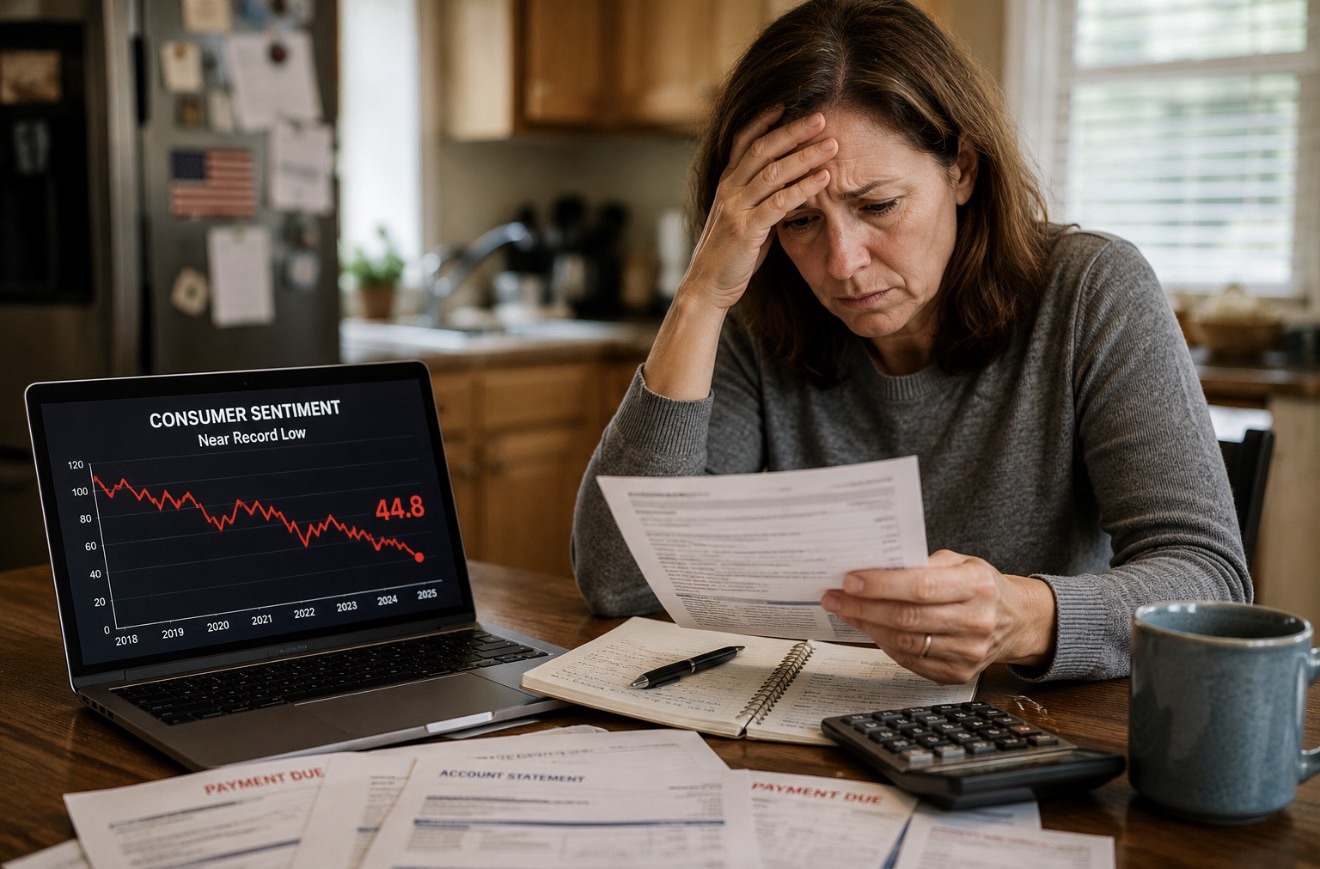

WASHINGTON — Americans are feeling worse about their finances than at any point on record, according to a closely watched consumer survey that underscores the growing strain higher prices are placing on household budgets.
The latest University of Michigan Consumer Sentiment Index fell to 44.8 in May, the lowest reading in the survey’s history and the third consecutive monthly decline. The reading was revised lower from an earlier estimate of 48.2 and now sits below the previous record low reached during the inflation surge of 2022.
The decline reflects a simple reality facing many households: the cost of everyday life continues to outpace what families feel they can comfortably afford.
According to the survey, 57% of respondents spontaneously cited rising prices as a major concern, up from 50% a month earlier. That means nearly six in ten Americans brought up inflation without being prompted, making it the dominant economic concern across the country.
The biggest pressures remain familiar.
Gasoline prices remain elevated, grocery costs continue rising, and housing affordability remains near multi-decade lows. While the labor market has remained relatively stable, many consumers say their paychecks are not stretching as far as they once did.
Survey Director Joanne Hsu said persistent inflation and higher fuel costs continue weighing heavily on public sentiment, particularly among lower-income households.
The pain is not being felt equally.
Consumers with lower incomes and those without college degrees reported some of the steepest declines in confidence, reflecting their greater exposure to rising costs for essentials such as food, transportation, utilities, and rent.
Unlike wealthier households, many families have little room to absorb higher expenses without cutting back elsewhere.
The survey also revealed growing concern about the future.
Consumers now expect inflation to remain elevated over both the next year and the longer term. Year-ahead inflation expectations rose to approximately 4.8%, while long-term inflation expectations increased to 3.9%.
That matters because expectations often influence behavior.
When consumers believe prices will continue rising, they frequently delay major purchases, reduce discretionary spending, and become more cautious about taking on debt. Those decisions can ripple throughout the broader economy.
The gloomy mood stands in contrast to recent government employment data.
The economy added 172,000 jobs in May, and unemployment remains relatively low at 4.3%. On paper, the labor market appears healthy.
But sentiment surveys measure something different.
They capture how people feel about their personal finances, not simply whether they have a job.
For many Americans, having a paycheck is no longer enough to feel financially secure when food, fuel, housing, insurance, and utility bills continue rising faster than expected.
Businesses are paying close attention.
Consumer spending accounts for roughly two-thirds of U.S. economic activity. When confidence falls, retailers, restaurants, travel companies, and manufacturers often feel the impact through slower sales and more cautious purchasing behavior.
Several major consumer-facing companies have already reported signs of customers trading down to lower-cost products, delaying purchases, and focusing more heavily on discounts and promotions.
Historically, consumer sentiment readings this low have often coincided with periods of slower economic growth.
While economists caution that sentiment alone does not guarantee a downturn, the survey provides an important snapshot of how households are experiencing the economy in real time.
There is some reason for cautious optimism.
Earlier this spring, sentiment improved modestly when gasoline prices briefly retreated and geopolitical tensions appeared to ease. That suggests consumer confidence could recover relatively quickly if inflation moderates and fuel costs decline.
For now, however, the message from American households is clear.
Even with jobs available and unemployment relatively low, the rising cost of everyday necessities is leaving consumers feeling more financially stressed than at any other point since the survey began.
Whether that mood improves will depend largely on what happens next with inflation, interest rates, fuel prices, and the broader economy.
JBizNews Desk
© JBizNews.com All Rights Reserved. Reproduction or distribution without written permission is prohibited.