
 Vos Iz Neias
After Fierce Secular Opposition, TA Municipality Reconsiders Location Of Ramat Aviv Mikveh
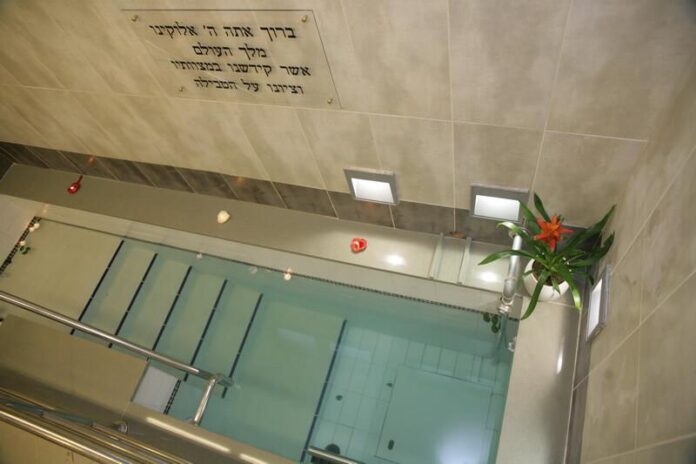
JERUSALEM (VINnews) — Following a bitter public struggle that was led by extremist liberal elements in the Ramat Aviv HaYeruka neighborhood together with the organization Hiddush, the Tel Aviv-Yafo Municipality has announced that it is reconsidering its original plan to build a mikveh in the neighborhood.
The mikveh was intended to provide a basic religious service for tens of thousands of women in northern Tel Aviv, religious, traditional, and secular women alike who observe Jewish tradition. However, it became the focal point of a social conflict led by a small group of residents, with the support of a city council member, who allegedly sought to prevent Jewish religious institutions from expanding in the public sphere.
In a letter to local residents, the municipality acknowledges the need of local women for the mikveh and says that the matter had been examined by various regulatory bodies, but added that due to “the site chosen arousing planning and environmental complexities, the municipality will hold an open discussion with local residents to examine other possible alternative locations in the neighborhood.”

At the same time as the decision to reconsider the mikveh location, the municipality also issued an eviction order against a Chabad kollel operating in a local commercial center.
According to the order, if Torah study activities are not halted within 35 days, the rabbi operating the institution could face a fine of 250,000 shekels for what the municipality describes as unauthorized use of the property.
Hadas Rogolsky, the city council member who led much of the campaign reportedly praised these measures, arguing that they were necessary to preserve the neighborhood’s character and maintain what she described as its “secular-liberal nature” against groups seeking to change it.
The religious council of Tel Aviv–Jaffa strongly rejected the criticism and expressed deep disappointment with the decision.
Council representatives emphasized that building a mikveh is not religious coercion but rather the provision of a basic public service requested by women in the neighborhood, for whom ritual immersion is an important part of their lifestyle. They noted that a mikveh previously operated in the area before being demolished, and that the planned facility on Noah Street was intended merely to replace it and provide a nearby option for local residents.
Religious activists in the city stated:”A few politicians, in order to gather a few votes in elections, chose to take a sacred project of ritual purity and turn it into a source of hatred and social friction. It is truly shameful.”
They added: “Things for which our ancestors sacrificed themselves in Soviet Russia to establish underground mikvehs are today disturbing people in the heart of the Jewish state.”