
 Matzav
Karhi Defends Communications Reform, Says It Will Reduce Shabbos Desecration and Break Media Monopolies
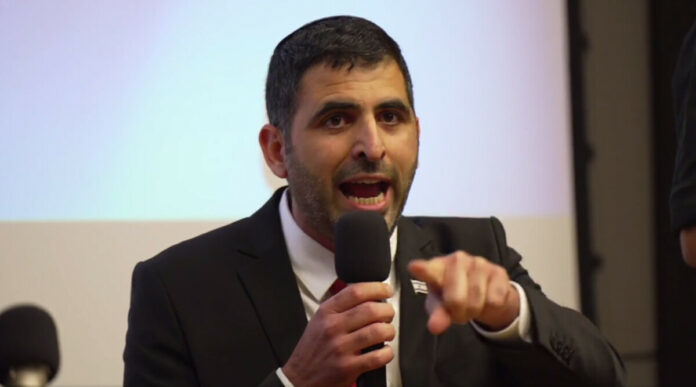
Communications Minister Shlomo Karhi launched a vigorous defense of his controversial communications reform during a wide-ranging interview with Kikar HaShabbos, rejecting allegations that the proposal would increase chilul Shabbos, attacking Israel’s legal establishment, and urging chareidi coalition partners not to be intimidated by the courts or the Attorney General.
The interview focused on several of the most contentious issues currently facing the government, including the communications reform bill, concerns about Shabbos observance, the draft law crisis, and the role of the Supreme Court and Attorney General in shaping public policy.
“The Panic Channels Are Going Crazy”
At the outset of the interview, Karhi addressed the mounting criticism directed at him as the legislation approaches final votes in the Knesset. According to the minister, the opposition stems primarily from economic interests and a desire by established media organizations to preserve their dominance.
“First of all, as we get closer to the finish line, and with Hashem’s help prepare to bless the completed work, everyone is going crazy,” Karhi said. “All the monopolies that currently control public consciousness and dominate public opinion—the panic channels—are unwilling to allow the market to open up. They don’t want other voices to be heard. They don’t want Kikar HaShabbos to receive a channel, or i24 to be able to broadcast on cable and satellite. They want to continue controlling public opinion, and that’s why they’re panicking.”
Karhi further claimed that media interests are actively working within the chareidi community to build opposition to the legislation.
“According to reports, they’re setting up campaign headquarters and even recruiting chareidi public relations people to hang pashkevilim against me. As if they need to teach me what Torah is, or what it means to protect our heritage and values. Anyone who follows my work sees how committed I am to these issues, and we’re already facing votes tomorrow.”
“A Complete Falsehood” Regarding Shabbos Concerns
The minister was asked directly about allegations that the new government streaming application intended to replace the Idan Plus system would facilitate and fund chilul Shabbos and the broadcasting of sporting events on Shabbos.
Karhi forcefully rejected the claims and argued that the reform would actually reduce chilul Shabbos.
“Today, the Idan Plus system costs the state 40 million shekels annually. That system requires technicians to maintain it around the clock, including on Shabbos. We are eliminating that. It will become an internet platform, like any government website or chareidi website whose servers remain operational on Shabbos, but without technicians actively desecrating Shabbos.”
He also pointed to specific language included in the legislation.
“We explicitly included in the law that sporting events of public significance will not be broadcast live on the application during Shabbos or Jewish holidays. Show me another piece of legislation where someone had the courage to include a legal definition of the beginning and end of Shabbos and Yom Tov. In addition, the annual cost to the state will drop from 40 million shekels to only two or three million.”
Addressing concerns about inappropriate content, Karhi insisted the law contains safeguards.
“There will be no obscene broadcasts on the application—period. We included language in the law making such content prohibited for any registered content provider.”
He added that discussions are ongoing with representatives of the chareidi parties and MK Avi Maoz to further strengthen content restrictions.
“We are working together on amendments that will define the content even more clearly. The regulator will be able to prevent channels that offend public sensitivities or promote religious conversion from appearing on the application, and those rules will be subject to oversight by the Knesset Economics Committee.”
Karhi also emphasized what he sees as one of the reform’s major benefits.
“This law will reserve ten free channel slots on all platforms for new news outlets. It will allow additional media organizations to obtain a channel free of charge and not remain dependent on monopolies.”
The minister further claimed that, according to reports he has heard, chareidi public relations professionals have been hired by Channel 12’s Keshet network to oppose the reform because established broadcasters wish to preserve their dominance.
Keshet strongly denied the allegation, stating: “There is absolutely no truth to this.”
Draft Law Crisis: “The Attorney General Is Hurting the Children of Torah Learners”
The second portion of the interview focused on the draft law dispute and economic sanctions affecting the chareidi public, including daycare subsidy issues.
Karhi strongly defended the chareidi parties while launching a sharp attack on Attorney General Gali Baharav-Miara and the legal system.
“The Attorney General isn’t sitting on the sidelines rubbing her hands together in satisfaction—she is actively intervening,” Karhi charged. “In her eyes, anyone who learns Torah deserves to be mistreated. She harms the children of Torah learners more than the state harms the families of terrorists or crime families. Their goal is to bring down the government and create division among us.”
The minister also discussed the government’s approval of the proposed Basic Law: Torah Study.
“This is legislation that will neutralize the damage being done regarding daycare subsidies. Once there is a Basic Law establishing that Torah study stands alongside equality as a constitutional value, it becomes impossible to use the courts to undermine it. Of course, no one suggested that grants for someone serving 400 days in combat should be identical to someone who did not serve, but this law will protect basic rights.”
“Don’t Go to Lavan the Aramean for a Blessing”
Concluding the interview, Karhi appealed directly to the chareidi parties, urging them not to allow concerns about legal opposition to dictate their legislative agenda.
“I view the chareidi factions as our natural and genuine partners. Some chareidi lawmakers are waiting to receive approval from the legal advisers and the Supreme Court—and in my view that’s like going to Lavan the Aramean to ask for a blessing.”
He argued that legal officials are fundamentally opposed to the coalition’s goals.
“Their objective is exactly the opposite. They enjoy the turmoil. We need to stand up to them and make it clear: You do not determine policy.”
Karhi concluded by citing a well-known statement by the late Prime Minister Yitzchak Rabin.
“As Yitzchak Rabin once said, ‘I am not afraid of the Supreme Court justices. They will rule according to the laws that we enact.’ That’s exactly what we need to do.”
{Matzav.com}