
 Vos Iz Neias
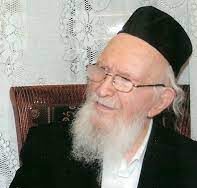
Rav Michel Yehudah Lefkowitz zt”l on his Yahrtzeit Today 26 Sivan
New York (VINNEWS/Rabbi Yair Hoffman)
It was 1982, and this author and two friends had come to the home of Rav Michel Yehudah Lefkowitz zt”l to purchase his Minchas Yehudah series of seforim for the yeshiva. There were not enough chairs, and he hurried to borrow some from the neighbors so that we could all be seated. The welcome we received was like finding one’s long lost zeidy — a grandfather who had been waiting years, pining to meet us at last. He asked us all about ourselves, drawing out each detail with genuine warmth and interest, and only after some twenty-five minutes did he gently ask why we had come. To us, he was the living embodiment of Avraham Avinu in his hachnasas orchim — the guest came first, and only afterward the purpose of the visit. We all left with a memory that has lasted us a lifetime, and we used his seforim for years. Once a rosh yeshiva whose shiur I was in attacked the position of the Minchas Yehudah, and I stayed up the entire night to answer up the questions. That morning, the rosh yeshiva accepted the answer and said it was correct.
Today, the 26th of Sivan, marks the yahrtzeit of one of the great roshei yeshiva and educators of the Lithuanian Torah world, Rav Michel Yehudah Lefkowitz, zt”l, who passed away on this date in 5771 (2011) at the age of 97.
Rav Michel Yehudah was born in Volozhin in Kislev 5674 (December 1913) to Rav Moshe Dovid and Chaya Lefkowitz. Volozhin, a town in what is today Belarus, was renowned throughout the Torah world as the home of the famed Volozhiner Yeshiva, the “mother of yeshivos” founded by Rav Chaim of Volozhin.
His father was sixty years old when he married, and despite a meager income, he hired private melamdim to teach his son. At the age of twelve, the young Michel Yehudah traveled to learn in the small yeshiva in Lida, celebrating his bar mitzvah together with his fellow students, far from his parents who remained in Volozhin. He later moved to Vilna to learn in Yeshivas Ramailes under Rav Shlomo Heiman, whom he regarded as his primary rebbe. Years later he would publish his rebbe’s shiurim in the sefer “Chiddushei Rabbi Shlomo.”
In 1936, the family ascended to Eretz Yisrael through certificates obtained by his older brother Aryeh Leib. This was the era of the British Mandate and the Arab revolt of 1936–1939, when entry to the land was tightly restricted by British immigration quotas, making such certificates precious and difficult to obtain. There he learned in Yeshivas Chevron in Yerushalayim and grew close to several of the gedolim of the generation, including Rav Isser Zalman Meltzer, with whom he established a weekly seder, and the Chazon Ish, of whom he became a devoted talmid.
On Lag BaOmer 5700 (1940), he married Chava Esther Gershonovitz, daughter of Rav Avraham Yitzchak Gershonovitz, rosh yeshiva of Tiferes Tzion in Bnei Brak. The Chazon Ish himself served as the shadchan and led him to the chuppah. Shortly after his marriage, Rav Michel Yehudah was appointed as a ram in Tiferes Tzion, where his talmidim included Rav Chaim Kanievsky, Rav Nissim Karelitz, and Rav Meir Tzvi Bergman.
During those years he founded a special shiur for baalei batim in the beis medrash of the Chazon Ish. At times the Chazon Ish himself would listen to the shiur with enjoyment. That shiur continued in an uninterrupted fashion for roughly fifty years.
In the early 1950s, Rav Yosef Shlomo Kahaneman founded Yeshivas Ponevezh L’Tzeirim for boys ages thirteen to seventeen, and appointed Rav Michel Yehudah to head it alongside Rav Aharon Yehudah Leib Steinman. For some sixty years he delivered shiurim there, producing thousands of talmidim, among them rabbanim, roshei yeshiva, and renowned talmidei chachamim. Only at the end of 5769 (2009), weakened by age, did he cease delivering his shiurim.
A man of deep humility, Rav Michel Yehudah requested in his will that only his two sons eulogize him, and that he not be described with the titles “gaon” or “tzaddik.” He also asked that no memorial volume be published in his honor, lest it cause bittul Torah.
When Rav Elazar Menachem Man Shach founded Degel HaTorah, Rav Michel Yehudah was added to the Moetzes Gedolei HaTorah, and he was widely regarded as a faithful continuer of Rav Shach’s path. His influence in the realms of chinuch and the yeshivos was vast; many roshei yeshiva sought his counsel, and he served as nasi of numerous Torah institutions. He devoted himself with particular passion to safeguarding “chinuch tahor” — pure, uncompromising Torah education. In his final will, he charged his family to strengthen the education of sons and daughters al taharas hakodesh.
Among his treasured educational guidance, Rav Michel Yehudah taught that a father should learn Torah with his son not only to fulfill “v’shinantam l’vanecha,” but to build a bond of love between them. Such learning, he taught, must flow from love rather than coercion: a father should listen to his son patiently and with a pleasant countenance, praise him for a good sevara to endear the learning to him, and rebuke gently so the son senses it stems from his father’s love and concern for his good. The generation is weak, he would say, and so one must lead primarily with the right hand that draws close rather than the left that pushes away. The key to success in raising children, he taught, is tefillah b’demaos — prayer with tears. And above all, he emphasized the power of personal example: when a son sees his father immersed in Torah and meticulous in mitzvos, it influences him more than any words of reproof.
Rav Michel Yehudah was survived by sons and daughters who themselves became marbitzei Torah, and by grandchildren and a vast network of talmidim who carry forward his legacy. He left behind important seforim, including Mincha Yehudah on numerous masechtos, Amri Daas, Darchei HaChaim, and Emek HaShaar.
He passed away on Tuesday, the 26th of Sivan 5771 — the yahrtzeit of his father-in-law, Rav Avraham Yitzchak Gershonovitz. His levaya, which set out from his home on Rechov Vilkomir in Bnei Brak, was attended by an estimated one hundred thousand people.
There is an extremely large percentage of the world accepts the principle of “What Goes Around Comes Around” – which in the language of Chazal is “Midah Keneged Midah.”
But why does Hashem do it? Why does Hashem run the world in this fashion? [It should also be noted that the American use of the word Karma is technically not the original use of the notion – which reflects an idea from a foreign religion/ The American use of it reflects the idea of Midah Keneged Midah].
Rav Michel Yehudah writes that there is a clear and determined purpose for Midah keneged Midah, and it is not what most people think. Every day, just before the Shma, we recite the bracha of Ahavah Rabbah which recalls the boundless love Hashem has for Klal Yisroel. But we must also remember that Hashem loves all of His creations and so much wants their Teshuvah. Hashem even wanted Pharoah’s Teshuvah. Hashem is good to all – Tov Hashem Lakol. Karov Hashem lechol Korav – lechol asher yikra’u’hu b’emes.
The reason for Hashem punishing people with “Karma” explains Rav Michel Yehudah, is that He wants us to know exactly what we did wrong so that we will know exactly how to do Teshuvah – so that we can come back to Hashem. Karma, so to speak, directs the individual to the exact location and area where he had stumbled.
Yehi zichro baruch.
The author can be reached at [email protected]