
 Matzav
‘What a Chilul Hashem’: Shas Launches Fierce Attack on Degel HaTorah Amid Escalating Coalition Feud
The ongoing political battle between Shas and United Torah Judaism intensified over Shabbos, as senior Shas officials sharply criticized Degel HaTorah over its opposition to measures affecting religious councils, deepening a dispute that has been simmering for months within the chareidi bloc.
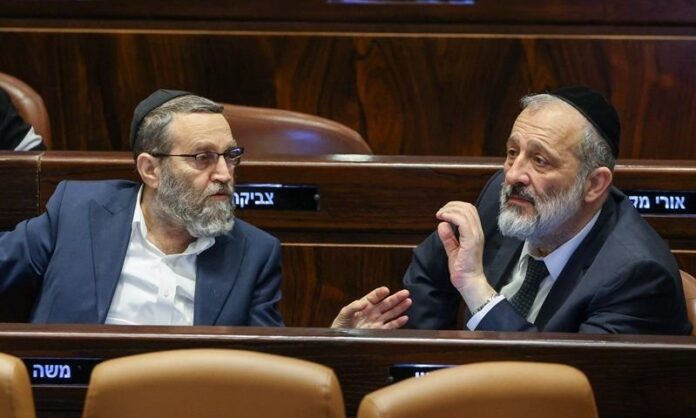
At the heart of the conflict is the long-running standoff between Finance Committee Chairman MK Moshe Gafni and Shas chairman Aryeh Deri regarding the composition and control of the Yerushalayim Religious Council. The dispute has been compounded by disagreements over the transfer of governmental authorities from the Interior Ministry to the Prime Minister’s Office, a process that began after Shas left the government nearly a year ago.
In recent months, the Knesset has repeatedly approved transfers of authority previously held by the Interior Ministry, historically controlled by Shas, to the Prime Minister’s Office. Supporters of the move have argued that it was necessary to bypass obstacles created by Justice Minister Yariv Levin.
As tensions escalated, United Torah Judaism began boycotting votes related to the transfer of powers. Despite the boycott, however, Shas succeeded last week in advancing legislation involving funding for religious councils.
The measure passed after Arab Knesset members were absent from the vote, allowing the coalition to secure the necessary majority despite opposition from UTJ lawmakers.
Following Degel HaTorah’s resistance, Religious Affairs Minister Michael Malkieli launched a blistering attack on the faction, saying he had been inundated with complaints from religious council officials across the country.
“I am flooded with phone calls from dozens of heads of religious councils around the country who are furious,” Malkieli said.
Questioning the position taken by Degel HaTorah, Malkieli added, “How is it possible that chareidi representatives vote against religious services? How do chareidi representatives join forces with Liberman’s and Lapid’s representatives?”
He went on to argue that the dispute carries serious public and spiritual ramifications.
“How much chilul Hashem is there when a law intended to strengthen taharah among the Jewish people, eruvin, and kashrus passes only because of the absence of the Arab parties? What happened to our commitment to religious services?”
Despite UTJ’s opposition, efforts to advance funding for religious councils continue moving forward.
Under the current timetable, the Knesset Finance Committee is expected to approve on Monday a formula allocating funding between the Ministry of Religious Services and municipalities throughout the country.
The initiative is intended to facilitate the continued expansion and development of religious services at the local level.
The total amount slated for distribution under the plan is approximately 230 million shekels.
Shas leaders view the funding package as a major achievement that will help sustain and expand religious councils and strengthen services related to kashrus, eruvin, taharah, and other religious needs. Meanwhile, officials within United Torah Judaism continue to express reservations, citing the broader political disputes that remain unresolved.