
 JBizNews
Knicks Win First NBA Title in 53 Years, Lifting Franchise Value Near $10 Billion
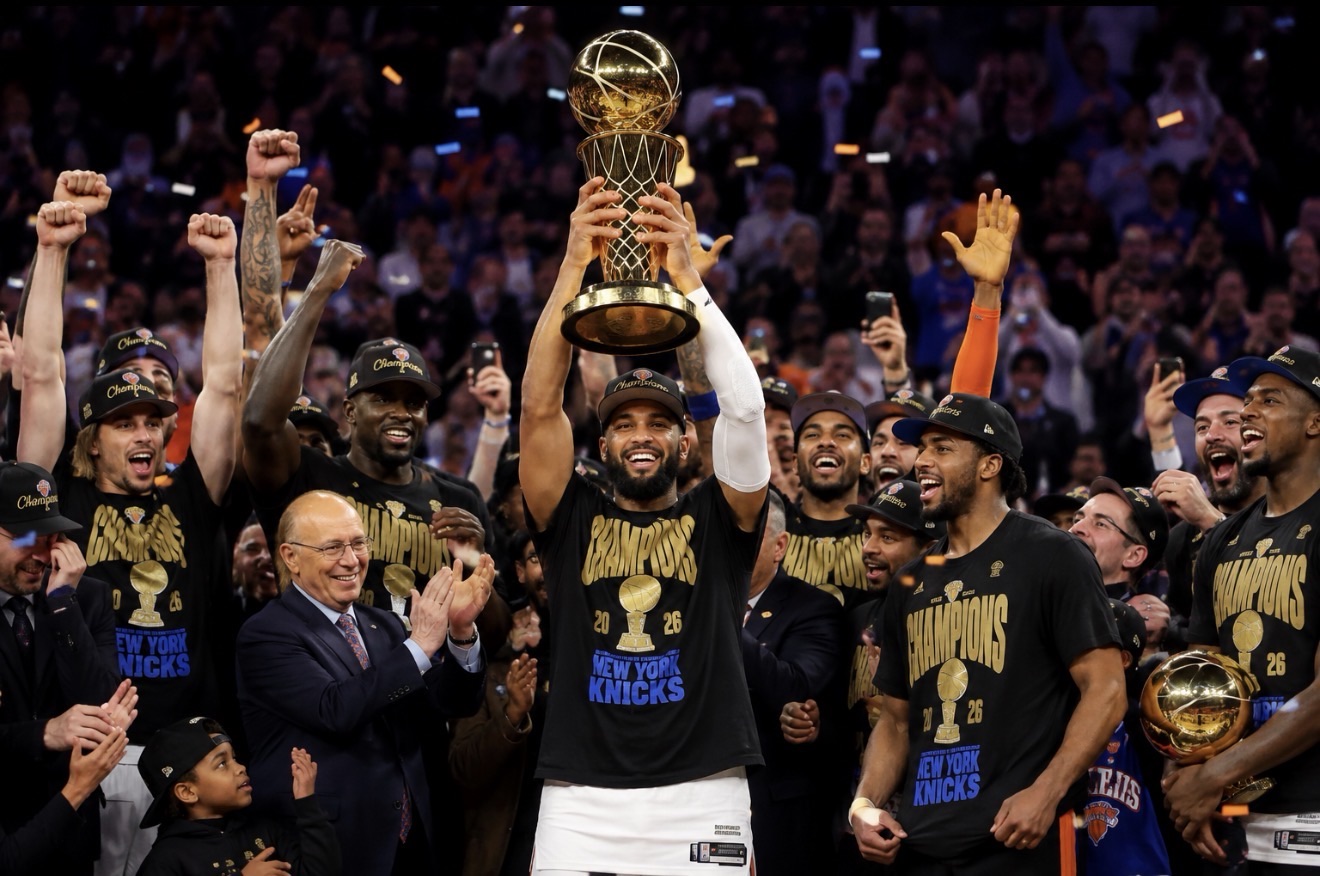
The New York Knicks ended a 53-year championship drought Saturday night, June 13, 2026, in San Antonio, defeating the San Antonio Spurs in five games to capture the franchise’s first NBA title since 1973. The victory delivers one of the biggest moments in modern New York sports history. It also highlights a less-discussed reality: championships can create enormous financial value long before the confetti is swept off the floor.
Start with the team’s owner. The Knicks are held by Madison Square Garden Sports Corp. (NYSE: MSGS), controlled by James Dolan, and the franchise is now valued at approximately $9.85 billion. That valuation has climbed sharply alongside the team’s success, while MSGS shares have surged roughly 43% in 2026 and 86% over the past 12 months.
A championship does more than add a banner to Madison Square Garden. It increases the value of one of the most recognizable sports brands in the world.
The playoff run itself generated significant revenue. David Joyce, an analyst at Seaport Research Partners, estimated the Knicks earned approximately $8 million per home game in the first round from tickets, suites, concessions, and merchandise. That figure rose to about $12 million per game in the second round and roughly $17 million per game during the Eastern Conference Finals. Finals home games were likely worth more than $20 million each, with analysts estimating the entire postseason run could add approximately $140 million in revenue.
One reason the financial impact is so significant is the Knicks’ ownership structure. Unlike many professional teams that play in venues owned by separate entities, the Knicks operate within the same ownership ecosystem as Madison Square Garden, allowing more playoff-related revenue to remain in-house.
The NBA’s revenue-sharing structure still applies. Teams retain approximately 75% of postseason ticket revenue, while the remaining portion is directed to the league to help cover playoff expenses and related obligations.
Fans also paid historic prices to witness the run. The cheapest tickets for NBA Finals games at Madison Square Garden approached $4,000, while average resale prices exceeded $7,000, making the series one of the most expensive Finals experiences in league history.
Beyond the arena, city officials projected a substantial economic impact. Mayor Zohran Mamdani and the New York City Economic Development Corporation estimated the postseason generated approximately $202 million in economic activity from home playoff games. Officials projected that number could have reached as high as $465 million had every possible Finals home game been played, with each game estimated to generate roughly $90 million in spending on transportation, lodging, food, merchandise, and entertainment.
Because the Knicks clinched the championship on the road in Game 5, the final economic impact fell below the city’s highest projection.
Not everyone agrees with the larger economic estimates. Many sports economists argue that major sporting events often shift spending rather than create entirely new spending. In that view, the largest financial gains tend to flow to team ownership, broadcasters, sponsors, and ticket marketplaces rather than the broader local economy.
The championship may also accelerate strategic decisions inside MSG Sports. The company has explored separating the Knicks and New York Rangers into independent publicly traded entities, an idea supported by activist investor Boyar Value Group, which has argued that the market undervalues the franchises when combined under a single corporate structure.
The title only strengthens that argument.
For perspective, MSG Sports reported approximately $1.04 billion in revenue during fiscal 2025. A championship run can continue producing financial benefits for years through higher season-ticket prices, increased merchandise sales, premium seating demand, sponsorship growth, and stronger media value.
So how much did the Knicks’ first championship in 53 years bring in?
Approximately $140 million in additional company revenue, a franchise valuation approaching $10 billion, and hundreds of millions of dollars in estimated economic activity across New York City.
The biggest winners, however, may be the people who already owned one of the most valuable franchises in sports.
JBizNews Desk — New York
© JBizNews.com All Rights Reserved. Reproduction or distribution without written permission is prohibited.