
 JBizNews
The World Cup May Be Bigger, But It Can’t Match the Pride, Excitement, and Momentum of a Knicks Championship
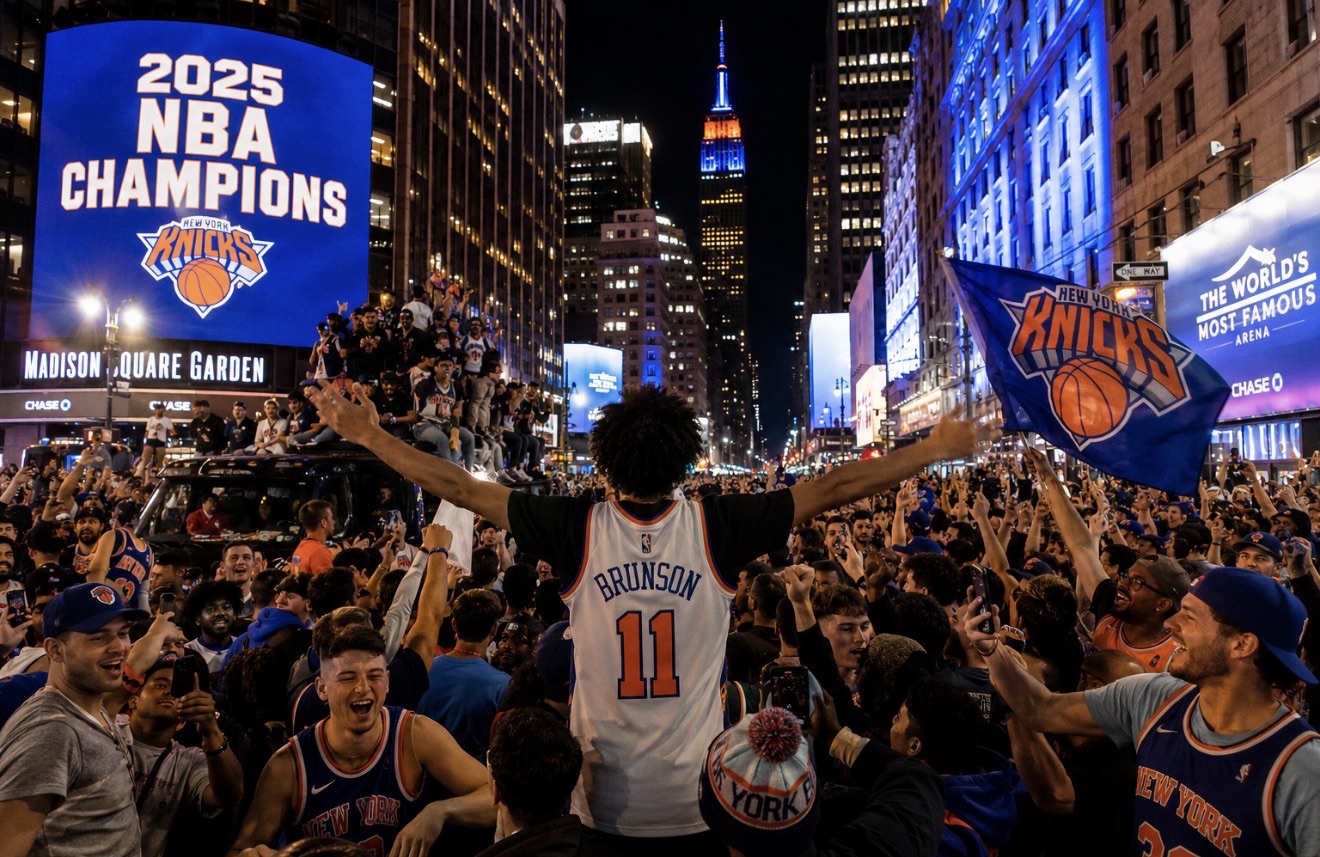
New York City turned into one giant block party Saturday night the moment the New York Knicks clinched their first NBA championship in 53 years, and by Sunday Mayor Zohran Mamdani had made the celebration official, announcing a ticker-tape parade for Thursday, June 18, through Lower Manhattan.
The timing is striking. The biggest sporting event on the planet, the FIFA World Cup, is being played in the same metro area right now — yet it is the Knicks who have seized the city’s heart and its streets.
The scenes told the story.
Thousands of fans poured out of bars, apartments, and watch parties the instant the final buzzer sounded in San Antonio, converging on Madison Square Garden, Times Square, and major intersections across Midtown. Crowds stretched for blocks. Fans climbed poles, danced on cars, waved flags, hugged strangers, and chanted into the night — an outpouring of civic pride no marketing budget can manufacture.
Mamdani leaned into the moment.
“For more than 50 years, New Yorkers have waited for this moment,” he said while announcing a City Hall ceremony, Keys to the City for the team, and municipal buildings illuminated in blue and orange.
It will be the Knicks’ first ticker-tape parade, after the city marked its previous championships with ceremonies rather than a Canyon of Heroes procession.
The economic impact is real.
A hometown championship is an event the city actually owns. The excitement translates directly into spending at neighborhood bars, restaurants, retail stores, hotels, and entertainment venues. It fuels merchandise sales, creates additional tourism activity, and drives crowds into Lower Manhattan for the parade.
The celebration also boosts the value of the franchise itself.
The Knicks are owned by Madison Square Garden Sports Corp. (NYSE: MSGS), and the championship strengthens a franchise already valued at approximately $9.85 billion. The title is expected to support future increases in ticket prices, premium seating demand, sponsorship revenue, and merchandise sales.
Contrast that with the World Cup.
Organizers have projected approximately $3.3 billion in regional economic impact, with New Jersey claiming roughly $2 billion of that total. Yet early business results have been more muted than many expected.
International visitor numbers have reportedly come in below forecasts, while domestic travelers have accounted for a larger share of attendance. Some hotels have reduced room rates to stimulate demand, and travel-data firms have described the tournament’s impact as uneven across host cities.
But the biggest difference cannot be measured in economic studies.
A championship belongs to a city in a way a global tournament never quite can.
The Knicks are New York’s team. Their championship represents the culmination of a 53-year wait shared across generations of fans in Manhattan, Brooklyn, Queens, the Bronx, and Staten Island.
The World Cup, by comparison, is a global event temporarily visiting the region.
Its marquee matches are being played at MetLife Stadium in East Rutherford, New Jersey, while high ticket prices and travel barriers have limited participation for many fans.
That difference shows up in the streets.
The Knicks created a spontaneous celebration that required no advertising campaign. The World Cup, while enormous in scale, has largely been defined by logistics, transportation planning, security operations, and venue management.
One event feels like a city celebrating itself.
The other feels like a city hosting someone else’s party.
None of this means the World Cup will not generate meaningful revenue.
The tournament is expected to continue drawing visitors through mid-July, culminating with the World Cup Final on July 19. Hotels, restaurants, bars, transportation providers, and retailers throughout the region are still expected to benefit.
But the type of emotional momentum that sends hundreds of thousands of people into the streets is difficult to replicate.
The pride.
The history.
The shared memories.
The feeling that an entire city is celebrating together.
Those are things money cannot buy.
For local businesses, the coming days present a rare opportunity.
The Knicks parade arrives while World Cup matches continue throughout the region, creating the possibility that bars, restaurants, retailers, hotels, and entertainment venues benefit from both events simultaneously.
It is an unusual collision of a homegrown championship and the world’s largest sporting event unfolding within the same metropolitan area.
Still, if you walked the streets of New York on Saturday night, the verdict seemed obvious.
The World Cup may be bigger.
It may draw more viewers.
It may generate larger economic projections.
But it cannot match the pride, excitement, momentum, and sense of ownership that comes from seeing your own team finally bring a championship home after more than half a century.
For one unforgettable weekend, New York belonged to the Knicks.
JBizNews Desk — New York
© JBizNews.com All Rights Reserved. Reproduction or distribution without written permission is prohibited.