
 Vos Iz Neias
Frustrated Iranian Citizens Blame Trump, Gulf States For Deal: ‘Regime Was About To Collapse’
JERUSALEM (VINnews) — The Hayom news site reports that Iranian citizens are describing a feeling of international abandonment, growing repression, and despair over the regime. Their testimonies point to deep disappointment with the Trump administration and frustration over the lack of Western intervention. Anger is also reportedly growing toward Arab countries involved in mediation efforts with Tehran.
Testimonies from Iran obtained by Hayom paint a picture of deep disappointment with the Trump administration, strong resentment toward Arab states, and serious concern about the close surveillance being carried out by security and policing agencies since the mass protests were suppressed.
“We feel hopeless because it seems Trump is making deals with the regime,” Iranian citizens said. “Even if it’s only a temporary agreement. We don’t want this regime. Like the people of Israel, we want the complete destruction of the radical Islamic regime.”
They emphasized that: “People here rely on themselves, but because they have no weapons against this brutal regime, they are afraid. In the end, though, they are the ones who will have to overthrow it.”
According to the testimonies, many Iranians view Israel as the only country that has not abandoned them: “While the Europeans, the Chinese, the Russians, and the left-wing movements around the world have abandoned us, Israel is the only nation standing with us. We are grateful for that.”
Many reportedly place hope in Israel to intervene and help bring down the regime, especially because they believe U.S. policy and the Trump administration have failed them.
The citizens also expressed concern about Iran’s current leadership, headed by Mojtaba Khamenei and former Islamic Revolutionary Guard Corps generals such as Ahmad Vahidi and Mohsen Rezaee:
“Even though there was talk that help was on the way” (referring to a promise reportedly made by President Donald Trump during the protests in early 2026), “nothing changed. Now even more radical people have gained power after the killing of Ali Khamenei, making things much worse.”
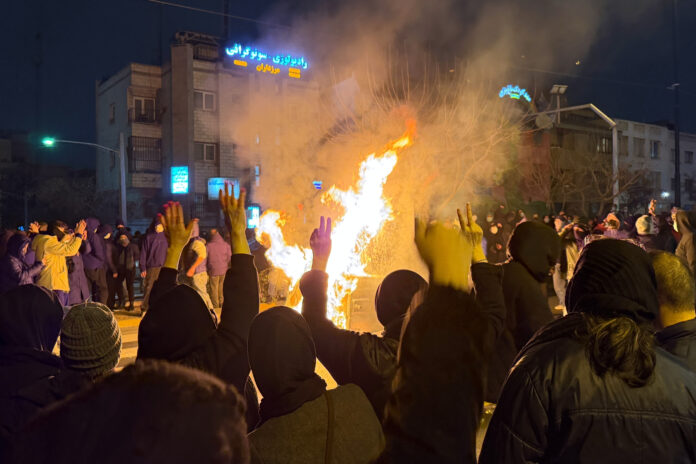
“On the streets, you don’t see the same kind of brutal repression we saw four months ago during the massacres,” Iranian citizens said, “but at night, regime loyalists gather in every public square.”
According to the testimonies, these individuals are often encouraged to participate through food distributions or cash payments. “Some of these people are simply desperate, while others come from families of prisoners. The regime tells them to work for the Islamic Republic in exchange for reduced sentences or the release of loved ones.”
Regarding Iran’s economy, the situation is described as worsening daily. According to the accounts, goods are increasingly scarce, and shop owners are:”Scraping the bottom of the barrel of their warehouse inventories.”
The recent attacks on petrochemical facilities have reportedly worsened economic conditions and increased the prices of construction materials, including products related to plastic and steel.Food is still available, but prices are extremely high. Unemployment remains widespread, and available jobs often do not provide a livable income.
The testimonies also claim that the Iranian government’s months-long internet shutdown devastated many businesses that depended on online services, pushing numerous citizens into poverty.
As a result, many people reportedly began spending their savings simply to survive. Nevertheless, according to these accounts, people fear uncertainty about the future even more than poverty or inflation, because conditions are constantly changing.
In addition, there is said to be significant public resentment toward countries such as Pakistan, Qatar, Egypt, and Turkey, which were reportedly involved in mediation efforts between Tehran and Washington.
“The only reason the Iranian regime is still standing is because of certain neighboring countries. Without them, Trump and Israel would have finished them off. The government was on the verge of collapse,” some citizens insisted.
Against this backdrop, some Iranians also accuse Pakistan and Qatar of profiting heavily from gas and oil trade resulting from sanctions on Tehran, while countries such as Saudi Arabia and United Arab Emirates allegedly do not want to see a strong, unified, and free Iran emerge, fearing it would become a major economic competitor.