
 JBizNews
Fujimori Edges Ahead in Peru’s Razor-Thin Vote as Copper and China Loom
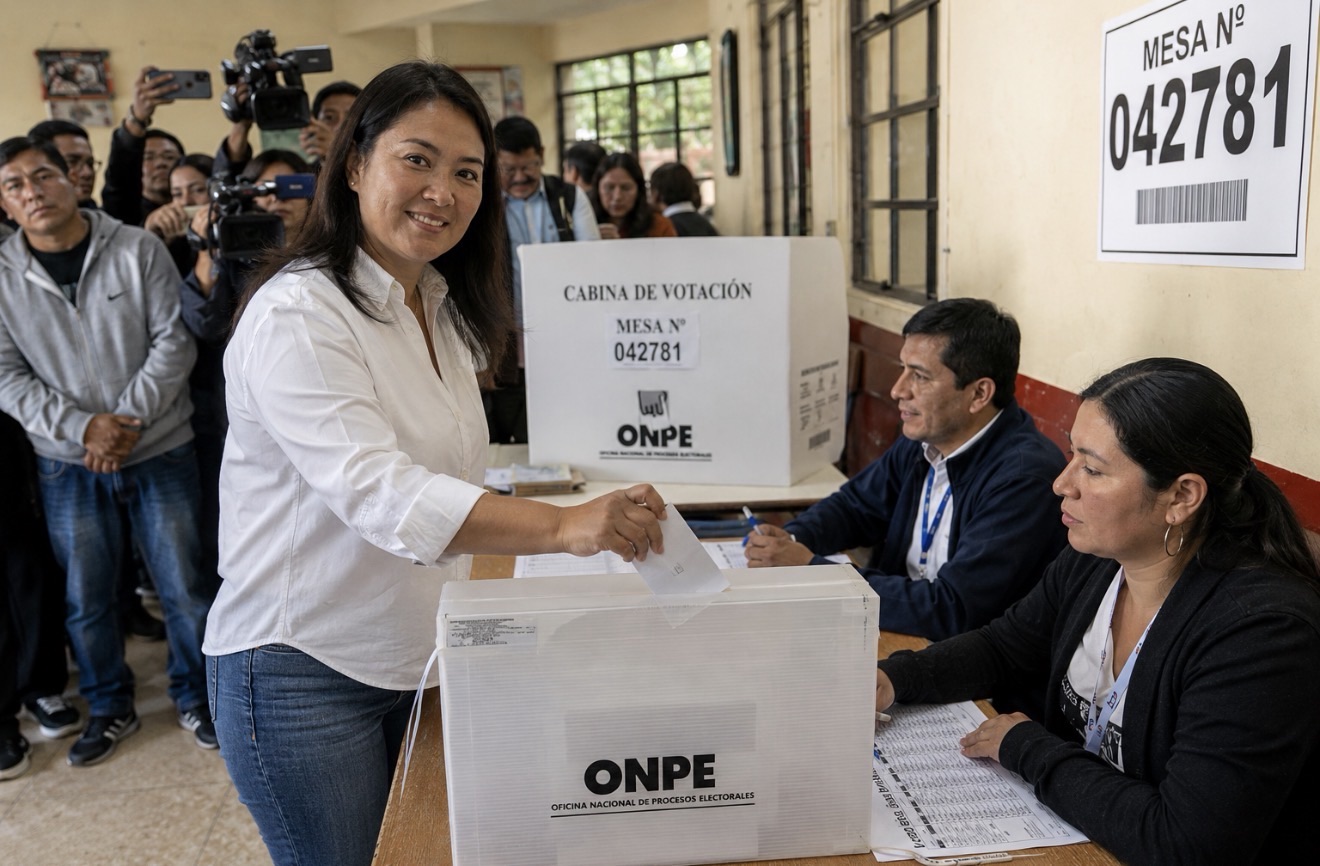
Peru may be on the verge of electing the daughter of one of its most controversial former presidents, but the outcome remains uncertain. According to official results updated Wednesday by Peru’s electoral authority, conservative candidate Keiko Fujimori holds a razor-thin lead over leftist challenger Roberto Sánchez following Sunday’s presidential runoff. The margin separating the two candidates remains less than one percentage point, and electoral chief Roberto Burneo has warned that final certification could take as long as 30 days.
Fujimori, 50, is the eldest daughter of former President Alberto Fujimori, who governed Peru from 1990 to 2000. His presidency remains deeply divisive. Supporters credit him with defeating insurgent groups and stabilizing the economy, while critics point to his 1992 dissolution of Congress and subsequent convictions for corruption and human rights abuses.
The election marks Fujimori’s fourth attempt at the presidency after unsuccessful campaigns in 2011, 2016, and 2021. She leads the Fuerza Popular party, which already controls roughly one-third of Peru’s Congress. Her opponent, Sánchez, is politically aligned with former President Pedro Castillo, who remains imprisoned following his own failed attempt to dissolve Congress in 2022.
The election comes after a decade of political instability that has seen eight presidents cycle through office, undermining investor confidence and complicating long-term economic planning.
For global markets, the stakes extend far beyond Peru’s borders.
Peru is the world’s third-largest producer of copper, a metal essential to electric vehicles, power transmission infrastructure, renewable energy projects, and the rapidly expanding artificial intelligence industry. The country is also a major producer of silver, gold, and zinc, making its political stability increasingly important to global commodity markets.
Investors have generally viewed Fujimori as the more market-friendly candidate. Her platform supports mining investment and private-sector growth, while some investors feared a left-wing victory could lead to higher mining taxes, increased royalties, or stricter operating requirements for foreign companies.
A clear Fujimori victory would likely be viewed positively by financial markets, potentially strengthening the Peruvian sol, supporting the Lima Stock Exchange, and providing momentum for more than $50 billion in planned mining projects. Market analysts say the greatest risk remains a prolonged dispute over the election result that could trigger protests or political paralysis.
Hovering over the entire race is the growing influence of China.
Chinese companies have become deeply embedded in Peru’s economy. They control some of the nation’s most important mining assets, including Las Bambas, operated by MMG, and Toromocho, owned by Chinalco. Chinese state-backed firms have also acquired major utility assets, including Luz del Sur.
Perhaps the most strategically significant investment is the $3.6 billion Chancay deepwater port, developed by COSCO Shipping and inaugurated by Chinese President Xi Jinping during a 2024 summit. The facility gives China a direct Pacific gateway for South American exports, particularly minerals destined for Chinese manufacturers.
The project has attracted attention in Washington, where policymakers increasingly view strategic infrastructure investments as part of a broader competition with Beijing.
American investors have responded by backing alternative projects. BlackRock’s infrastructure division has invested in the rival Matarani port, positioning it as a competitor to Chinese-backed facilities and reflecting growing U.S. interest in maintaining influence in South America’s critical supply chains.
Analysts remain divided on what a Fujimori presidency would mean for U.S. interests.
Supporters argue that Fujimori is more likely to pursue pro-investment policies, strengthen ties with Washington, cooperate on security matters, and take a more cautious approach toward Chinese strategic investments. They point to issues such as counternarcotics cooperation and trade relations where closer alignment with the United States could emerge.
Others caution that any shift may be limited. China is Peru’s largest trading partner and a dominant source of investment capital. Regardless of who wins, Peru’s economy remains deeply tied to Chinese demand for minerals and commodities.
They also note that the Fujimori name remains highly polarizing. A victory decided by only a few hundred votes could face legal challenges and public protests, raising the possibility of renewed instability in a country that has struggled to maintain political continuity.
For investors, the central question may not be which candidate ultimately prevails but whether Peru can produce a widely accepted result and maintain enough stability to remain a reliable supplier of critical minerals.
Until the final certification is issued, Peru’s mines continue operating, copper continues flowing through both Chinese- and Western-backed ports, and global markets remain focused on one of the closest presidential elections in the country’s modern history.
JBizNews Desk — Latin America
© JBizNews.com All Rights Reserved. Reproduction or distribution without written permission is prohibited.