
 JBizNews
SpaceX IPO Soars 19% in Historic Debut. Here’s What Investors Expect Next
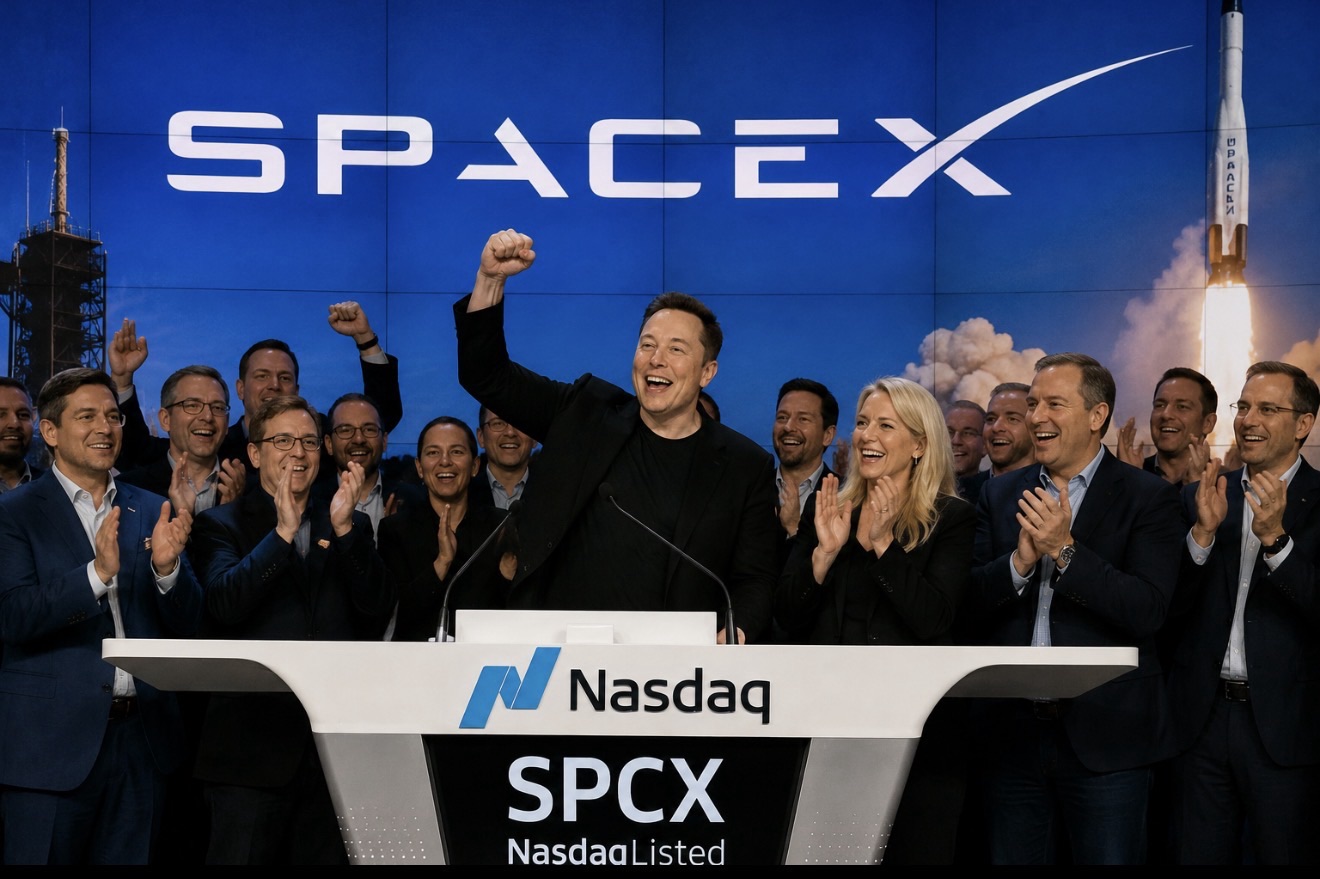
SpaceX completed the largest initial public offering in history Friday, June 12, and its stock rewarded early buyers, climbing about 19% on its first day of trading on the Nasdaq under the ticker SPCX. Chief Executive Elon Musk rang the opening bell from Texas while SpaceX President and Chief Operating Officer Gwynne Shotwell did the honors at the Nasdaq site in New York.
The numbers were staggering.
SpaceX priced its shares at $135, raised roughly $75 billion, and sold more than 555 million shares, making it the biggest IPO ever. The stock opened at $150, ran as high as $176.52 in intraday trading, then settled to close at $160.95.
That left the company valued at approximately $2.1 trillion, instantly making it one of the most valuable publicly traded companies in the world.
The debut also cemented a personal milestone for Musk. The offering made him the world’s first trillionaire, capping a remarkable journey for a company he once feared would fail.
“I gave SpaceX a less than 10% chance of succeeding at all,” Musk said before the opening bell, reflecting on the company’s early struggles and repeated near-collapse moments.
For Wall Street, the size of the offering and investor demand dominated the conversation.
The IPO was estimated to be roughly four times oversubscribed, with demand reportedly reaching approximately $250 billion. More than 500 million shares changed hands during the first trading session, volume that approached levels last seen during Facebook’s blockbuster public debut in 2012.
One factor that made the offering different from most IPOs was the unusually large allocation to individual investors.
Retail investors typically receive only 5% to 10% of shares offered in major IPOs. SpaceX allocated more than 20% of the offering to retail buyers, allowing ordinary investors broader access than is usually available in deals of this size.
The response was immediate. Retail trading volume in SpaceX reportedly reached approximately $453 million during the first session, putting the company on pace to challenge records previously set by Coinbase and other high-profile technology listings.
Most analysts viewed the debut as a clear success.
The stock produced a healthy first-day gain without the extreme volatility that sometimes accompanies highly anticipated offerings. By the closing bell, SpaceX had already become one of the largest publicly traded companies in America.
Not everyone viewed the performance as extraordinary.
Jay Ritter, one of the nation’s leading IPO experts at the University of Florida, noted that while a 19% gain is impressive, some prediction markets had forecast an even larger first-day surge.
His point highlights the unusual scale of the offering. A typical IPO gaining 19% may be noteworthy. A company raising $75 billion and adding hundreds of billions in market value on day one is something entirely different.
The next chapter may be even more important than the first day.
Analysts are already debating whether the successful launch will open the floodgates for a new generation of public offerings tied to artificial intelligence, advanced computing, and next-generation technology.
Many investors are watching companies such as OpenAI and Anthropic, which are widely viewed as potential future IPO candidates.
A successful SpaceX offering could provide a blueprint for how those companies eventually approach public markets.
The stock itself also carries several unique characteristics that investors will be watching closely.
SpaceX currently has a relatively tight public float, meaning a limited percentage of shares are available for trading. Tight floats can amplify both gains and losses because fewer shares are available to absorb buying or selling pressure.
The company will also become part of numerous index-tracking exchange-traded funds after Nasdaq and Russell accelerated their normal inclusion timelines. As a result, millions of retirement investors may gain indirect exposure to SpaceX through ETFs and 401(k) plans without ever purchasing shares directly.
Another key date sits on the calendar.
SpaceX’s 180-day insider lockup period expires around December, a milestone traders often monitor because it allows insiders and early investors to begin selling larger portions of their holdings.
Meanwhile, the broader space sector already felt the impact of the IPO. Shares of Rocket Lab and several smaller aerospace companies declined as investors rotated capital toward the newly public industry giant.
For now, the verdict is straightforward.
The largest IPO in history delivered a strong first-day return, created the world’s first trillionaire, and generated enormous enthusiasm among institutional and retail investors alike.
The harder challenge begins next week.
Investors will shift their focus from the excitement of the debut to a more difficult question: whether SpaceX can justify a valuation exceeding $2 trillion once the opening-day excitement fades and the company begins life as a publicly traded stock.
JBizNews Desk — Markets
© JBizNews.com All Rights Reserved. Reproduction or distribution without written permission is prohibited.